
 By
By 
Zambia has called for strengthened collaboration with Zimbabwe in commercial utility governance, regulatory approaches, rural water supply systems, capacity development and transboundary water management.
Water Development and Sanitation Minister, Collins Nzovu, said Zambia had made significant progress in expanding access to safe water, modernising infrastructure and improving service delivery, particularly in urban areas.
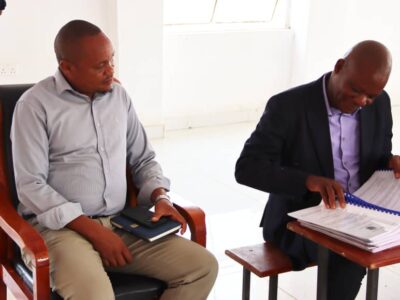
He said this when Zimbabwean Deputy Minister of Local Government, Albert Mavunga, paid a courtesy call on him in Lusaka on Monday.
Nzovu noted that while challenges persisted — including financing gaps, rapid urbanisation and climate-related pressures — the sector continued to improve through sustained reforms and strong institutional partnerships.
He said a key driver of Zambia’s progress was the commercialisation of water supply and sanitation services initiated in the 1990s, which aimed to improve efficiency, promote accountability and create financially viable service providers.
“Today, we have 11 Commercial Utility Companies that operate on business principles that allow them to improve billing systems, reduce non-revenue water, enhance maintenance and deliver better customer service, all while maintaining a pro-poor focus to ensure affordability for low-income households,” he said.
Nzovu said the establishment of Commercial Utilities had strengthened service delivery and improved sector financing, especially because the utilities operate as autonomous entities with clear mandates in designated service areas.
He explained that their governance was guided by a structured ownership model in which the Ministry of Local Government and Rural Development served as the primary shareholder on behalf of local authorities.
“As shareholders, they play a critical role, through participating local authorities in the nomination of suitable candidates to serve on the utility boards of directors, ensuring representation of key stakeholders and balanced expertise across governance, finance, engineering and community interests as guided by the articles of association,” he said.
At national level, he said governance has been strengthened by clearly defined institutional roles. The Ministry of Water Development and Sanitation provides policy direction, sector planning, resource mobilisation and overall coordination.
“NWASCO, our autonomous regulator, oversees service standards, tariff regulation and performance monitoring of utilities through annual reporting and benchmarking, while the Water Resources Management Authority (WARMA), the water resources management regulator, ensures sustainable water resources management,” he said.
Nzovu added that the separation of roles — policy, regulation and utility management — had enhanced transparency, accountability and long-term sustainability of the water sector.
WARNING! All rights reserved. This material, and other digital content on this website, may not be reproduced, published, broadcast, rewritten or redistributed in whole or in part without prior express permission from ZAMBIA MONITOR.








Comments