
 By
By 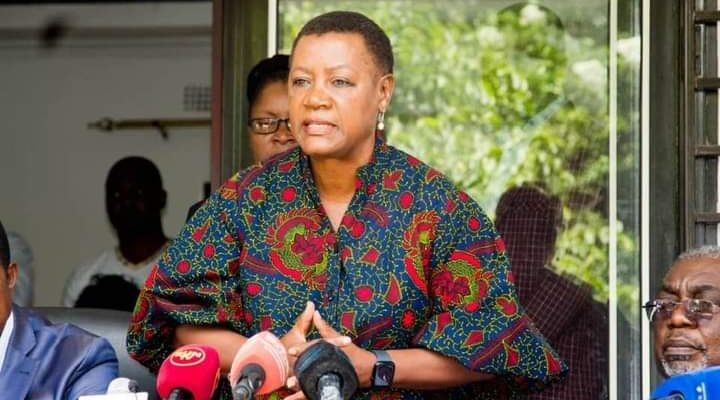
New Heritage Party (NHP) leader, Chishala Kateka, has blamed successive Zambian governments and leaders for promoting a narrow and sectarian style of governance, which she says has contributed to the breakdown of key sectors in the country’s economy.
In a statement issued in Lusaka on Monday, Kateka said the sectarian approach—rooted in tribal, regional, and political divisions—has consistently undermined national unity and equitable development.
“The only government that will succeed in this nation is one that does not advance any sectarian agenda but seeks to benefit all Zambians regardless of tribe, region, or party affiliation,” Kateka said.
She urged citizens and leaders alike to rise above historical grievances, whether real or perceived, and focus on the collective potential of the country.
“We must look beyond any previous hurts or injustices, but instead look at the potential of what Zambia can become and what we will leave for our posterity,” she said.
Kateka called for a national reset, saying the spirit of hatred, vengeance, competition, and division must be firmly rejected.
She stressed that Zambians urgently needed to unite around a common cause to achieve meaningful development.
“What we are seeing today—statements like ‘You people have already eaten, it is now our turn,’ or ‘Your tribe has ruled, now it’s our turn’—will not advance national interests. This mindset only takes us down a divided and dangerous path,” she warned.
Kateka lamented that access to national resources and opportunities remained limited to a select few, to the detriment of the wider population.
“The sectarian path, which is still at play today—if not more so—cannot and will not succeed. By its very nature, it is incapable of delivering a national development agenda,” she said.
Kateka cautioned that the cost of continued division was perpetual poverty and underdevelopment.
“No Zambian—regardless of tribe, region, political party, or religion—wants to see this continued polarization, economic stagnation, or the weakening of the Constitution and other key governance institutions,” she said.
Kateka referenced biblical teachings to highlight the importance of unity, quoting: “If a kingdom is divided against itself, that kingdom cannot stand” (Mark 3:24) and “How good and pleasant it is when brethren dwell together in unity, for there the Lord commands a blessing” (Psalm 133).
She identified key governance institutions—such as Parliament, law enforcement agencies, the judiciary, and the Human Rights Commission—as vital to national stability, especially in a context of widespread poverty.
“What we are facing as a nation is an existential threat—one that stems not only from a historical failure of leadership, but from a collective cowardice on our part as citizens to challenge a status quo that has not served the people of Zambia,” Kateka stated.
WARNING! All rights reserved. This material, and other digital content on this website, may not be reproduced, published, broadcast, rewritten or redistributed in whole or in part without prior express permission from ZAMBIA MONITOR.









Comments