
 By
By 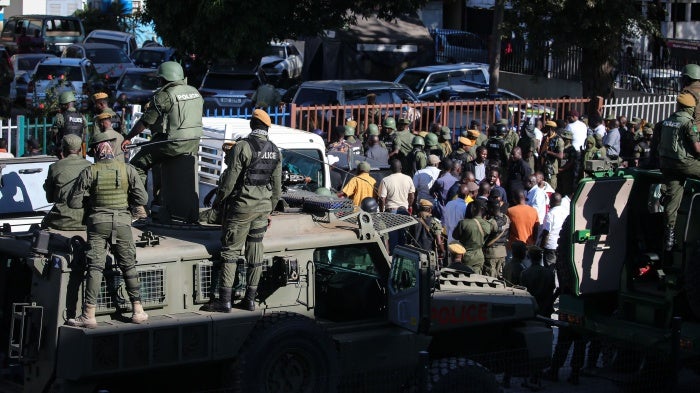
The 2024 Country Reports on Human Rights Practices for Zambia has highlighted serious human rights issues in the country, including credible reports of arbitrary or unlawful killings, torture, and cruel, inhuman, or degrading treatment or punishment.
The report noted significant restrictions on freedom of expression and media freedom, citing instances of violence and threats against journalists, particularly by those in authority.
While the United States Department of State acknowledged that the Zambian government had taken credible steps to identify and punish officials responsible for human rights abuses, impunity remained a challenge.
The report cited numerous cases of arbitrary or unlawful killings.
In the first quarter, the Human Rights Commission (HRC) reported that a male suspect taken into custody at a Mongu police post was tortured and died en route to the hospital.
In April and May, two suspects reportedly died while in custody at Matero and Kanyama police stations.
Police officers involved were arrested and charged with manslaughter, but their cases remained pending at the end of the year.
The Police Public Complaints Commission recorded a significant rise in complaints regarding police conduct, including 20 allegations of extrajudicial killings.
However, the number of such killings dropped compared with 2023, according to the HRC.
Although Zambia’s constitution and laws provide for freedom of expression, they also allow restrictions in certain circumstances, such as national defense, public safety, public order, public health, or protecting the rights and reputations of others.
The report stated that these laws were disproportionately applied to political opposition figures.
“The government showed sensitivity to criticism, particularly from political opposition figures, and restricted the ability of individuals to criticize government officials or policies freely or discuss matters of public interest,” the report said.
On August 20, then Home Affairs and Internal Security Permanent Secretary Joseph Akafumba issued a warning regarding social media abuse, likening a proposed cybercrime bill to an AK-47 and emphasizing that authorities would use the law to take decisive action against offenders.
The report further noted harassment and intimidation of journalists by ruling party supporters and government officials.
On April 13, journalists Rodgers Mwiimba and Innocent Phiri were arrested for filming an altercation between police officers and opposition party leaders at an unauthorized rally.
The Committee to Protect Journalists condemned the arrests and urged thorough investigations.
While the government encouraged self-censorship, it reportedly did not practice direct censorship. The law prohibits arbitrary arrest and detention and provides the right to challenge unlawful detention in court.
The report noted that authorities generally observed these requirements, although police could arrest without a warrant for offenses such as treason, sedition, or unlawful assembly.
Despite legal safeguards, arbitrary arrests and prolonged pretrial detention remained widespread.
Suspects, including Jason Mwanza, Chanda Chikwanka, and Thomas Zulu, were detained for over six days following a peaceful protest before successfully applying for habeas corpus.
According to the HRC, detainees often spent an average of six months in pretrial detention, exceeding the maximum potential sentence for their alleged crimes.
Contributing factors included inability to meet bail requirements, nonbailable offenses, trial delays, judges working on circuit court basis, and absent prosecutors or witnesses.
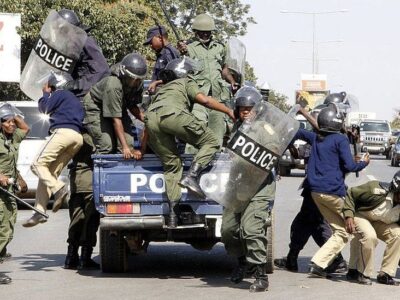
The report also cited credible allegations of torture at police stations in Mansa, Nyimba, Chilenje, Matero, Kanyama, and Munali, sometimes resulting in deaths, despite constitutional prohibitions against cruel, inhuman, or degrading treatment.
WARNING! All rights reserved. This material, and other digital content on this website, may not be reproduced, published, broadcast, rewritten or redistributed in whole or in part without prior express permission from ZAMBIA MONITOR.






Comments