
 By
By 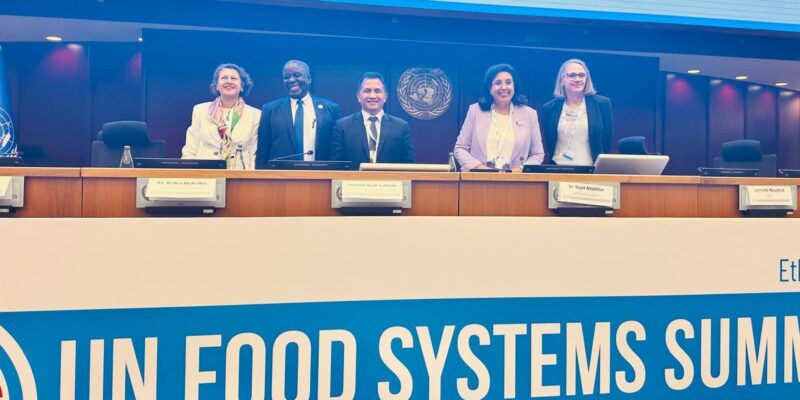
The Zambian government has reaffirmed its commitment to transforming food systems as a vital step toward ending malnutrition and contributing to broader Africa Agenda of promoting equitable access to nutritious diets for all.
Agriculture Minister, Reuben Mtolo, said ending malnutrition required more than increasing food production, but also called for a complete shift in how farmers grow, consume, and value food.
Mtolo said this during a high-level panel discussion titled “Transforming Food Systems for Healthy Diets and Nutrition” at the UN Food Systems Summit +4, in Addis Ababa.
The Minister highlighted that Zambia’s approach was guided by the National Food and Nutrition Act, which places nutrition oversight directly under the Office of the Vice President, ensuring high-level coordination and accountability across sectors.
“Zambia’s Comprehensive Food Systems Pathways places access to safe, diverse, and nutritious diets at the centre of national agricultural planning and investment,” he said.
To achieve this transformation, Mtolo outlined several key initiatives such as the launch of the national Food Based Dietary Guidelines (FBDGs) to promote healthy food consumption patterns, offering culturally relevant and practical guidance tailored to the country’s nutritional needs, food availability, and traditions.
He said that the Zambian government was implementing a robust crop diversification plan aimed at reducing overreliance on maize by encouraging the cultivation of legumes, tubers, oilseeds, and horticultural crops.
“This strategy enhances climate resilience, improves nutrition security, and supports rural livelihoods,” Mtolo stated.
“In a bid to shift consumption patterns away from ultra-processed foods, Zambia is actively promoting traditional and indigenous foods,” he added.
Reflecting on Zambia’s recovery from last year’s devastating drought, Phiri shared that, under a Presidential directive, Zambia had set ambitious targets to boost the production of maize, wheat, and soybeans.
However, Mtolo stressed that increased production must be aligned with nutritional goals, and that reforms were being implemented to ensure that food availability translated into improved dietary outcomes for all citizens.
“Zambia’s participation in the summit reiterates its determination to foster resilient, inclusive, and nutrition-sensitive food systems that respond to both local challenges and global imperatives,” he said.
WARNING! All rights reserved. This material, and other digital content on this website, may not be reproduced, published, broadcast, rewritten or redistributed in whole or in part without prior express permission from ZAMBIA MONITOR.










Comments