
 By
By 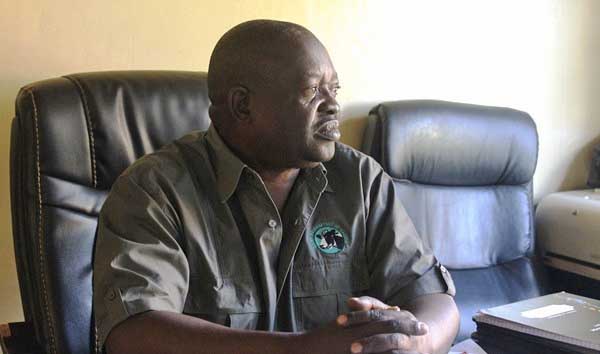
The Zambia National Farmers’ Union (ZNFU) has welcomed government’s decision to reopen maize export borders, saying the move is expected to improve producer prices and sustain cultivation of the staple crop.
ZNFU president, Jervis Zimba, described the policy shift as progressive and aligned with farmers’ long-standing appeals for broader market access.
He emphasized that scaling up maize production would only be viable if markets continue to expand.
“Truth must be laid bare — the cost of producing maize remains high. There are no indications that fertilizer and other key input prices will drop, even though the Kwacha has appreciated against the US dollar,” Zimba said.
He urged government to complement the Food Reserve Agency’s (FRA) producer price with close monitoring of market trends across provinces, warning that in some areas, prevailing prices are driving farmers deeper into poverty.
“With the export window now open, the private sector should actively participate in maize marketing by offering farmers better deals. We must remember that it will take a long time for farmers to recover from last year’s devastating drought, which wiped out their asset base,” he said.
Zimba noted that historically, bumper harvests have often led to oversupply and depressed prices, leaving farmers in financial distress.
This year, he explained, many farmers have struggled to secure buyers since the crop forecast was released, with the FRA remaining the main purchaser in most farming areas.
ZNFU believes that a mix of export opportunities, fair domestic pricing, and greater private sector involvement will create a more stable and profitable environment for maize producers, enabling them to withstand future shocks and sustain production levels.
Similarly, the National Union for Small Scale Farmers of Zambia (NUSSFAZ) expressed support for the government’s decision to export part of the surplus maize harvested during the 2024/2025 farming season.
The Zambian Cabinet recently approved the export of 501,620.61 metric tonnes of surplus maize grain and mealie meal to regional markets following a bumper harvest.
The country produced an estimated 3.7 million metric tonnes of maize and carried over 385,000 metric tonnes from the previous season, bringing total available stocks for 2025/2026 to 4.04 million metric tonnes.
Union Executive Director, Dr. Frank Kayula, told Zambia Monitor that the country only consumes about 2.5 million metric tonnes of maize annually at both commercial and household levels, meaning the sale of over 500,000 metric tonnes will not affect food security.
Kayula noted that exporting the surplus maize would benefit the government through foreign exchange earnings and also involve the private sector in supplying maize to neighbouring countries.
He explained that unlike in the past—when climate shocks led to shortages after maize stocks were sold—the current surplus allows Zambia to export without compromising domestic availability.
“The country is currently able to sell part of the maize it has because it has sufficient stocks following the bumper harvest recorded in the past rainy season and the carryover from the previous farming season,” Kayula said.
He added that exports will also benefit the Food Reserve Agency (FRA), which is offering competitive prices to local farmers during this marketing season.
“The exports will allow FRA to pass on the benefits to small-scale farmers through improved maize pricing, enabling them to reinvest in farming and plant more crops,” Kayula said.
The government’s decision to reopen maize exports has not been without criticism.
Earlier this week, the Citizens First Women’s League urged authorities to halt all maize exports until the FRA fully stocks 1.5 million metric tonnes for the national strategic reserve and a verified audit confirms Zambia’s 12-month consumption needs of over 3 million metric tonnes are secured.
National Women’s Chairperson, Faith Munthali, described the decision to export as “reckless, short-sighted, and a direct threat to national food security,” warning that drought is “always one season away.”
She argued that while other nations were stockpiling grain in anticipation of global climate shocks, Zambia’s leaders were “rushing to sell off the only insurance against hunger.”
“Food security should come first, especially since Zambia has been here before — in 2023 — when drought left millions hungry while empty FRA silos gathered dust,” she said.
WARNING! All rights reserved. This material, and other digital content on this website, may not be reproduced, published, broadcast, rewritten or redistributed in whole or in part without prior express permission from ZAMBIA MONITOR.










Comments