
 By
By 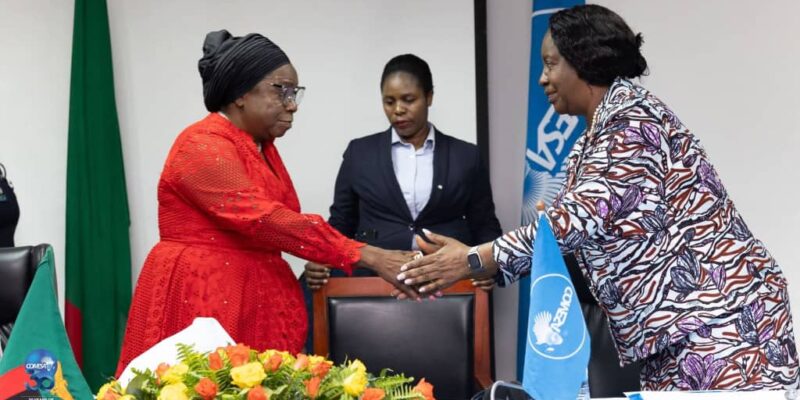
Vice President, Mutale Nalumango, has urged COMESA member states to invest in evidence-based policymaking to strengthen health systems and address emerging crises such as mental health, which has long been overlooked.
Speaking during the opening session of the 2nd COMESA Ministers of Health Meeting in Lusaka on Thursday, Nalumango stressed that research, science and innovation must guide health interventions across the region.
“Let us reaffirm that science and solidarity must always guide our way forward,” she said, adding that the meeting itself was a powerful demonstration of regional unity in the face of global health challenges.
She recalled that in the past five years, the Covid-19 pandemic claimed more than seven million lives worldwide and triggered an estimated US$13.8 trillion in economic losses.
Read more: Malawi, Zambia sign COMESA mutual recognition agreement to boost trade in six key commodities
“In the COMESA region, the shock led to GDP contractions of up to six percent in some member states, disrupted medical supply chains, and exposed critical gaps in emergency preparedness and health system resilience.
“The current Mpox outbreak and growing threats linked to climate-related health emergencies remind us that health security is economic security,” she said.
Nalumango highlighted that Africa still shouldered over 90 percent of the global malaria burden, while non-communicable diseases (NCDs) now account for 37 percent of deaths on the continent.
She warned that mental health, once neglected, had become a silent but growing crisis, with depression alone costing African economies an estimated four percent of GDP in lost productivity.
At the same conference, COMESA Secretary-General, Chileshe Kapwepwe, said Africa lost an estimated US$120 billion in GDP between 2020 and 2021 due to the Covid-19 crisis, with tourism-dependent and commodity-reliant economies hit hardest.
She cited the 22 percent decline in tourism and reduced intra-regional trade volumes, which negatively affected businesses and households.
“Malaria continues to drain economies, with over 100 million cases annually and losses of about US$12 billion per year continent-wide. HIV and AIDS still affect an estimated 20.6 million people in Eastern and Southern Africa, the highest regional prevalence in the world,” Kapwepwe said.
She noted that NCDs were rising sharply and straining already limited healthcare systems, while mental health disorders such as depression and anxiety increasingly contributing to GDP losses due to reduced productivity and absenteeism.
Delivering a vote of thanks, Burundi’s Health Minister, Lydwine Baradahana, said participants were confident of building resilient, equitable and inclusive health systems that citizens deserve.
“Your call for evidence-based policymaking, investment in local pharmaceutical manufacturing, strengthened surveillance, and the integration of mental health into primary care resonates strongly with the purpose of this meeting,” she said.
WARNING! All rights reserved. This material, and other digital content on this website, may not be reproduced, published, broadcast, rewritten or redistributed in whole or in part without prior express permission from ZAMBIA MONITOR.








Comments