
 By
By 
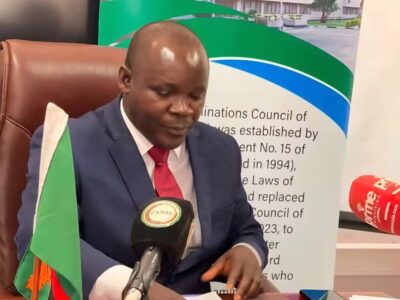
The Anti-Corruption Commission (ACC) Director General, Daphne Chabu, has emphasized the importance of grounding young people in morality to help them make informed decisions and shield the country from corruption and malpractice.
Speaking in Kabwe, Central Province, on Thursday during the official opening of the training workshop on “A Curriculum for Building a Society of Integrity” held at Neem Park Lodge, Chabu highlighted that the National Policy on Anti-Corruption recognizes youths as one of the most vulnerable groups to corruption, disproportionately affected by its negative consequences.
She explained that the curriculum aimed to instill strong ethical values in young learners, creating a generation of citizens who contribute positively to the fight against corruption and emerge as leaders of integrity.
“The values elaborated in this curriculum—Integrity, Honesty, Trust, Honour, and Servanthood—are critical foundations for eradicating corruption and related crimes that hinder good governance and national growth,” Chabu said.
The ACC Director General stated that the curriculum sought to foster collaboration among key stakeholders to build a culture of integrity in Zambia. This would be achieved through implementing school integrity curricula, capacity building for facilitators, and supporting the operationalization of the 2023 National Policy on Anti-Corruption.
“The Policy promotes youth participation in the fight against corruption through social accountability tools and platforms, such as the collaboration we are launching today,” she added.
Chabu described the Character is Destiny curriculum framework as timely and vital, complementing existing interventions and reinforcing foundational civic values embedded in Zambia’s education system.
She further noted that the Zambian Constitution, under Article 8, emphasized the promotion of national values and principles for the well-being of citizens, including morality and ethics, patriotism and national unity, democracy and constitutionalism, human dignity, equity, social justice, equality and non-discrimination, as well as good governance and integrity.
“National values and principles are crucial in shaping law-abiding citizens who reject corruption and negative vices, forming a bedrock for leadership of integrity and national development,” she said.
Recognizing that Zambia is a youthful nation, Chabu said the age-appropriate curriculum aligned with the majority of the population.
“In 2013, the Commission, in collaboration with the Ministry of Education, embarked on a historic project to incorporate anti-corruption themes and values into the national education curriculum. To date, these values have been embedded from early childhood education to secondary schools, and in some tertiary institutions, including the University of Zambia (UNZA) and the Technical Education, Vocational, Entrepreneurship, and Training (TEVET) system,” she explained.
Chabu added that selected teachers and tutors had been trained nationwide to effectively implement these curricula.
“Corruption undermines national development, erodes societal trust, and leads to inequality and unfair distribution of opportunities. Addressing these effects requires a strong focus on promoting moral values, such as integrity,” she stated.
WARNING! All rights reserved. This material, and other digital content on this website, may not be reproduced, published, broadcast, rewritten or redistributed in whole or in part without prior express permission from ZAMBIA MONITOR.









Comments