
 By
By 
International Tax and Investment Centre (ITIC) president, Daniel Witt, has stressed that predictable and transparent tax regimes were essential for attracting investment into Africa.
Speaking in Lusaka on Wednesday during the International Workshop on Improving the Tax Compliance Environment for Large Businesses at Southern Sun Hotel, Witt said multinational companies were generally willing to pay taxes where administrations were stable and trustworthy.
“Many of the revenue risks that transitioned developing countries once faced are now much less. The risk of overly aggressive tax planning has largely ended,” Witt said.
He observed that competition for capital across Africa is intensifying, and countries with consistent and fair tax regimes are more likely to gain an edge.
“The five countries in this room are all competing for capital. Having a competitive—not a giveaway—but a predictable and stable tax administration would be your comparative advantage and help you win that competition,” he added.
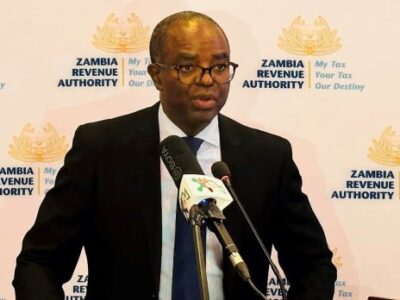
At the same event, Zambia Revenue Authority (ZRA) Commissioner-General, Dingani Banda, said the authority was scaling up efforts to build mutual trust with taxpayers in order to improve compliance and strengthen revenue collection.
He explained that ZRA was implementing the Customs Accredited Client Programme, a domestic initiative, alongside the internationally recognised Authorised Economic Operator Programme under the World Customs Organisation.
Both, he said, were anchored on trust between taxpayers and the authority.
“Under this arrangement, taxpayers are expected to uphold the highest standards of business ethics and controls in their dealings with the authority. In return, ZRA expedites the clearance of goods, leveraging the trust that has been established,” Banda said.
He revealed that five taxpayers had already been enrolled in the Cooperative Compliance Programme, with a target of 10 by the end of the year.
The initiative, he said, was designed to extend trust-based compliance practices into Zambia’s domestic tax environment.
Banda also noted that Africa continued to face weak tax systems, with the average tax-to-GDP ratio standing at 15 percent.
Zambia’s ratio is relatively higher at 18.3 percent, but he stressed that further improvements would require reforms that promoted voluntary compliance and embraced data-driven tax administration.
WARNING! All rights reserved. This material, and other digital content on this website, may not be reproduced, published, broadcast, rewritten or redistributed in whole or in part without prior express permission from ZAMBIA MONITOR.








Comments