
 By
By 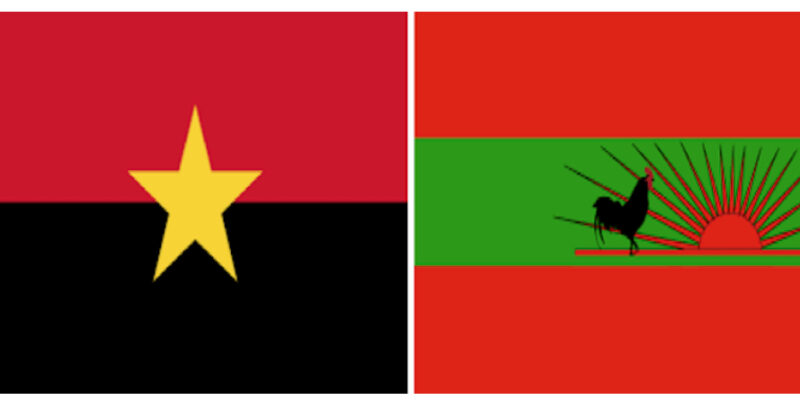
A little over a month ago, a taxi strike over fuel prices tipped Angola into its worst unrest in years.
What began as fare protests spread through Luanda and beyond. By week’s end, dozens were dead, hundreds were hurt, and well over a thousand people had been detained. Weeks later there is still no independent inquiry into the shootings.
The Attorney General hasn’t moved. Church leaders and rights groups called the crackdown a grave breach of basic freedoms.
The government offered condolences, praised the police for restoring order, and carried on. For many Angolans, that silence said more than any press conference behind the elections and speeches, power still protects itself first.
The anger didn’t fade with the headlines. Journalists from public outlets have voted to strike nationwide starting Monday, September 8, with additional phases already mapped out into the year’s end.
It is not a routine wage dispute. It’s a rare, coordinated halt across state TV and radio, the news agency, and major dailies institutions that usually move in lockstep with the ruling party.
Reporters want what they’ve asked for since spring long-promised pay adjustments and safer conditions. If the country’s own public press is willing to walk off the job, it’s because trust in the authorities has thinned to a thread.
The current wave of unrest appears to validate dire warnings from experts about Angola’s trajectory. Just two weeks ago, economist Francisco Miguel Paulo, a researcher at the Catholic University of Angola, cautioned that July’s violence would not be the last. Citing grim statistics, he noted that around one million young people in Luanda – and some three million countrywide – are neither in school nor employed.
These disaffected youths, facing extreme poverty and few prospects, form a volatile powder keg. “If nothing is done,” Paulo observed, “what happened in July will happen again – and frequently.”
In his analysis, a generation with “nothing to lose” will continue to erupt in anger because they have no jobs, no opportunities, and increasingly, no hope.
Paulo emphasized that this crisis cannot be solved by police repression alone – a point made painfully clear by July’s bloodshed. Unless the government addresses the root causes – rampant unemployment, high living costs, and glaring inequality – discontent will keep boiling over.
In his words, labeling jobless youths as mere “vandals” misses the point: “There aren’t enough police or soldiers to contain them if their desperation isn’t addressed.”
This sobering perspective is increasingly echoed by civil society leaders who see the writing on the wall.
Each passing week without reform or accountability raises the likelihood that July’s tragedy will repeat itself, perhaps on an even wider scale.
These events are unfolding against a backdrop of collapsing public confidence in Angola’s longtimerulers.
The MPLA, which has held power continuously since independence in 1975, is now widely perceived as weakened and in disarray.
Notably, retired General Higino Carneiro – a prominent MPLA figure – has hinted at a bid for the party’s leadership, exposing divisions at the top of the regime.
Fights that once stayed behind closed doors now leak into view. The government is, in effect, fighting on two fronts against a public tired of impunity and hardship, and against its own internal rivalries.
That double pressure is new and it matters.Sensing this vulnerability, other groups are likely to seize the moment.
The taxi drivers were one sector; the journalists are next. Teachers’ unions, nurses, civil servants, and youth movements could be inspired to mount their own protests or strikes in the coming months.
The image of a monolithic, unassailable MPLA has cracked, and Angolans have taken notice. Every sign of regime infighting further erodes its authority in the eyes of the people.
The question now is whether UNITA will take advantage of this?
After decades in the shadow of one-party dominance, the opposition has momentum it hasn’t felt in a generation. Its leaders condemned the July deaths clearly and fast. In the capital and other cities, especially among younger voters, UNITA now looks like the vehicle for change and a credible democratic alternative.
The party’s message is simple and direct jobs, prices, accountability, freedom of speech and democracy. It nearly took Luanda in the last election and has spent this year widening its base through town halls and provincial tours rather than rallies heavy on spectacle.
UNITA is also organizing with intent. An extraordinary fourteenth congress is scheduled for late November, and a commission is already in the field to line up delegates, hammer out rules, and crucially set strategy.
This isn’t housekeeping. With the next national vote on the horizon, the party wants answers to practical questions that decide close races: who it partners with; how it protects ballots; how it turns street energy into durable civic networks; how it convinces voters far from Luanda that change won’t mean chaos.
Those are the unglamorous details that separate protests from power.
The international mood is shifting as well. No outside capital will choose Angola’s leaders, but signals count. Partners that once looked the other way now see a government that answers allegations of corruption and excessive force with silence.
An opposition promising institutional checks and economic pragmatism gets a warmer hearing than it did a few years ago. Even discreet diplomatic pressure can shape calculations at home.
None of this guarantees UNITA’s success. The state’s levers security, administration, broadcast reach are still formidable. Patronage networks are deep.
And Angola’s history warns against romanticizing confrontation. The country has paid dearly for violence. The opposition’s challenge is to keep the urgency of the moment without tipping into a language of vengeance.
It needs to show discipline as well as passion: credible programs that speak to prices, jobs, water and power; structures that can defend votes; outreach in provinces that rarely see national leaders except at election time.
The government has choices, too. It can keep defending the July crackdown and hoping the news cycle moves on.
Or it can open an independent inquiry, engage with unions and the press in good faith, and deliver visible relief on the cost of living. Even small, concrete steps – on transport fares, staple foods, and wage arrears would do more to cool tempers than any speech.
Angola is at a hinge moment. The old compact endure inequality and corruption in exchange for calm no longer holds. The MPLA faces a public that is poorer, angrier, and less afraid, and a party that is less united than it looks.
UNITA, if it stays disciplined, has a genuine opening to force a reckoning: reform within the ruling party or a real contest for power. What happens next will depend less on slogans than on whether leaders on all sides pass a simple test: put citizens first, and prove it with actions that can be felt in a market queue, on a bus, and in a paycheck.
That proof not promises will decide whether this moment becomes a democratic transition or another cycle of protest and repression. The opportunity is real. So is the cost of missing it.
Authored by Lydia Makina
WARNING! All rights reserved. This material, and other digital content on this website, may not be reproduced, published, broadcast, rewritten or redistributed in whole or in part without prior express permission from ZAMBIA MONITOR.



Comments