
 By
By 
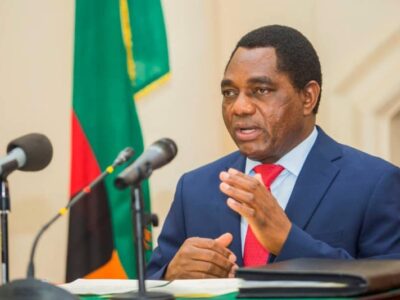
The Legal Resources Foundation (LRF) has sued the President in the Constitutional Court over the failure by the Executive and Parliament to enact the Political Parties Act, as required under Article 60(4) of the Constitution, nearly a decade after the provision was introduced in 2016.
Through Simeza, Sangwa & Associates, whose partners include constitutional lawyer John Sangwa, LRF has cited the President, the Attorney General, the Speaker of the National Assembly, and the Registrar of Societies as respondents.
The organisation is seeking a series of declarations and mandatory orders, including one compelling the President to, within 30 days, initiate a Political Parties Bill for submission to Parliament.
According to the petition, the continued omission to legislate has left political parties governed by the colonial-era Societies Act, Cap. 119, a framework the Foundation argues is unsuitable for regulating political organisations in a constitutional democracy.
LRF contended that this gap had undermined multiparty democracy, weakened transparency in political financing, and exposed political parties to executive interference.
The petition stressed that Article 60(4) was framed in mandatory terms, requiring Parliament to establish rules on party funding, audited accounts, campaign expenditure, and internal democracy.
“The omission is not a mere technicality. It strikes at the heart of Zambia’s constitutional order. With the 2026 General Election less than one year away, the urgency of this matter cannot be overstated. Unless corrective measures are directed by this Honourable Court, the next election risks being conducted under unconstitutional conditions,” it read.
Among its proposed remedies, LRF is asking the court to order that every registered political party publish and lodge with the court audited accounts and disclosures of sources of funds, evidence of internal elections, and proof of compliance with national character and gender equity requirements.
It also seeks the establishment of a provisional Political Parties Fund to be equitably distributed among qualifying parties until permanent legislation is enacted.
The Foundation further wants the Constitutional Court to assume supervisory jurisdiction until a Political Parties Act is fully enacted and operational. Under this proposal, Parliament and the Executive would be required to file compliance reports every 30 days detailing steps taken towards fulfilling Article 60(4).
LRF warns that failure to act threatens the legitimacy of the upcoming general election. It notes that without regulation of political financing, campaign expenditure, and internal party democracy, Zambia’s elections cannot be considered free and fair within the meaning of Article 45 of the Constitution.
The petition also highlights regional examples, noting that countries such as Kenya, South Africa, Tanzania, and Ghana have all enacted specific laws to regulate political parties, while Zambia remains an outlier.
“The continued reliance on the Societies Act undermines accountability, transparency, and equal participation. This Court must intervene to preserve Zambia’s multiparty democracy and protect citizens’ constitutional rights,” it argued.
WARNING! All rights reserved. This material, and other digital content on this website, may not be reproduced, published, broadcast, rewritten or redistributed in whole or in part without prior express permission from ZAMBIA MONITOR.











Comments