
 By
By 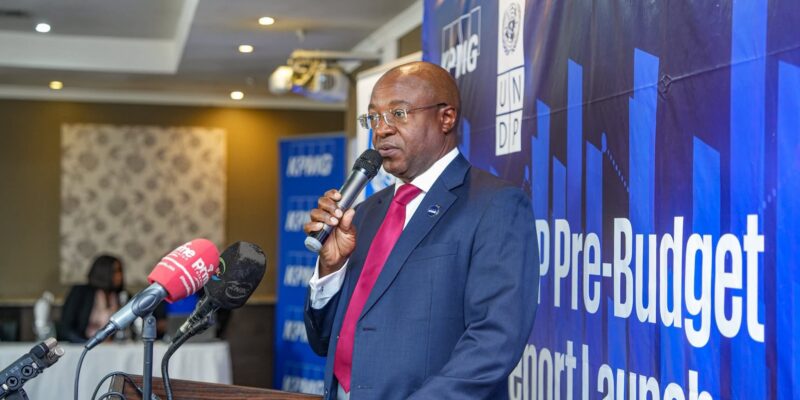
A new survey conducted by KPMG has underscored the importance of the government balancing fiscal consolidation with inclusive development to restore business confidence, reduce inequality, and set Zambia on a path of resilient, sustainable growth.
The survey noted that Zambia had made steady progress in improving macroeconomic stability through fiscal consolidation and debt restructuring.
The pre-budget report presented in Lusaka emphasized the need for government to leverage the private sector and strengthen its regulatory capacity to minimize environmental damage by industry and the mining sector.
“The improved environment has contributed to the appreciation of the Kwacha against the US$ as well as the downward trend in inflation that is likely to result in a much more stable economy,” it stated.
However, the survey highlighted that currency fluctuations and inflationary pressure continue to pose downside risks to the business environment by adversely affecting firms’ revenue and profitability through higher operational costs.
It recommended that government consolidate its macroeconomic gains to further bolster the business environment.
“Further, the business environment has continued to be adversely affected by various macroeconomic and policy factors which include the high cost of utilities, difficulty in attracting and maintaining skilled labor, and climate change-induced shocks,” the survey said.
The KPMG survey further advised that policymakers should foster stronger macroeconomic fundamentals, particularly on domestic currency and prices, while ensuring that fiscal consolidation measures spur confidence in the economy, especially in the wake of the debt crisis.
“The inadequacy of skilled labor has potential to slow productivity and economic growth that the country needs,” it noted.
It recommended that government, in partnership with the private sector, map skills gaps and make strategic investments in the requisite skills for industrial and business development.
This should balance short-term needs, such as importing specialized skills, with long-term measures like training, reskilling, and business development services for Micro, Small and Medium Enterprises (MSMEs).
The report also pointed to inefficiencies in the energy, telecommunications, and financial sectors, highlighting challenges relating to high utility costs and limited access to capital. KPMG called on government to consolidate and accelerate structural reforms in these sectors to improve efficiency and service availability.
It further urged regulators to fast-track the creation of a single-window system for firm registration, which could accelerate formalization and expand the tax base.
Another observation was that Zambia’s tax regime is perceived to have a high to moderate impact on business operations.
“Therefore, government has to continue rationalizing the tax structures and other non-tax user fees to improve the operational environment of the MSMEs,” the survey stated.
It added that these measures must be complemented with stronger enforcement and optimized collection of existing fees, while ensuring minimal negative impact on the poor.
The survey also flagged inefficiencies and opacity in state-owned enterprises, recommending greater transparency and efficiency in their operations.
Read More: PPP model gains momentum as Zambia unlocks new investment opportunities
Commenting on the findings, KPMG Country Managing Partner Jason Kazilimani said the survey revealed that inflation, Kwacha fluctuations, and high interest rates have had the most significant negative impacts on business performance.
“These effects have been amplified by challenges such as high utility costs, climate-related events, difficulties in retaining skilled labour, and limited access to capital,” Kazilimani said.
He added that persistent inflationary pressures, mounting debt service obligations, and exchange rate volatility continue to constrain business stability and erode investor confidence in Zambia.
“These challenging macroeconomic conditions have a significant impact on our economy, creating pressures for businesses and consumers alike,” Kazilimani explained.
Nonetheless, he noted that the government had been implementing key measures to restore stability.
“Despite these hurdles, the Government of Zambia has been implementing key policy measures to restore stability. By March 2025, the Government had successfully embarked on restructuring its external debt, with over 92% of this debt restructured,” Kazilimani said.
WARNING! All rights reserved. This material, and other digital content on this website, may not be reproduced, published, broadcast, rewritten or redistributed in whole or in part without prior express permission from ZAMBIA MONITOR.





Comments