
 By
By 
Zambia stands at an energy crossroads. For years, the nation’s economic growth trajectory has been shadowed by power deficits that throttle industrial productivity, limit agricultural expansion, and frustrate investment.
Yet if the discussions at the 2025 Energy Forum for Africa (EFA) are any indication, the conversation is finally shifting from lamentation to solutions — and Stanbic Bank Zambia is positioning itself at the heart of this transition.
At the Forum, Stanbic executives emphasized one truth policymakers often gloss over: Zambia cannot leapfrog into a renewable-powered future without securing immediate stopgaps.
Chief Executive Mwindwa Siakalima was blunt — power imports are not a sign of weakness but a necessary bridge.
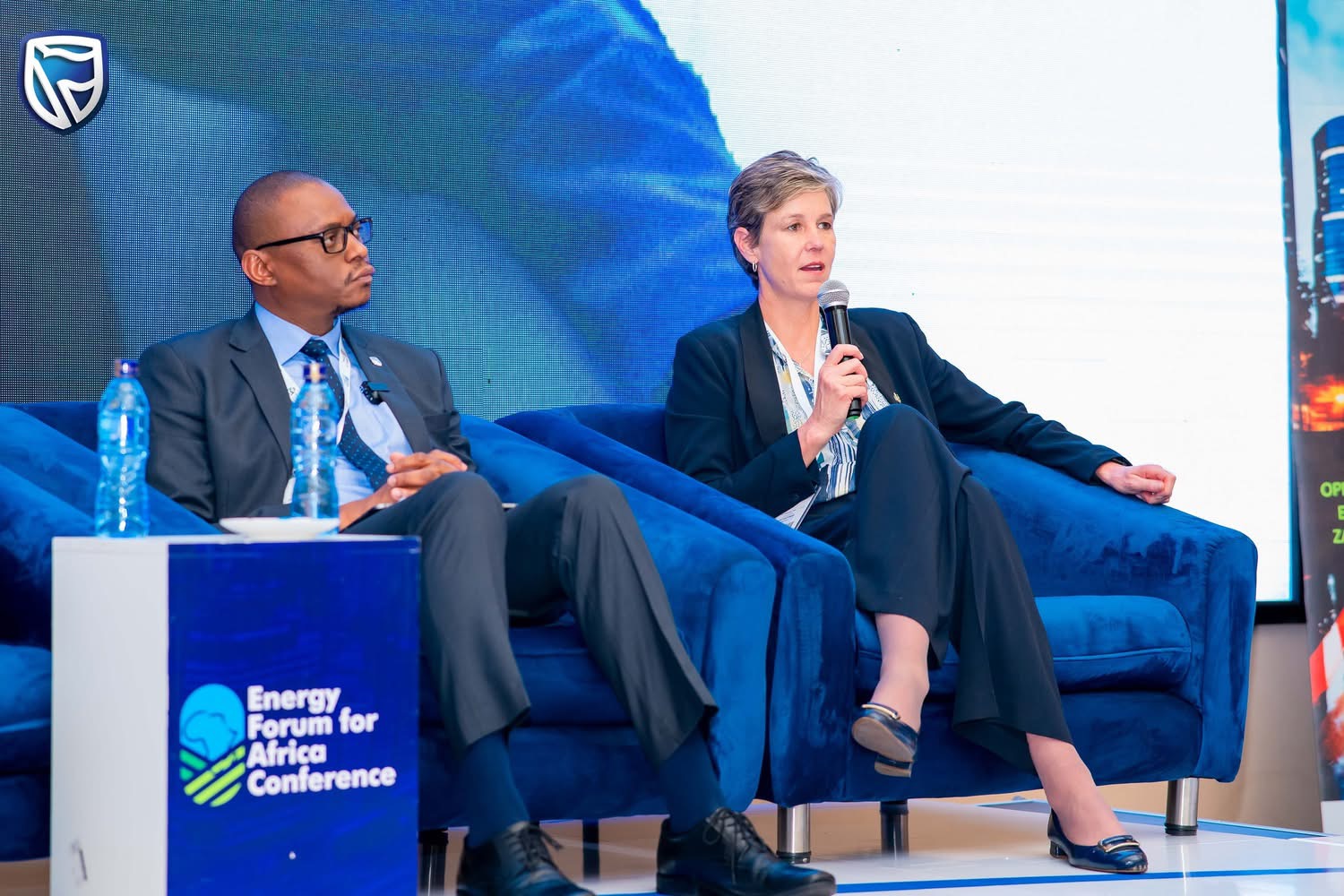
With the bank already backing a US$55.5 million facility for imports, Siakalima framed imports as “a critical piece of the puzzle,” buying time for solar, wind, and other long-term projects to stabilize.
That pragmatism matters. Without reliable supply, talk of industrialization remains hollow.
Equally telling was Stanbic’s insistence that Zambia’s policy reforms are quietly rewriting the country’s investment story.
As Helen Lubamba, Stanbic Bank Head of Corporate and Investment Banking, explained, measures like open access to the grid, cost-reflective tariffs, and streamlined licensing have opened the door for financiers to take calculated risks.
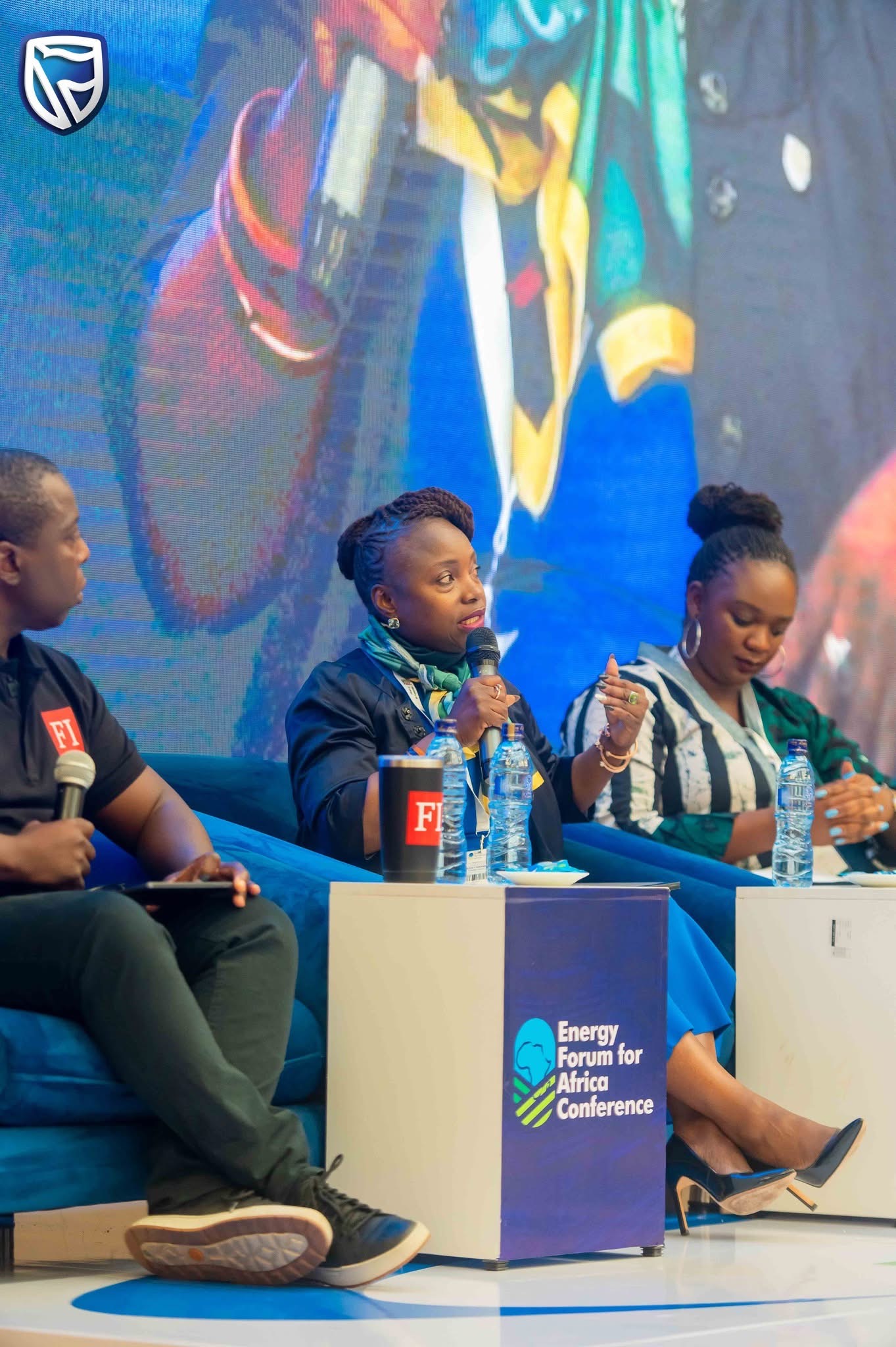
These aren’t abstract policy tweaks.
They are the scaffolding that has allowed banks to channel millions into solar projects and green bonds that were unimaginable a decade ago.
ZESCO, too, is proving that the transition is more than a boardroom conversation.
The utility has reportedly added 125 megawatts (MW) of solar power to the national grid over the past three months, a milestone in what Managing Director Justin Loongo described as a “solar explosion” programme.
With more than 1,000MW in the pipeline — 600MW of which are advancing urgently — Loongo said the vision is to deliver a diversified, resilient energy mix by 2026.
“In the past three months, 125MW have been injected into the grid, and over 600MW are advancing through development with urgency,” Loongo told delegates.
He emphasized that ZESCO is no longer just a utility but a “market enabler,” opening its grid to independent producers, rolling out net metering, and pushing mini-grids for rural areas. Bankability, he stressed, “is now the standard” for new projects.
Perhaps the most important shift lies in how Zambia is approaching partnerships. The revival of the Public-Private Partnership (PPP) model — after years of dormancy — signals recognition that the state cannot do it alone.
Stanbic Vice President Nkandu Machungwa captured it succinctly: concessions must reflect the unique risks of each project. Rigid, one-size-fits-all agreements killed deals in the past. Today, flexibility is turning projects into bankable opportunities.
This is not just theory. In the past year alone, Stanbic has helped mobilize over US$220 million for Zambia’s energy sector, from financing a 100-megawatt solar PV plant under ZESCO to supporting Africa GreenCo’s power imports.
That kind of capital flow is not charity. It is a bet — on Zambia’s policies, on its reforms, and on its ability to sustain investor confidence.
Still, challenges remain. As President Hakainde Hichilema reminded delegates, recurring droughts, outdated transmission infrastructure, and fragmented regional grids continue to undercut progress.
His call to “dismantle artificial boundaries” and accelerate interconnector projects is not rhetoric.
The Zambia–Tanzania interconnector, for instance, could be a game-changer, linking Southern and Eastern African markets. But it requires both political will and financial innovation.
What is clear is that the energy debate is no longer about choosing between imports or renewables, private capital or state action, domestic capacity or regional trade.
It is about weaving all these strands together into a coherent, bankable, and resilient energy future.
For Zambia, the stakes could not be higher. Energy sufficiency is not merely about keeping the lights on; it is about powering the mines that earn foreign exchange, irrigating the fields that secure food, and driving the industries that employ young people.
It is about ensuring the country does not miss yet another wave of continental opportunity.
The takeaway from this year’s Energy Forum for Africa is simple: Zambia cannot afford dogma in its energy strategy. Imports must complement investment.
Policy must balance investor needs with public interest. And above all, partnerships — genuine, flexible, and innovative — must replace rhetoric.
If these lessons are heeded, Zambia has a real shot not just at energy sufficiency, but at becoming a regional electricity hub.
WARNING! All rights reserved. This material, and other digital content on this website, may not be reproduced, published, broadcast, rewritten or redistributed in whole or in part without prior express permission from ZAMBIA MONITOR.








Comments