
 By
By 
The Socialist Party has criticized the current national budget, describing it as neo-liberal and skewed toward private sector participation at the expense of ordinary Zambians.
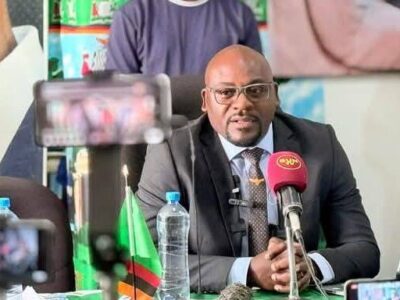
Presenting the party’s 2026 alternative budget, National Youth Secretary, Stanly Muba’sa, argued that allocations to key sectors such as agriculture, health, and education were inadequate.
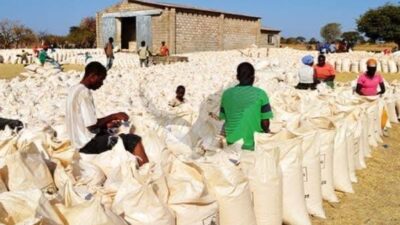
Muba’sa pointed to the K9.2 billion allocation to the Farmer Input Support Program (FISP) as particularly insufficient.
“The Farmer Input Support Program is key, there is need to quickly grow the number of beneficiaries to 2 million,” he told Zambia Monitor in an interview.
He stressed that the amount earmarked for FISP “gives no hope” to over 1.2 million peasant farmers in rural areas who, he said, feed the entire nation.
Muba’sa urged the government to invest in local fertilizer production to reduce dependence on imports and create employment opportunities.
He further emphasized deliberate support for local investors through policies that place Zambians first while still welcoming foreign partners for financing and knowledge transfer.
“Provide massive training for agriculture experts and research institutions to improve farming methods and increase production for food security,” he said, adding that more agricultural specialists should be deployed in rural areas to train farmers.
He also highlighted the importance of soil research, saying:
“There is need to identify soil type suitable for specific crops, teach farmers how to manage soil, crops and animals, all this in an attempt to improve yields, reduce losses, maximize profits and ensure food security for all Zambians.”
The Socialist Party alternative budget also calls for agro-processing industries to add value to farm products, create jobs, and boost the sector’s contribution to GDP.
Muba’sa further challenged the government to halt the export of raw minerals and instead promote local mineral processing.
“This is necessary in order to stop exporting raw minerals. Doing so is exporting Zambian jobs and weakening the Kwacha, thereby increasing the cost of living and doing business, as the case is now,” he said.
Read More: Zambia to spend K253.1 billion in 2026. Who got what? See budget breakdown
He insisted that foreign investors should not operate mines exclusively, but rather in partnership with Zambians, with majority ownership retained by citizens or the government.
“Zambians through their government and through their local investors have to increase ownership. Every mine functioning or not must be associated with Zambians. No foreigner will entirely own key assets without getting into contracts with Zambians,” Muba’sa said.
He proposed the development of manufacturing industries to process Zambia’s minerals into finished products locally.
“Fridges, electric cables, TV, phones and many others will have to be manufactured locally with our minerals. This will result in massive job creation through setting up of manufacturing industries, which will employ many citizens across the nation with different professional backgrounds,” he said.
Muba’sa urged the government to develop the entire value chain in the mining sector—from extraction to processing and manufacturing—and to implement fair taxation policies that ensure the industry contributes significantly to government revenue.
WARNING! All rights reserved. This material, and other digital content on this website, may not be reproduced, published, broadcast, rewritten or redistributed in whole or in part without prior express permission from ZAMBIA MONITOR.







Comments