
 By
By 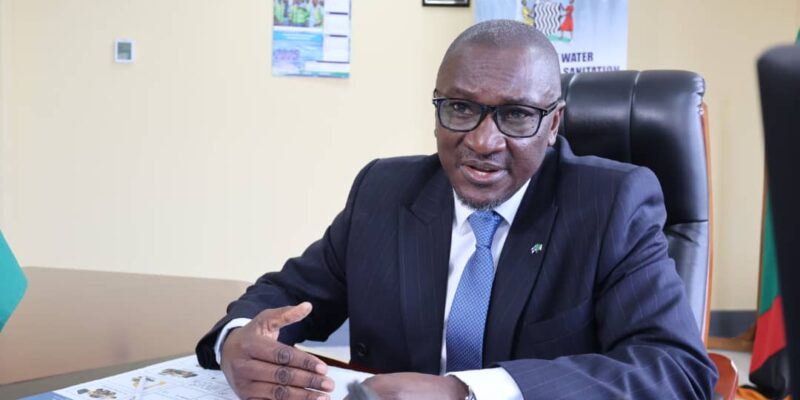
Minister of Water Development and Sanitation, Collins Nzovu, has announced the successful completion of the Kwacha Constituency Water Supply and Sanitation Project, funded by the government through the Disaster Management and Mitigation Unit (DMMU).
The project, implemented at a total cost of K53.4 million, ran from February 2023 to September 2025 and has been completed within the stipulated timeframe, according to Nzovu.
In a statement issued in Lusaka on Tuesday, Nzovu highlighted the project’s three key components — improvement of water supply, upgrading of sewer infrastructure, and construction of sanitation facilities.
He said the project included replacing leaking and obsolete pipes in Old Kwacha and Kwacha East, as well as extending water supply networks to Bulangililo Extension and Kwacha Resettlement (KR), thereby reaching thousands of households.
“Rehabilitation and upgrading of 3.7 km of sewer lines from DN150 to DN200 and key sections covered include Old Kwacha to Momo Bakery/Changanamai and Bulangililo Mosque to the Bulangililo trunk line,” Nzovu said.
He added that the project also provided waterborne toilets for 1,679 households and installed a 29 km sewer network to support the new sanitation facilities.
Nzovu stated that households in Old Kwacha now had access to sanitation facilities and a functional sewer system for the first time, noting that residents had previously relied on pit latrines — an unsustainable situation due to congestion and lack of space, which posed a serious risk of waterborne diseases.
Read More: AU applauds Hichilema’s leadership on water development, digital trade promotion
“Through this intervention, Government, working with Nkana Water Supply and Sanitation Company, has averted a potential public health crisis and brought dignity, safety and better living standards to the people of Kwacha,” Nzovu said.
He revealed that the completion of the project meant over 1,600 households now had reliable access to clean water and proper sanitation.
Nzovu emphasized that the upgraded sewer lines and new waterborne toilets would reduce the risk of disease outbreaks, improve hygiene, and enhance the community’s resilience against future sanitation-related disasters.
He further noted that the project had employed over 1,200 people during its implementation, empowering local households with income and skills while contributing to poverty reduction.
WARNING! All rights reserved. This material, and other digital content on this website, may not be reproduced, published, broadcast, rewritten or redistributed in whole or in part without prior express permission from ZAMBIA MONITOR.









Comments