
 By
By 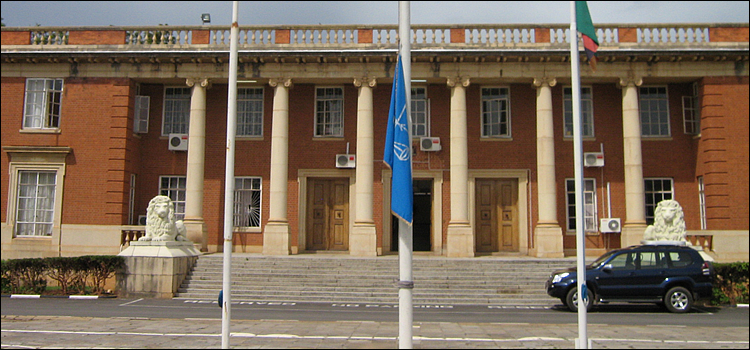
The Constitutional Court has affirmed the Attorney General’s constitutional independence and clarified his duty as “keeper of the public interest,” directing Mulilo Kabesha to represent Speaker of the National Assembly Nelly Mutti in the Law Association of Zambia’s (LAZ) petition challenging her handling of Constitution Amendment Bill No. 7 of 2025.
LAZ is seeking to halt all parliamentary proceedings related to the controversial Bill, accusing the Speaker of violating the Constitution by allowing debate to continue after the Court had, a day earlier, ruled that the Bill’s originating process was unconstitutional for not being “people-driven.”
In its ruling, the seven-member panel underscored that Article 177—now located in Part XIII of the Constitution—signals the framers’ deliberate intent to strengthen the Attorney General’s autonomy from the Executive.
This placement, the Court noted, illustrated the office’s overarching mandate to serve the entire Government in ways that safeguard constitutional fidelity, the rule of law, and the separation of powers.
The Court stressed that the Attorney General’s representation “explicitly applies to all arms of Government,” further observing that all public officers, including the Attorney General, had a duty under Article 122 to uphold the independence and dignity of the Judiciary.
Crucially, the Court rejected LAZ’s argument that the Attorney General could not represent the Speaker due to an alleged conflict of interest with the Executive.
It held instead that the Attorney General has “no constitutional mandate to act in the interest of the Executive in a manner detrimental to the rest of Government,” adding that he is professionally regulated by LAZ and subject to judicial review under Article 267(4).
“The Attorney General is essentially in-house counsel for the entire Government system,” the ruling stated, noting that the Constitution did not require each branch or institution to maintain separate legal standing.
To prevent fragmented or contradictory legal positions within Government, the Court reiterated that proceedings against any state organ must be brought through the Attorney General.
Relying on its earlier precedent in LAZ v. President of the Republic of Zambia, the Court dismissed LAZ’s motion seeking independent representation for Speaker Mutti.
It ordered that Kabesha be joined as Respondent in place of the Speaker, concluding that this approach best aligned with Zambia’s constitutional architecture.
WARNING! All rights reserved. This material, and other digital content on this website, may not be reproduced, published, broadcast, rewritten or redistributed in whole or in part without prior express permission from ZAMBIA MONITOR.










Comments