
 By
By 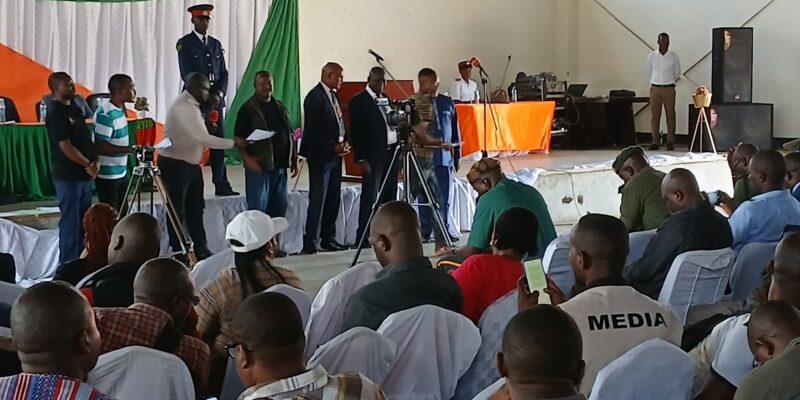
Government has launched the third phase of its nationwide training programme for artisanal and small-scale miners (ASM), marking a further step in efforts to formalise the sector, promote safety, and ensure communities benefit from Zambia’s mineral wealth.
Speaking during the launch in Mpika on Monday, Ministry of Mines and Minerals Development Permanent Secretary, Hapenga Kabeta, said the new phase built on the success of the first two phases, which trained more than 400 mining cooperatives and issued gold mining licences.
According to a statement issued in Lusaka, phase three is also targeting 400 cooperatives and has drawn participants from eight provinces: Central, Copperbelt, Eastern, Muchinga, North-Western, Western, Southern and Lusaka.
Kabeta said this broad participation reflected the nationwide importance of mining sector development.
He said the programme aimed to equip miners with knowledge in safe and sustainable mining practices, environmental protection, value addition, business management, and community benefit sharing.
“This is a monumental step forward, one that brings dignity, accountability, and opportunity to thousands of Zambians,” Kabeta said.
He urged trainees to become ambassadors of responsible mining and to share the lessons learned with colleagues in their communities.
Kabeta also underscored the role of the Artisanal and Small-Scale Mining (ASM) Fund, created to provide financial support to miners who often struggle to access affordable capital.
Financial challenges, he said, remained a major barrier to improving safety, mechanisation and value addition.
“Through this fund, government seeks to unlock the full potential of our citizens in the mining value chain and ensure that the benefits of mineral wealth are widely shared,” he said.
He added that government was streamlining licensing, providing technical support, and strengthening cooperatives as part of broader reforms to establish a well-regulated ASM sector that contributed meaningfully to national development.
Muchinga Province Permanent Secretary, Mathews Chilekwa, said government was committed to eliminating illegal mining and strengthening oversight. Illegal operations.
He warned that illegal mining drained public resources, damaged the environment, created unsafe conditions and undermined legitimate investors.
“Mpika must be known for lawful mining—not for illegal activities,” Chilekwa said.
He said government, working with security agencies and local leaders, was intensifying enforcement to safeguard mineral resources and protect human life, noting past accidents caused by unsafe practices.
Chilekwa also highlighted the need for transparency in mineral trading. For years, informal trading had allowed minerals to leave the country without records, taxes or community benefits. He said government was strengthening traceability systems and ensuring that cooperatives and traders operated in formal markets that supported national development.
He added that secure and transparent value chains were essential to ensure that communities in mineral-rich areas genuinely benefited. As mining expands in Muchinga Province, Chilekwa said government—together with traditional leaders, district administrators and civic structures—would continue to protect peace, order and the integrity of Zambia’s mineral resources.
WARNING! All rights reserved. This material, and other digital content on this website, may not be reproduced, published, broadcast, rewritten or redistributed in whole or in part without prior express permission from ZAMBIA MONITOR.







Comments