
 By
By 
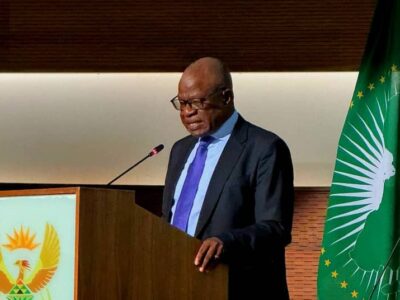
ZESCO Managing Director, Justin Loongo, says the commencement of the 100-megawatt Kafue Lower Solar Project marks a significant step in strengthening Zambia’s national grid and accelerating the country’s transition to a diversified energy mix.
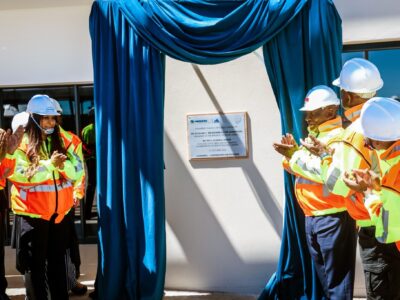
“Today, we break ground for another 100 megawatts of solar power—a project that strengthens our national grid, supports energy diversification, and moves Zambia one step closer to energy security for all,” Loongo said during the groundbreaking ceremony on Thursday in Kafue.
He noted in a statement that the project was being developed through a joint venture between Jigsaw Investments and ZESCO.
“This is a perfect example of how public-private partnerships can deliver real, large-scale renewable solutions..The investment—covering a 100-megawatt solar plant, a 33/330kV substation, and a 15-kilometre transmission line—is approximately US$90 million,” he said.
Construction is expected to take 12 months, after which the plant will supply “clean, stable electricity to power communities, create jobs, and attract investment.”
Loongo said the project site, situated 11 kilometres from Kafue Gorge Lower, was selected after evaluating three transmission route options.
“The preferred route from Mwiinga Village through Kapiri Hills is the shortest and most cost-effective. It avoids private land, causes no displacement, steers clear of protected areas, and remains safely distanced from the Kafue River,” he said.
Read more: Zambia launches $250 million ASCENT programme to expand access to clean energy
He emphasized that while solar was being deployed as a quick win in addressing Zambia’s energy shortages, ZESCO continues to prioritise other generation sources.
“Positioning solar electricity as a quick win does not mean we have abandoned hydropower or stopped pursuing other baseload sources such as coal.We recognize the need for balance and continue to develop hydropower, wind, geothermal, biomass and thermal projects across the country,” he said.
Loongo added that the results of ongoing projects will be “clearly visible” by 2026, noting that both government and ZESCO were also scaling up nationwide electricity access.
“Just yesterday, we collectively launched the largest electricity access expansion programme to date, which will bring electricity to at least 1.6 million additional Zambians over the next five years,” he said.
Loongo reaffirmed ZESCO’s commitment to building a resilient, modern energy sector.
“ZESCO is building Zambia’s energy future with commitment and purpose—not alone, but with public and private partners,” he said.
Meanwhile, Energy Minister, Makozo Chikote, said President Hakainde Hichilema had set a “clear and bright vision” to make Zambia energy-sufficient before the end of 2026.
Chikote said the New Dawn Administration had been making substantial investments in the energy sector through various initiatives and partnerships.
“President Hakainde Hichilema has a clear vision that will see Zambia become energy-sufficient by 2026. The New Dawn Administration has made it a mandate to ensure the country becomes energy secure, and we are achieving this through massive investments and collaborations,” he said.
He added that the current load shedding crisis was the result of the previous administration’s lack of investment.
“Zambia is experiencing load shedding because the former administration failed to invest in the sector. We are now correcting that,” he said.
WARNING! All rights reserved. This material, and other digital content on this website, may not be reproduced, published, broadcast, rewritten or redistributed in whole or in part without prior express permission from ZAMBIA MONITOR.







Comments