
 By
By 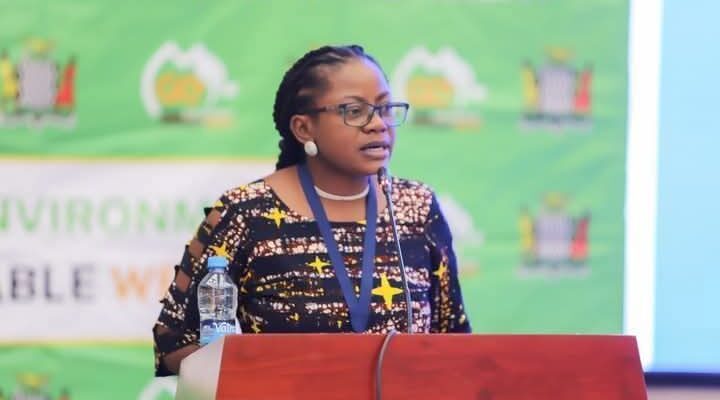
The Centre for Environment Justice (CEJ) has urged urgent, coordinated action to tackle Zambia’s escalating environmental challenges, warning that inaction could threaten public health, livelihoods, and the country’s ecological future.
CEJ Executive Director, Maggie Mwape, raised particular concern over the country’s deforestation rate, noting that between 250,000 and 300,000 hectares are lost annually due to agricultural expansion, logging, mining, and unsustainable land use.
Mwape spoke during a dialogue on environmental rights organised by CEJ with support from Norwegian Church Aid and Danish Church Aid through their Joint Country Programme in Lusaka on Sunday.
She stressed that environmental issues in Zambia were no longer distant threats but everyday realities affecting families.
“The gathering was not just a meeting, but a defining moment to reaffirm collective responsibility and ignite action for a cleaner, safer, and more just Zambia,” Mwape said.
Highlighting Zambia’s water crisis, Mwape noted that nearly two-thirds of the population lack access to clean and safe drinking water, disproportionately affecting rural communities, women, and youth.
She warned that this situation eroded biodiversity, undermined food security, and accelerated climate change, leaving future generations with an uncertain legacy.
Mwape recalled the February 2025 tailings dam collapse that released 50 million litres of toxic mining waste into the Kafue River on the Copperbelt.
“The incident poisoned water sources, devastated aquatic life, and forced a shutdown of water supplies in Kafue town, affecting thousands of residents and downstream communities,” she stated.
Mwape also highlighted other environmental crises, including prolonged droughts, flash floods in Eastern Zambia, outbreaks of waterborne diseases, rising air pollution, and unmanaged solid waste.
She noted that these challenges had compounded public health risks and strained fragile social systems.
Read More: Zambia pushes for global action on climate change at COP-30 summit
“These crises are not abstract. They translate into empty plates at dinner tables, children missing school due to illness, and families losing income as agriculture and fisheries collapse,” Mwape said.
Emphasising that environmental protection is linked to human dignity, health, and economic stability, Mwape called for the full implementation of the Environmental Management Act of 2011, which guaranteed every Zambian’s right to a clean, safe, and healthy environment.
She urged stakeholders to translate lived experiences into policy solutions that expand access to clean water and sanitation, improve waste management, and protect forests and rivers.
Mwape also called for greater transparency, stronger enforcement, and inclusive decision-making that empowered communities to hold duty-bearers accountable.
“This engagement is your platform, my platform, everybody’s platform. Together, we can shape policies that deliver real change,” Mwape said, describing environmental protection as both a moral and spiritual duty rooted in the belief that safeguarding natural resources was a divine mandate.
She expressed hope that the dialogue would inspire courage, creativity, and collective action toward a healthier, more resilient, and equitable Zambia.
Itezhi Tezhi Member of Parliament and Parliamentary Caucus on Environment and Climate Change Co-Chair, Mutinta Twaambo, said the caucus continued to collaborate with stakeholders to advance environmental and climate justice.
WARNING! All rights reserved. This material, and other digital content on this website, may not be reproduced, published, broadcast, rewritten or redistributed in whole or in part without prior express permission from ZAMBIA MONITOR.





Comments