
 By
By 
The latest Auditor General’s report on the Constituency Development Fund (CDF) has revealed that more than 71,000 school desks valued at about K130 million were not delivered, despite full payment having been made to suppliers.
According to the report for the financial year ended December 31, 2024, authorities approved and released K514,221,546 for the procurement of 356,460 desks for schools across 156 constituencies.
The report identifies serious weaknesses in the management and utilisation of the Fund, undermining its objective of delivering social and economic benefits to communities.
It points to the general non-enforcement of CDF guidelines, resulting in systemic challenges such as weak budget utilisation and poor fund management.
These shortcomings led to delayed project implementation and the accumulation of unspent funds at the end of the financial year, denying communities timely access to essential services.
The audit further highlights the misapplication of youth and women empowerment grants, with some beneficiaries diverting funds to unauthorised activities, a practice that diminishes the intended impact of empowerment programmes and erodes public confidence in CDF interventions.
In addition, the report identified ineffective management of soft loans, characterised by weak loan recovery processes and poor enforcement of penalty provisions.
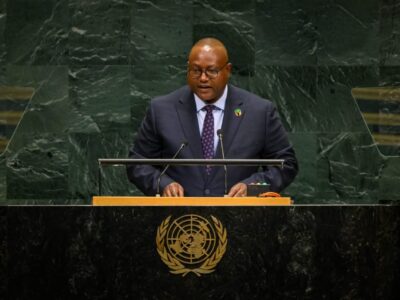
Acting Auditor General, Dr Ron Mwambwa, said these weaknesses had resulted in significant outstanding balances, limiting the Fund’s capacity to support additional beneficiaries.
“The report cited weak bursary management, including cases where beneficiaries failed to report to learning institutions after payments were made, as well as the funding of non-skills courses contrary to the CDF guidelines,” Mwambwa said.
He said the situation undermined the objective of enhancing skills development and youth participation in the labour market.
Mwambwa also expressed concern over poor procurement and contract management, evidenced by inadequate due diligence, abandoned projects after advance payments and delayed deliveries.
He further cited the supply of defective goods, noting that these shortcomings compromise value for money and slow the delivery of critical community infrastructure.
“The highlighted weaknesses pose a significant risk to the achievement of the CDF’s intended outcomes and underscore the need for strengthened oversight and accountability mechanisms, from the parent ministry down to individual local authorities,” he said.
To address the identified shortcomings, Mwambwa recommended a comprehensive strengthening of controls across the entire CDF framework.
Key recommendations include enforcing stringent measures against contractors who abandon projects after receiving advance payments, improving monitoring of budget utilisation, strengthening project tracking systems and enhancing contractor accountability to ensure timely and effective project delivery.
Other proposals include stronger oversight of empowerment grants and improvements in soft loan recovery processes, including stricter enforcement of repayment and penalty provisions.
Mwambwa also emphasised the need to improve bursary verification processes and introduce robust post-disbursement monitoring to ensure compliance with CDF guidelines.
He said addressing the issues was critical to safeguarding public resources and ensuring that the Constituency Development Fund delivered tangible and sustainable benefits to communities across Zambia.
WARNING! All rights reserved. This material, and other digital content on this website, may not be reproduced, published, broadcast, rewritten or redistributed in whole or in part without prior express permission from ZAMBIA MONITOR.







Comments