
 By
By 
The Zambezi River Authority (ZRA) Council of Ministers (COM) has approved an equity contribution of US$220 million each by Zambia and Zimbabwe towards the construction of the Batoka Gorge Hydro-Electric Scheme (BGHES), a US$4.2 billion regional power project.
The Council also reaffirmed the adoption of a Public-Private Partnership (PPP) model, including the exploration of equity partnerships to enhance the project’s bankability.
According to a statement issued in Lusaka on Tuesday by Ministry of Energy Principal Public Relations Officer, Bob Sianjalika, the allocation will cater for dam construction under the 2026 budget cycle, with implementation timelines remaining flexible.
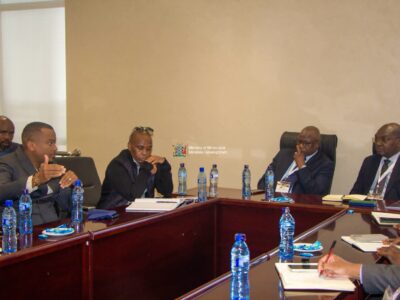
Outgoing ZRA Council of Ministers Chairperson, Makozo Chikote, announced the decision during the 43rd Ordinary Meeting held on December 29, 2025, at Elephant Hills Resort in Zimbabwe.
The meeting reviewed bilateral issues including the hydrological situation, water allocation at Lake Kariba, progress on strategic energy projects, and the implementation of community development programmes.
Chikote said the updating of engineering feasibility and environmental studies for the Batoka project was underway, with advisory services strengthened through the engagement of financial, technical, and legal consultants.
While noting progress, the Council directed that project implementation timelines be revised, in line with resolutions made by the two Heads of State during the Bi-National Commission meeting held in Zimbabwe in November 2025, aimed at accelerating project delivery.
The Council also noted progress on the Devil’s Gorge Hydro-Electric Scheme prefeasibility studies being undertaken by Tractebel Engineering, which has submitted inception, environmental and social screening, and options assessment reports.
Read More: AfDB commits $1 million for floating solar project on Lake Kariba
“The options assessment identified areas requiring further geological investigations and bathymetric surveys, while the consultant has been instructed to finalise the prefeasibility study using available data, with the final report expected in the first quarter of 2026,” Chikote said.
In addition, the Council acknowledged progress on the Kariba Floating Solar PV Project, including the African Development Bank’s completion of consultant evaluations and the appointment of a joint venture consortium to undertake feasibility studies.
It further noted Zimbabwe’s approval of a 600MW floating solar plant on Lake Kariba, to be implemented in three phases starting with 150MW in the second quarter of 2026.
“This aligns with the Council’s earlier resolution allowing both Zambia and Zimbabwe to independently pursue solar projects on the lake,” Chikote said.
The Council also called for the expedited implementation of the Zambia–Tanzania interconnector project, which involves 912 kilometres of 330kV transmission lines and associated substations.
Zambia’s Energy Minister confirmed that financing has been secured from the World Bank, European Union and the United Kingdom, with commercial operations expected in the fourth quarter of 2028.
WARNING! All rights reserved. This material, and other digital content on this website, may not be reproduced, published, broadcast, rewritten or redistributed in whole or in part without prior express permission from ZAMBIA MONITOR.










Comments