
 By
By 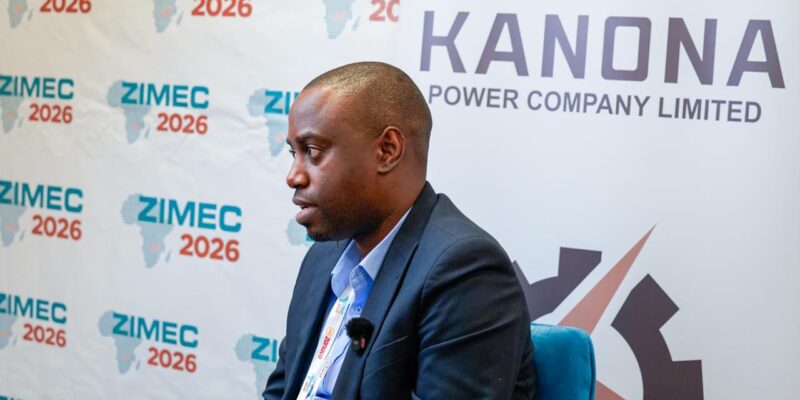
As Zambia sets its sights on producing three million tonnes of copper by 2031, Kanona Power Company is steadily positioning itself as one of the most influential players linking electricity availability to mining productivity. Beyond trading power, the company is emerging as a bridge between policy ambitions and real-sector implementation—turning what was once a national aspiration for a competitive energy market into a practical reality.
Driving Growth Through Reliable Power
Kanona has fast built a reputation as a trusted power trading and aggregation company that connects generation to demand, producers to consumers, and policy to practice. Its operations have helped anchor the growth of several major mining houses—some among Zambia’s largest copper producers—by ensuring they have access to reliable and sustained power for their operations.
This contribution has been especially significant in a country historically bruised by power deficits. Kanona’s involvement has meant that even during challenging periods, including the nationwide outages triggered by the devastating 2024 drought, critical industrial users continued operating with less disruption.
Interpreting the ZIMEC Mandate: Partnerships for Sustainable Growth
At the 13th Zambia International Mining and Energy Conference (ZIMEC) held in Kitwe, Kanona openly aligned itself with the event’s theme: “Promoting responsible investment and partnerships to sustainably grow Zambia’s Mining and Energy sectors.”
Kanona Account Manager, Bodrick Mwansa, underscored the urgency behind this year’s message. “This year’s theme is timely in that the mining and energy sectors need to collaborate more effectively for both to sustainably grow and contribute more towards Zambia’s economic growth and development.”
His interpretation reflects a broader belief within the company that partnerships—not isolated efforts—will determine whether Zambia achieves its mineral production goals. Mwansa emphasised that scaling copper output to one million tonnes by the end of this year, and ultimately three million tonnes by 2031, hinges on power availability.
He reiterated this during a media interview:
“We believe platforms like this help create the partnerships that will drive growth, so we are excited at the prospect of seeing more partnerships come out of this year’s conference that will lead to more mining and energy projects being implemented in due course.”
Regional Integration as an Economic Strategy
Mwansa made it clear that Kanona’s value lies not only in brokering electricity, but also in shaping regional energy cooperation. “Regional power integration is not only an energy policy issue, but an economic competitiveness strategy,” he said.
This perspective reflects Kanona’s lived experience. Through the Southern Africa Power Pool (SAPP), the company has repeatedly leveraged regional partnerships to offset Zambia’s power deficits. During the recent shortages, Kanona structured cross-border power imports that stabilised supply for key industrial users—a lifeline for national economic activity.
Read more: kanona-power-calls-for-stronger-regional-interconnectors-to-support-mining-sector
Such interventions, the company notes, are only possible when regulatory systems permit participation in regional power markets and when utilities collaborate constructively.
The Promise of Cross-Border Interconnectors
A key part of this regional integration is the ongoing Zambia–Tanzania Interconnector, which Mwansa said would accelerate power offtake for mining companies seeking to ramp up production.
Once completed, the interconnector will give Zambia access to surplus power from Tanzania, and the wider East African Community—enhancing long-term energy security.
Kanona believes that as more electricity is injected into the national grid through expanded transmission infrastructure, Zambia’s target of three million tonnes of copper by 2031 will be within reach.
A Post-Drought Shift: Renewables Take Centre Stage
The 2024 drought triggered prolonged power interruptions, accelerating Zambia’s transition toward renewable energy, particularly solar. Kanona sees this not merely as crisis management, but as part of a modern and resilient energy strategy.

“For us, it is not only a response to the drought that affected hydro generation, but a long-term strategy for improving supply security and cost stability for our customers,” Mwansa said.
Kanona’s model blends renewable sources with regional imports, creating a stable power mix tailored to large mining and industrial users—a significant advantage at a time when mining companies are under pressure to meet Environmental, Social, and Governance (ESG) benchmarks.
“Many mining companies are also under pressure to meet ESG targets, so they want cleaner energy, but at the same time they cannot afford interruptions in production,” Mwansa noted, adding: “Our model allows them to integrate renewable energy into their supply mix without compromising reliability.”
Balancing Zambia’s Land-Linked Realities Through Cooperation
Because Zambia is a land-linked country, Kanona maintains that regional cooperation is not optional. It is essential. Strong cross-border partnerships, infrastructure investment, and harmonised regulatory environments remain the pillars of sustained growth in both the mining and energy sectors.
Kanona insists that responsible, commercially viable investments aligned with ESG principles will be the foundation of Zambia’s future competitiveness.
“For us at Kanona, these themes are very relevant, because we rely on regional cooperation, strong infrastructure, and responsible investment to structure reliable power solutions that support the growth of the mining sector and the wider economy,” the company stated.
A Call from SAPP: Expand Transmission, Unlock Growth
At the 66th SAPP Management Committee Meeting held earlier in March in Lusaka, Kanona Board Chairperson Padmore Muleya emphasised the urgency of expanding regional transmission infrastructure.
He noted that Southern Africa possessed vast, but unevenly distributed energy resources, including solar, hydro, geothermal, and emerging gas. “Some systems have surplus potential, while others face persistent deficits. The power pool exists precisely to bridge this imbalance,” Muleya said.
He argued that stronger interconnections were necessary to meet rising electricity demand driven by mining expansion in Zambia, Democratic Republic of Congo, Zimbabwe, and beyond.
Kanona’s view is that electricity must move across borders as efficiently as commodities like copper and cobalt already do—especially with soaring global demand for critical minerals such as copper, cobalt, nickel, and manganese.
Private–Public Networks: The Key to Powering Zambia’s Next Phase
Kanona’s track record demonstrates how coordinated private and public sector networks can ease power rationing and enable industries—especially mining—to maintain growth even during energy slumps.
Its role, built on regional cooperation, responsive business models, and infrastructure investment, is shaping Zambia’s pathway toward industrial expansion and energy stability.
As Zambia looks ahead, Kanona’s message is unmistakable: The future of mining, energy security, and industrial growth depends on deeper regional integration, smarter investments, and partnerships that turn policy into power.
WARNING! All rights reserved. This material, and other digital content on this website, may not be reproduced, published, broadcast, rewritten or redistributed in whole or in part without prior express permission from ZAMBIA MONITOR.









Comments