
 By
By 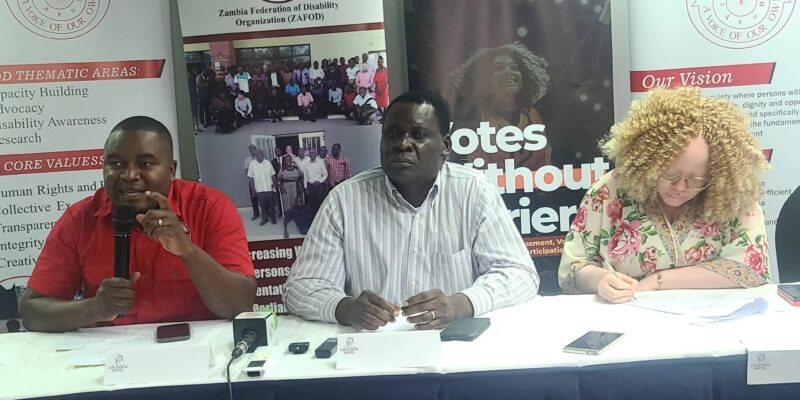
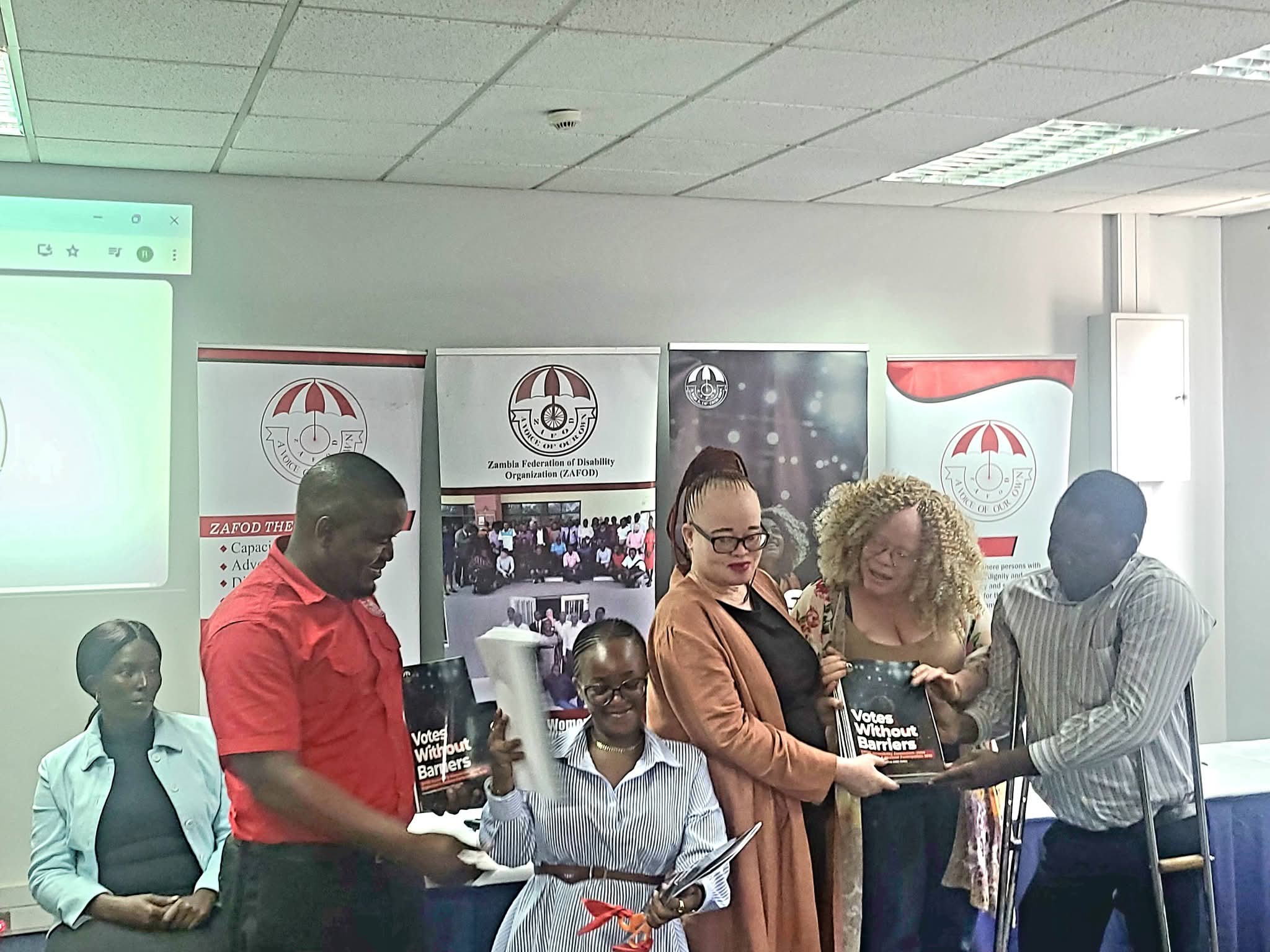
The 2025 Zambia Federation of Disability Organisations (ZAFOD) Accessibility Assessment, Voter Registration and Electoral Participation Report has revealed widespread, persistent barriers that continue to prevent persons with disabilities from fully and independently taking part in Zambia’s electoral processes.
The report, released in Lusaka on Wednesday, warns that unless urgent reforms were undertaken, Zambia risks entering the 2026 General Elections with an electoral system that remained structurally inaccessible, operationally inconsistent, and non-compliant with both national law and international disability rights obligations.
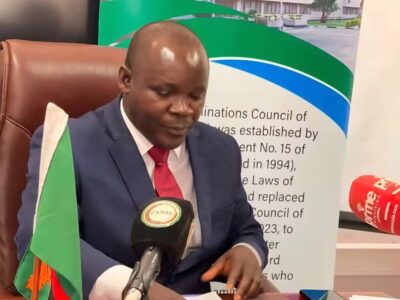
Presenting the findings during a media briefing at Mikango Golfview Hotel, ZAFOD Programmes Officer, Steven Phiri, said the country’s strong legal framework — including the Persons with Disabilities Act, the Electoral Process Act and constitutional guarantees of equality — had not translated into real accessibility on the ground.
“This gap between commitments and practice is particularly concerning given the 2025 Constitutional Amendment, which introduced proportional representation seats specifically reserved for women, youth, and persons with disabilities,” Phiri said.
He noted that while the reform had the potential to advance political inclusion, its operationalisation remained unclear, and systemic accessibility challenges across the electoral cycle continue to undermine meaningful participation.
ZAFOD’s audit of 254 voter registration centres across 21 districts found that the majority of locations were physically inaccessible. Only 34.6 percent — 88 out of 254 centres — had ramps, and fewer than 3 percent had handrails that met minimum accessibility standards.
“Almost half of all centres required navigating stairs, making independent access impossible for many voters with disabilities,” Phiri revealed.
Communication barriers were also widespread. Accessible voter instructions—such as Braille, large print and sign language—were available in only 9.4 percent of the centres monitored.
Phiri said these barriers, combined with poorly trained staff and the absence of accessible materials, amounted to a systemic failure to uphold constitutional guarantees and Zambia’s obligations under the Convention on the Rights of Persons with Disabilities (CRPD). They also conflict with the landmark 2011 Sela Brotherton judgment, which affirmed the Electoral Commission of Zambia’s (ECZ) legal duty to ensure accessible voting environments.
While acknowledging recent engagements between the ECZ and Organisations of Persons with Disabilities — including an accessibility review workshop held in December 2025 — Phiri said the actions taken so far remained fragmented and insufficient.
He added that the ECZ had not responded to repeated ZAFOD requests for meetings or shared critical disability-related documentation for review.
Read More: Group decries low access to assistive technologies for persons with disabilities (Video)
“This lack of transparency undermines collaborative reform, particularly the principle that disability inclusion efforts should include persons with disabilities,” he said.
Phiri also raised concern that the ECZ did not publish an Accessibility and Inclusion Plan nor disclose a dedicated budget for accessibility for the 2025 voter registration exercise — gaps that weaken accountability and preparedness for the 2026 elections.
ZAFOD stressed that accessibility was not optional but a legal requirement and a prerequisite for credible elections.
“Zambia’s commitments under the CRPD, the amended Constitution, the Persons with Disabilities Act, and regional frameworks such as the SADC Principles require proactive removal of barriers, provision of reasonable accommodations, and full participation of persons with disabilities in political life,” Phiri said.
The report concludes that electoral inclusion in Zambia remains a patchwork of goodwill rather than a consistent, enforceable national standard.
“As Zambia prepares for the 2026 General Elections, one truth must guide our national commitment: there can be no credible election without full accessibility for persons with disabilities. Inclusive democracy is not aspirational – it is a constitutional obligation and a human rights requirement,” Phiri said.
It called on the government, ECZ, parliament, political parties, civil society and development partners to urgently close accessibility gaps and protect the rights and dignity of more than 1.5 million Zambians with disabilities.
Among its recommendations, ZAFOD is urging the ECZ to: Publish and implement a national Accessibility and Inclusion Strategy with a clear budget and timelines, upgrade or relocate inaccessible polling stations and registration centres to meet minimum standards, and provide accessible voter materials nationwide, including Braille, tactile guides, large print and sign language interpretation.
Other recommendations include: Introduce mandatory disability-inclusion training for election staff at all levels, comply with the Sela Brotherton judgment and integrate disability-disaggregated data into electoral planning and improve transparency by sharing key planning documents and engaging consistently with civil society.
WARNING! All rights reserved. This material, and other digital content on this website, may not be reproduced, published, broadcast, rewritten or redistributed in whole or in part without prior express permission from ZAMBIA MONITOR.






Comments