
 By
By 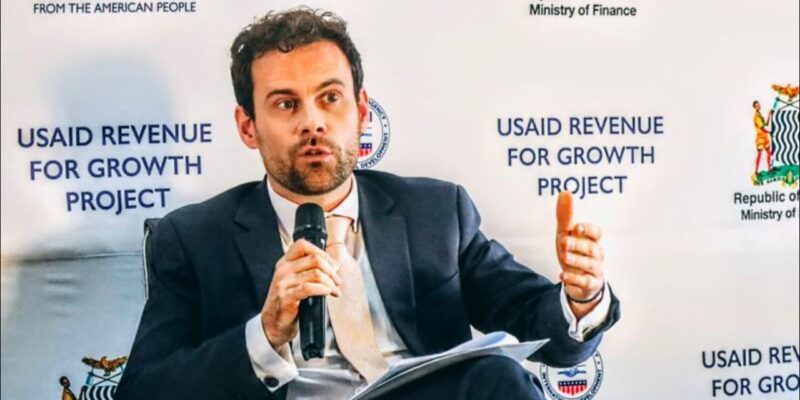
The International Monetary Fund (IMF) says Zambia has made notable progress in restoring macroeconomic stability and strengthening public institutions but cautions that the country remains vulnerable to debt distress and external shocks, underscoring the need for sustained reforms and a stronger focus on inclusive growth.
Speaking at a town hall meeting on Zambia’s 2021–2025 economic performance and the 2026 budget and economic outlook on Thursday, IMF Resident Representative, Eric Lautier, said a series of institutional and structural reforms implemented by the Government had significantly improved debt management, monetary stability and social protection systems.
“The debt is now better managed and better controlled,” Lautier said, citing the enactment of the Public Debt Management Act, the establishment of a dedicated Debt Management Office, and strengthened systems for debt monitoring and reporting.
He added that the regular publication of quarterly debt statistics has enhanced transparency and accountability in public finance management.
Lautier noted that monetary policy had remained firmly focused on anchoring inflation, while exchange rate stability has been maintained.
He said Zambia’s international reserves had risen to about US$5.8 billion by mid-January, providing a stronger buffer against external shocks.
He also highlighted progress on Zambia’s structural reform agenda, particularly in the energy sector.
Fuel subsidies have been removed, and energy pricing has been liberalised through a transparent monthly pricing mechanism.
In addition, opening the TAZAMA pipeline to competition has reduced transport premiums, contributing to lower diesel prices.
In the agricultural sector, subsidies have been reformed through a transition to a voucher-based system, while public financial management has been strengthened through improved cash management and the rollout of electronic platforms.
Lautier said governance reforms had also advanced, including improvements in public audit processes, procurement transparency and progress towards access-to-information legislation.
He noted that the reform programme had enabled a reallocation of government spending towards social sectors, with social cash transfers significantly scaled up last year to protect vulnerable households.
“These outcomes reflect the institutional effort and the hard work of the Government of Zambia. They matter for macroeconomic stability and for social outcomes,” Lautier said.
However, he cautioned that reforms must be sustained to ensure economic growth becomes more inclusive and broad-based.
He said the next phase should prioritise improving the business environment, strengthening governance and accountability, and translating reforms into productive investment, job creation and higher productivity.
While Zambia’s macroeconomic position had improved, Lautier warned that public debt vulnerabilities remained elevated on a forward-looking basis. He said fiscal space remained constrained and will depend largely on Government’s ability to mobilise additional domestic revenue.
He further cautioned that the economy remained highly exposed to climate-related shocks and volatile external financing conditions.
To address these challenges, Lautier said the Zambian authorities had requested successor financing arrangements, and the IMF stood ready to continue supporting the country.
“The IMF remains a trusted partner and is ready to engage with the Zambian authorities to explore future cooperation,” he said.
WARNING! All rights reserved. This material, and other digital content on this website, may not be reproduced, published, broadcast, rewritten or redistributed in whole or in part without prior express permission from ZAMBIA.






Comments