
 By
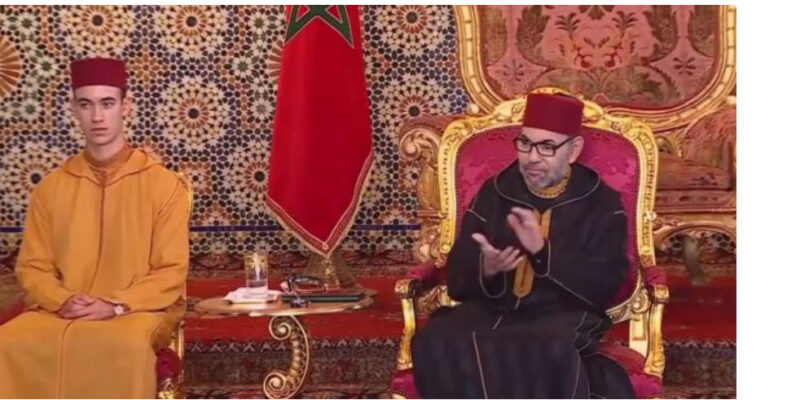
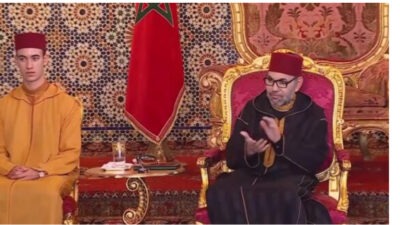
Moroccan King Mohammed VI chaired on Wednesday 25 November 2026 a ceremony at the Royal Palace in Rabat to sign two agreements concerning the financing and implementation of the roadmap for developing Morocco’s defense and security industry and mobilizing the national private and financial sectors.
This event came after His Majesty entrusted on Ali Seddiki with overseeing the preparation for the operational implementation of the roadmap to develop the national defense and security industry, while taking into account the prerogatives vested in the relevant institutional stakeholders, pending the creation of the Strategic Agency, and while continuing to carry out his duties as Director General of the Moroccan Investment and Export Development Agency
This ceremony comes a week after the working session chaired by the King on November 18, during which he issued directives to accelerate implementation of the roadmap for developing the national defense and security industry aiming to a shift towards practical implementation through the establishment of governance and financing mechanisms and the definition of the responsibilities of the institutions and stakeholders concerned.
Ali Seddiki, Director-General of the Moroccan Agency for Investment and Export Development, presented an overview of the project, stressing that the royal vision aims to build a national industrial and technological base for defense and security, characterized by sovereignty, effectiveness, innovation and competitiveness.
He stressed that this direction forms part of the continuation of the national industrialization drive and strengthens Morocco’s position in advanced industrial sectors, drawing on its economic potential and human capital.
This vision is based on expanding the role of private investment in the national economy, in line with the goal set by the King in February 2022 of raising the share of private investment to two-thirds of national investment by 2035. It also intersects with the directives set out in the Throne Speech last July, regarding the expansion of access to bank and non-bank financing, particularly for the benefit of small and medium-sized enterprises, innovation, manufacturing and exports.
The information presented during the ceremony indicates that the initial mobilization of public-sector partners has resulted in the provision of a financial envelope of 22 billion dirhams ($2.2 billion) for this strategic project, which aims to enable industrial operators based in Morocco to meet 40 per cent of the needs of the Royal Armed Forces and security agencies, allowing local production to develop and reducing reliance on imports in a number of defence and technological fields.
These figures reflect an ambition that goes beyond meeting domestic needs towards building an industry capable of competing in international markets, attracting investment, transferring technology and developing local production chains.
To implement these objectives, the strategic agency responsible for monitoring the implementation of the roadmap for the Moroccan Defense and Security Industry – known as DIFAA – was announced. It will oversee the fulfillment of commitments by public and private actors and implement the state’s strategy in this field through investment mobilization and the management of support mechanisms and the structure of the national industrial base.
The fields in which the agency will work include the development of arms production, particularly drones and autonomous systems, land and naval systems, defense electronics, cyber-security and artificial intelligence. It will also mobilize industrial compensation mechanisms, public procurement, contracts and innovation, linking the needs of military and security institutions with the development of production, research and manufacturing capabilities within the country.
The two agreements signed under the chairmanship of King Mohammed VI cover two complementary tracks. The first concerns financing the implementation of the roadmap. It was signed by the Ministers of the Interior, Economy and Finance, and Industry and Trade, and the Minister Delegate in charge of National Defense Administration, alongside officials from the Moroccan Agency for Investment and Export Development, the Hassan II Fund for Economic and Social Development, and Mohammed VI Polytechnic University, which specializes in technical disciplines.
The second agreement aims to mobilize the private and financial sectors to implement the roadmap. It was signed by government officials alongside the Governor of Bank Al-Maghrib, the President of the Moroccan Banks Association, the President of the Moroccan Capital Market Authority, the Chairman of the Board of Directors of the Casablanca Stock Exchange, and the President of the Moroccan Association of Investors in Capital.
The different nature of the two agreements reveals an approach that seeks to distinguish between securing the financial resources needed to implement the project and expanding the circle of entities capable of investing and contributing to its financing.
The first track establishes the financial and institutional foundation, while the second opens the field to banks, capital markets, investors and contractors, making them active partners in building this industry rather than limiting it to public financing.
The significance of the working session and the royal directives lies in linking the development of the defense industry to a broader path towards rebuilding Morocco’s industrial base. The project is not limited to producing military equipment to meet the needs of the armed forces and security agencies. Rather, it seeks to establish an integrated system encompassing research, development, manufacturing, training, financing and exports, elements whose impact can extend to other civilian and technological sectors.
The project places human capital at the heart of implementation by establishing a national system for research and development and mobilizing local expertise and Moroccan skills abroad. This aspect is particularly important because the ability to manufacture advanced defense systems is not achieved merely by providing financing or establishing industrial units. Rather, it requires specialized engineering and technical expertise, research partnerships and training programs capable of keeping pace with rapid developments in artificial intelligence and autonomous systems and cyber-security.
The target of directing more than 65 per cent of the associated revenues towards exports reflects an ambition to build an industry that goes beyond the domestic market. It also seeks to benefit from Morocco’s position and network of economic relations and international partnerships to open foreign markets. However, achieving these goals will remain linked to the new agency’s ability to coordinate the work of institutions, ensure continuity of financing, develop capabilities and strike a balance between the requirements of defense sovereignty and international quality and competitiveness standards.
WARNING! All rights reserved. This material, and other digital content on this website, may not be reproduced, published, broadcast, rewritten or redistributed in whole or in part without prior express permission from ZAMBIA MONITOR.







Comments