
 By
By 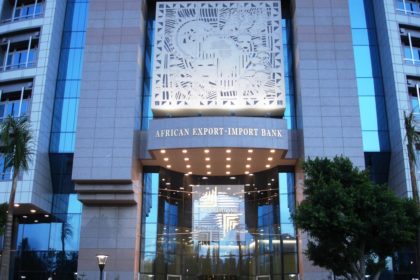
African Export-Import Bank (Afreximbank) has closed a three-year dual-tranche syndicated term loan facility totaling US$2 billion equivalent, the lender said on Monday.
The facility, concluded on March 9, raised US$1.73 billion in U.S. dollars (Facility A) and €228 million (Facility B).
According to a statement, the proceeds will be used to refinance existing debt and for general corporate purposes.
Read more: Afreximbank releases date for 33rd Annual Meetings in Egypt
The bank said the transaction was initially launched at US$1.5 billion equivalent but drew strong investor interest, with total commitments reaching US$2.36 billion, resulting in a final allocation of US$2 billion.
“This transaction is the largest ever syndicated facility borrowing by Afreximbank. It is a clear demonstration of the global investors’ confidence in the Bank’s credit story. This, clearly, affirms the Bank’s robust and undisputed access to international markets,” said Chandi Mwenebungu, Afreximbank Managing Director, Treasury and Markets, and Group Treasurer.
It said the deal involved 31 geographically diverse lenders across Europe, the Middle East, Asia, and Africa. Mashreqbank PSC, MUFG Bank Ltd., and Standard Chartered Bank acted as joint global coordinators, initial mandated lead arrangers, and bookrunners.
Standard Chartered Bank also served as the documentation and facility agent.
WARNING! All rights reserved. This material, and other digital content on this website, may not be reproduced, published, broadcast, rewritten or redistributed in whole or in part without prior express permission from ZAMBIA MONITOR.









Comments