
 By
By 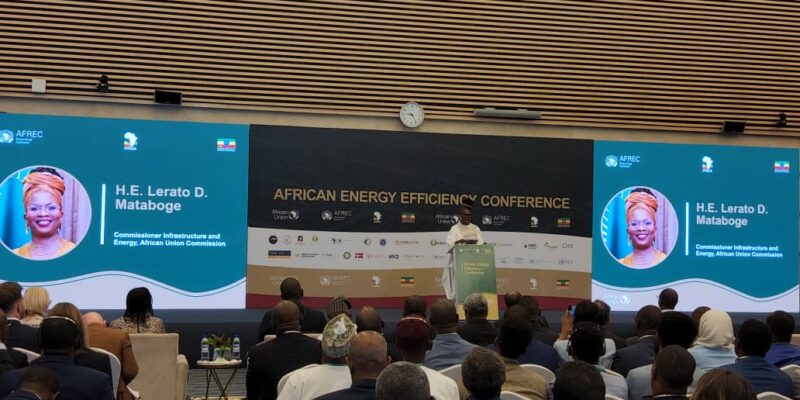
The inaugural two-day African Energy Efficiency Conference (AfEEC) has opened in Addis Ababa, Ethiopia, with a call to scale up regional power interconnections and promote local production of energy-efficient appliances across the continent.
The conference, running from 10–11 December under the theme “Advancing Africa’s Energy Efficiency Agenda through Strategic Partnerships”, has brought together African Union (AU) Member States, development partners, experts, and regional institutions to accelerate the continent’s energy efficiency efforts.
African Union Commissioner for Infrastructure and Energy, Lerato Dorothy-Mataboge, said Africa was losing between US$20 and US$30 billion annually due to poor energy efficiency, warning that the continent’s development would continue to be undermined unless it strengthened manufacturing capacity and modernised energy systems.
Mataboge stressed that localising the production of energy-efficient appliances would catalyse Africa’s industrialisation and energy transition.
“By becoming producers, not just consumers, Africa can drive its own growth. Local manufacturing creates jobs, stimulates economies, and reduces energy costs,” she said.
She added that the African Development Bank (AfDB) estimated that improving energy efficiency could save the continent up to 10 percent of its total energy consumption by 2030 — translating into billions of dollars in savings.
Mataboge cited outdated electricity grids, high technical losses, and inadequate investment as key contributors to Africa’s energy inefficiencies. She noted that Central, West, and East Africa lose between 15 and 20 percent of electricity during transmission, compared to about 5 percent in Europe and North America.
She reminded participants that the AU had set ambitious targets, including increasing energy productivity by 50 percent by 2050 and 70 percent by 2063. She further referenced the International Energy Agency (IEA), which projected that Africa could cut electricity demand by 30 percent by 2030 through energy and material efficiency measures.
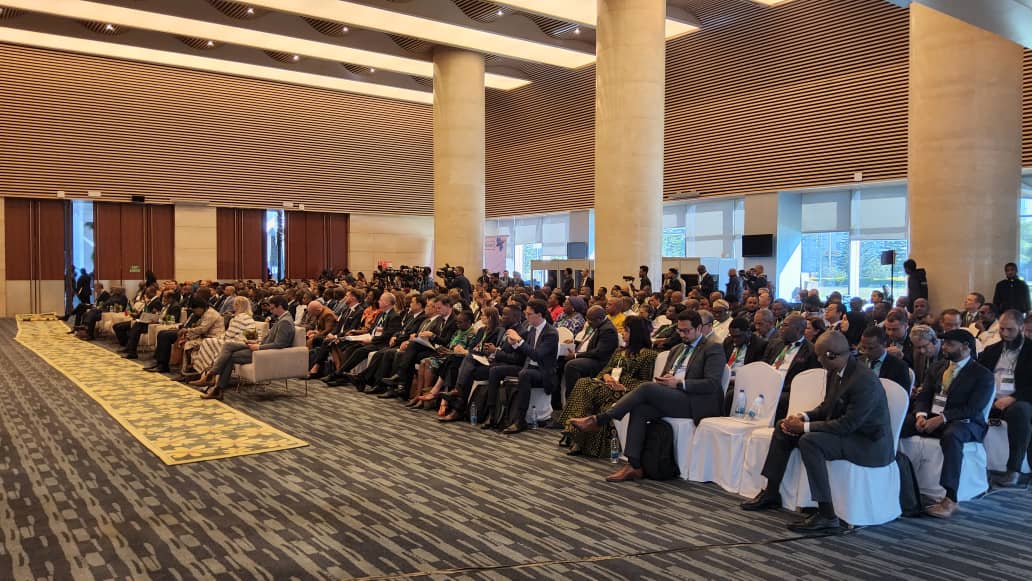
Adam Farah, Ethiopian Deputy Prime Minister, Vice President of the Prosperity Party, and Head of the Democracy Building Center Coordination Office, said expanding regional power interconnections and boosting local production of energy products would significantly enhance energy access and efficiency.
“The regional power interconnections will enhance energy security and reliability, increase electricity access — especially in rural areas — and promote economic growth and development,” Geleta said.
He urged African governments to strengthen Public-Private Partnerships (PPPs), develop regional energy markets, promote local manufacturing, and invest in capacity building for energy efficiency and renewable technologies.
According to the African Energy Commission (AFREC), the conference follows the adoption of the African Energy Efficiency Strategy and Action Plan (AfEES), endorsed by the African Union Executive Council earlier this year. AfEES outlines more than 100 actions across the power, industry, transport, buildings, and agriculture sectors.
AFREC Executive Director Rashid Ali Abdallah highlighted Africa’s dual challenge: expanding access to modern energy while responding to the climate emergency.
“Nearly 600 million people remain without electricity, and close to one billion people still lack access to clean cooking services,” he said, adding that population growth, rapid urbanisation, and industrialisation were driving up energy demand.
The AfEEC now serves as a premier continental platform to position energy efficiency as a driver of economic growth, sustainable development, and climate action.
The event was preceded by specialised training sessions held from 8–9 December 2025 and marked the operationalisation of the African Energy Efficiency Alliance (AEEA) — a collaborative platform uniting government, development partners, financiers, businesses, and civil society to accelerate knowledge sharing, advocacy, and investment in energy efficiency.
WARNING! All rights reserved. This material, and other digital content on this website, may not be reproduced, published, broadcast, rewritten or redistributed in whole or in part without prior express permission from ZAMBIA MONITOR.









Comments