
 By
By 
The Africa Energy Commission (AFREC) has unveiled the African Energy Transition Strategy and Action Plan, which requires more than US$12.35 million at continental level to support its implementation and real investments in projects.
Anchored in the African Union’s development blueprint, Agenda 2063, the Strategy outlines the link between expanding energy access and safeguarding environmental sustainability.
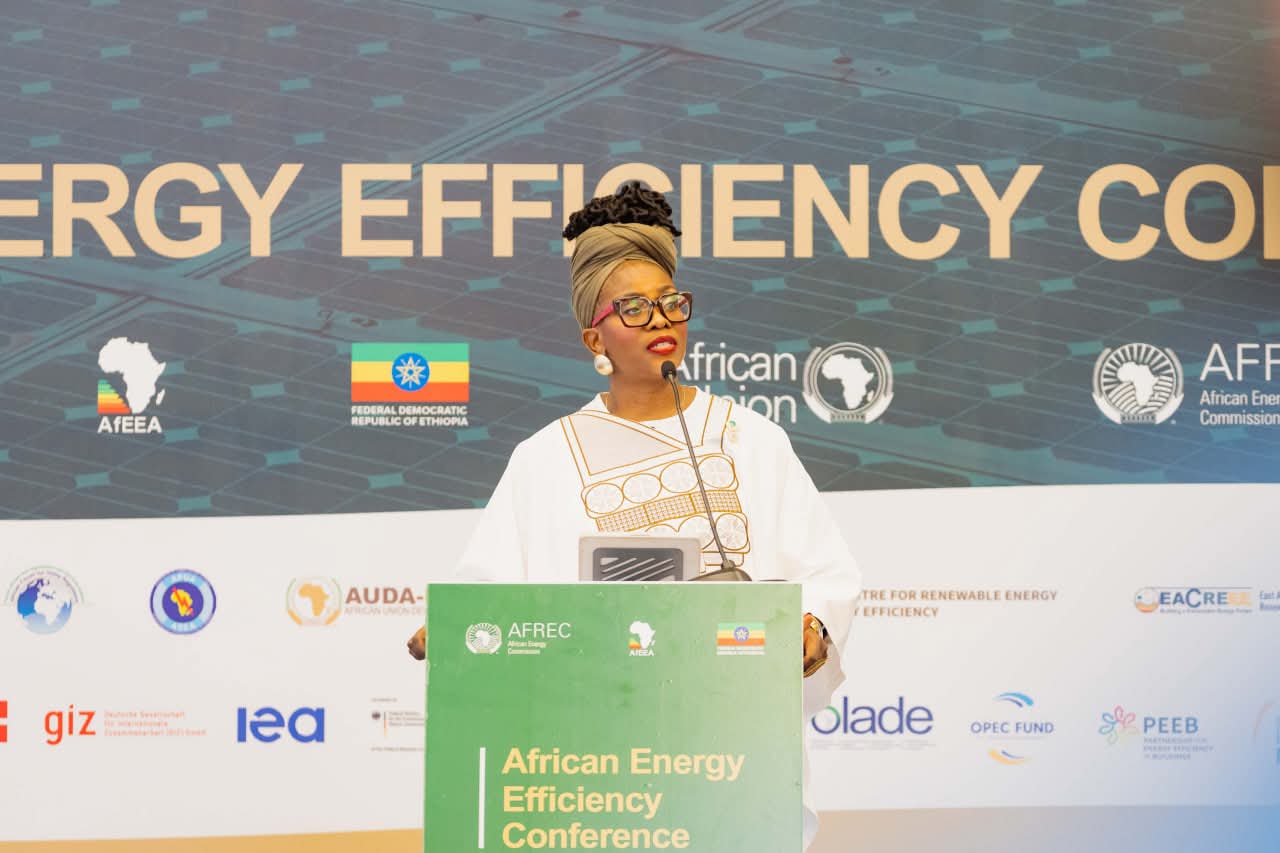
The Strategy was officially launched on Thursday by Lerato Mataboge, the AU Commissioner for Infrastructure and Energy, during the second day of the Africa Energy Efficiency Conference in Addis Ababa, Ethiopia.
Her speech was delivered on her behalf by AFREC Executive Director Rashid Ali Abdallah.
Mataboge said the launch marked “a significant milestone in Africa’s energy transition journey.”
“First, it reinforces our call for a just energy transition that leverages the continent’s resources to advance energy access and equality across facets of our society,” she said.
Despite Africa’s abundant natural resources, Mataboge noted that the continent continues to lag behind in energy access.
She said Africa accounted for roughly 83 percent of the global electricity access deficit, with nearly one billion people still relying on traditional biomass and kerosene for cooking—practices that pose severe public health, gender and environmental risks.
“These disparities highlight both the scale of the challenge and the urgency of adopting integrated, data-driven approaches that leverage emerging technologies—such as smart grids, geospatial analytics, and distributed renewable microgrids—to close the gap,” she stated.
Mataboge added that Africa’s energy transition was not just about cost and emissions reduction but also represents “a profound opportunity for the much-needed socioeconomic transformation.”
She said the continent aimed to use electrification and beneficiation of critical minerals to drive industrialisation, knowledge economies, and broader inclusion, especially for women and young people.
“By fostering local manufacturing of renewable energy components, we can generate employment, build resilient supply chains, and retain value within African economies,” she said.
She explained that the Strategy was developed through extensive consultations with AU Member States, regional economic communities, private sector players, civil society and development partners.
It identifies six priority pillars, including clean cooking, cross-border energy trade through harmonised policies, improved energy efficiency, and strengthened innovation and human capacity development.
“While we celebrate this milestone, the real work begins to domesticate the continental strategy based on local realities and invest in the identified priority projects for full benefits,” she said.
She congratulated The Gambia, Madagascar and Botswana for pioneering National Deep Decarbonization Pathways under the continental framework, joining countries such as South Africa, Nigeria, Kenya, Uganda, Ghana and Morocco.
However, Mataboge emphasised that significant financial support was needed, particularly for more than 15 Member States that have expressed interest in domesticating the Strategy.
Meanwhile, Tanzania’s Minister for Energy, Deogratius Ndejembi, pledged his country’s full commitment to the implementation of the Strategy.
“This is in order to realise the full benefits of the strategy launched here today in Addis Ababa and help reduce on the energy losses African countries are currently experiencing due to several challenges,” Ndejembi said.

Meanwhile, the African Development Bank (AfDB) has affirmed its commitment to supporting the Africa Energy Transition Strategy and Action Plan launched by the Africa Energy Commission (AEC) during the inaugural Africa Energy Efficiency Conference (AEEC) in Addis Ababa, Ethiopia.
AfDB Manager for the Energy Policy, Regulation and Statistics Division, Kambanda Callixte, said the bank would enhance access to green finance and technical assistance for energy transition and low-carbon initiatives through regulatory and market reforms.
Speaking on the second day of the AEEC on Thursday, Callixte said while the bank continues to provide finance in the power sector across the continent to boost universal access, it also recognizes the importance of soft infrastructure, including policy, regulatory, and institutional frameworks.
He highlighted the Africa Single Electricity Market (AfSEM), which spans multiple regional and national jurisdictions, and stressed the need for harmonized policies, legislation, regulatory and institutional frameworks at the regional level to improve coordination, cooperation, and remove barriers to clean energy investments.
“The trajectory is underscored in Mission 300 national energy compact. The trajectory aims also at accelerating reforms and facilitating the energy transition. As indicated, the three Deep Decarbonization Pathways (DDPs) trajectories developed as pilots for 48 countries will provide a roadmap that other countries can follow and adapt to their own contexts,” Callixte said.
He added that, in support of Mission 300, the bank had adopted a programmatic approach to provide technical assistance, facilitating the development of appropriate tools and frameworks and building capacities to accelerate the energy transition.
Callixte said similar initiatives were being implemented in countries such as Tunisia, Senegal, and Nigeria to support low-carbon, climate-resilient development while contributing to their Nationally Determined Contributions (NDCs) in line with the Paris Agreement.
“The energy transition emphasizes technologies such as renewable energy systems, green hydrogen development, electric vehicles and energy storage solutions. These are the building blocks of our clean energy future,” he said.
He added that the DDPs for the three pilot countries underscored the importance of achieving universal access to energy services while promoting sustainable, low-carbon development to meet Africa’s growing energy demand.
However, Callixte noted that the energy transition cannot happen in isolation. “The bank’s focus has been directed on creating the right conditions for renewable energy to be developed, and we believe the transition will not occur within individual countries but within and across regions,” he said.
WARNING! All rights reserved. This material, and other digital content on this website, may not be reproduced, published, broadcast, rewritten or redistributed in whole or in part without prior express permission from ZAMBIA MONITOR.









Comments