
 By
By 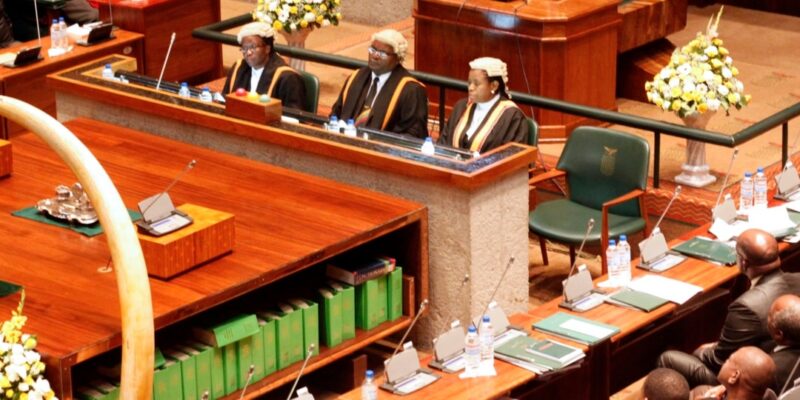
The passage of the Constitution of Zambia (Amendment) Bill No. 7 of 2025 marks one of the most consequential political moments in Zambia’s recent history, closing a chapter of intense national debate while opening another defined by implementation, reconciliation and political recalibration.
For the ruling United Party for National Development (UPND), the successful passage of Bill 7 represents a significant political victory.
The government secured 131 votes during the second reading and 135 votes at the third and final reading, comfortably surpassing the constitutionally required two-thirds majority.
Securing the constitutionally required two-thirds majority in a deeply divided Parliament not only demonstrated the government’s legislative strength but also confirmed its ability to mobilise support beyond its own benches in the face of sustained resistance.
Yet the manner in which Bill 7 was passed underscores the enduring fault lines within Zambia’s political landscape.
The walkout by Patriotic Front lawmakers and the boycott calls from the Oasis Forum highlight lingering concerns about procedure, legitimacy and public trust in constitutional reform processes.
While legality was affirmed by government ministers, the political scars from the process may persist long after the Bill becomes law.
Substantively, Bill 7 introduces far-reaching structural changes.
It expands the number of elected Members of Parliament from 156 to 220 and provides for the addition of more than 42 lawmakers through proportional representation, targeting women, youth, and persons with disabilities.
Supporters argue these measures address chronic under-representation, while opponents warn they may increase the cost of governance and dilute accountability.
Critics, however, view the reforms as an expansion of political power that risks increasing the cost of governance and weakening accountability.
President Hakainde Hichilema’s post-passage message reflects an effort to shift the national mood from confrontation to cohesion.
By framing the outcome as a democratic resolution rather than a partisan triumph, the President positions Bill 7 as the people’s decision, delivered through their elected representatives.
Read more: Breaking! Zambian Parliament passes constitution amendment Bill 7 with two-thirds majority
He said:“Bill 7 has been one of the most topical and consequential issues of our time, one that has tested the strength of our democracy and the unity of our nation. Throughout this process, we all engaged in lobbying and robust debate; we agreed and, at times, disagreed. As is the nature of any democratic process, such engagement must ultimately lead to a resolution.
“The greatest winners in this process are the people of Zambia and our democracy itself. The people have spoken through their duly elected representatives, and as a nation committed to democratic principles, we must respect both the outcome and the collective resolve it represents.
“Now is the time to turn our full attention to national development. We must do so as one people; Government, the opposition, civil society, and citizens alike, moving forward together in one direction.
United by our shared destiny, let us reaffirm our commitment to One Zambia, One Nation, and work collectively for the progress and prosperity of our country.”
His appeal to “One Zambia, One Nation” signals an awareness that constitutional authority alone is insufficient without social and political buy-in.
The indefinite adjournment of the National Assembly further symbolises the closing of an institutional chapter, leaving the spotlight firmly on the President’s desk.
Presidential assent will formalise the amendments, but the real test lies ahead — in how the reforms are implemented, how dissent is managed, and whether the promised inclusivity translates into tangible democratic gains.
In the end, Bill 7 may be remembered less for the votes that passed it and more for how it reshaped Zambia’s governance, political culture and national unity in the years to come.
WARNING! All rights reserved. This material, and other digital content on this website, may not be reproduced, published, broadcast, rewritten or redistributed in whole or in part without prior express permission from ZAMBIA MONITOR.








Comments