
 By
By 
The Constitutional Court has declined to grant an interim conservatory order sought by the Legal Resources Foundation (LRF) to stop the ongoing process for appointing new judges to the superior courts.
LRF had asked the court to suspend all steps in the recruitment process until its petition challenging the constitutionality of the appointments was heard.
But in a ruling delivered on December 11, Constitutional Court Deputy President, Justice Arnold Shilimi refused to issue the order.
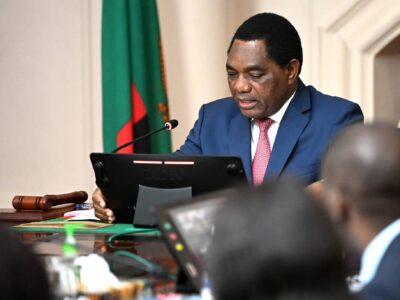
LRF, represented by Simeza Sangwa and Associates, has cited President Hakainde Hichilema, the Attorney General, the Judicial Service Commission (JSC) and the National Assembly as respondents.
The organisation argued that the current and planned judicial appointments violate constitutional principles of merit, transparency, inclusivity, accountability and good governance.
The petition challenges the advertisement of 20 judicial vacancies published in March and April 2025 under the repealed Superior Courts (Number of Judges) Act of 2016, as well as the new positions created under the Superior Courts (Number of Judges) Act No. 12 of 2025.
Read More: Constitutional Court rejects bid by Oasis Forum to halt constitution amendment process
Court records show that on November 11, 2025, the petitioner filed an ex-parte summons seeking interim conservatory relief under Article 128 of the Constitution, Order 15 Rule 1 of the Constitutional Court Rules, and the court’s inherent jurisdiction.
LRF wanted to halt the shortlisting of applicants, submission of names to the President, and any subsequent steps including parliamentary ratification.
The application was supported by an affidavit from advocate Chimwemwe Tchongwe, who argued that allowing the appointments to proceed would render the petition academic and undermine judicial oversight.
However, Justice Shilimi ruled that the case did not meet the legal threshold for conservatory relief.
“It is my duty to balance any prejudice which might be suffered by the public if the order was granted… Granting the order would not result in the promotion of constitutional values,” he said.
With the ruling, the appointments process will continue as planned while the substantive petition remains pending before the Constitutional Court.
WARNING! All rights reserved. This material, and other digital content on this website, may not be reproduced, published, broadcast, rewritten or redistributed in whole or in part without prior express permission from ZAMBIA MONITOR.










Comments