
 By
By 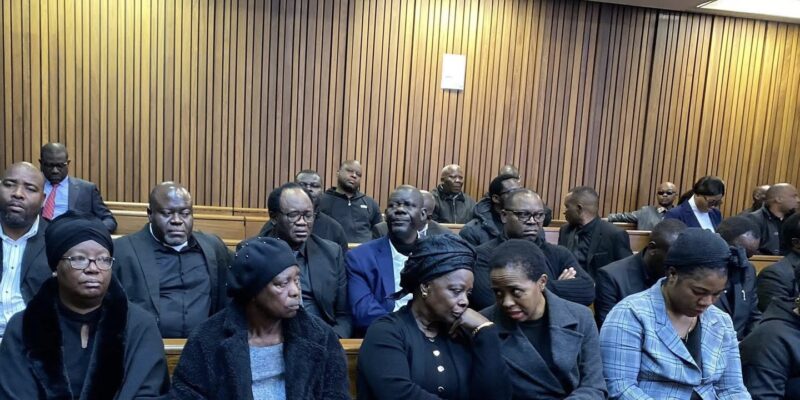
A tense hush fell over a South African courtroom in Pretoria as lawyers debated the final resting place of Zambia’s sixth Republican President, Edgar Chagwa Lungu, nearly two months after his death.
In the gallery, former First Lady Esther Lungu sat quietly—visibly fatigued and gaunt—a portrait of grief amid the legal wrangling that has followed her husband’s passing.
At the heart of the case is a deeply emotional and politically charged question: Should Lungu be buried in Zambia with full state honours, or should his family be allowed to lay him to rest privately in South Africa, in line with what they say were his final wishes?
The Zambian government, represented by Attorney-General Mulilo Kabesha and South Africa-based counsel, B.C. Stoop, argued that Lungu deserved a state funeral in Zambia as a former head of state.
They contended that the law and past precedent granted the state authority over the burial of public figures—even if they had forfeited official privileges during their lifetime.
“The state’s position is clear. President Lungu wished to be repatriated and buried with dignity. That includes military honours and the presence of the Head of State. It is a matter of national symbolism and public interest,” the state submitted.
However, lawyers representing the Lungu family offered a sharply different narrative.
They argued that Lungu died as a private citizen, having been stripped of his benefits after re-entering active politics in 2023. The family insists he wanted no involvement from the current administration, particularly President Hakainde Hichilema, whom Lungu reportedly blamed for his legal and political woes.
“It would be undignified for him to be buried while the current president presides,” said the family’s lawyer, adding, “He made this clear on several occasions before his death.”
At the centre of the legal dispute is the Benefits of Former Presidents Act, which suspends a former president’s state privileges—including funeral costs—if he resumes political activity. Advocate Welgemoed, representing the Lungu family, argued that the law contains no clause for posthumous reinstatement of benefits.
“There is no statute that magically restores state benefits at the moment of death. To suggest otherwise is legal fiction,” he told the court.
The state countered that death effectively nullified the disqualification and that a “sensible interpretation” of the law means Lungu’s benefits, including a state-sponsored burial, should automatically resume.
“The impediment to his benefits was his political involvement. That ceased with his death. The funeral should be honoured by the state, and the law supports that view,” the state’s counsel argued.
Complicating matters further, both sides referenced an alleged compromise agreement meant to facilitate Lungu’s repatriation. But their interpretations of that deal differed dramatically.
The government claimed there had been consensus that the body would be flown back to Zambia for a state funeral with President Hichilema in attendance.
However, the family’s legal team denied this, saying any such agreement was conditional on the president being excluded from speaking or presiding at the funeral.
“There is no enforceable agreement,” the family’s counsel said, adding, “What exists is a breakdown in trust and interpretation.”
The court also heard arguments over custody of Lungu’s body. The applicants raised concerns that the state might attempt to unilaterally move the remains before a ruling was made. An ex parte order had earlier been secured to ensure the body remained at the funeral home pending the court’s decision.
“The concern was that the body could be moved and buried while proceedings were still ongoing,” the family’s legal team said.
The state raised procedural objections, arguing that the South African court lacked jurisdiction, since the dispute revolves around Zambian law and national protocols.
“The deceased is a Zambian national. All elements of state responsibility connect to Zambia. South Africa has no jurisdiction,” the state’s counsel submitted.
But the family’s lawyers pushed back, insisting that the court could intervene on humanitarian grounds to protect the dignity and final wishes of the deceased.
The matter was presided over by a three-member bench: Deputy Judge President Ledwaba, Acting Deputy Judge President Mudau, and Judge Potterill.
The bench assured both parties that a ruling would be delivered without delay.
“We are alive to the urgency of this matter,” the court said. “Judgment will be delivered no later than Friday—possibly earlier,” it added.
WARNING! All rights reserved. This material, and other digital content on this website, may not be reproduced, published, broadcast, rewritten or redistributed in whole or in part without prior express permission from ZAMBIA MONITOR.







Comments