
 By
By 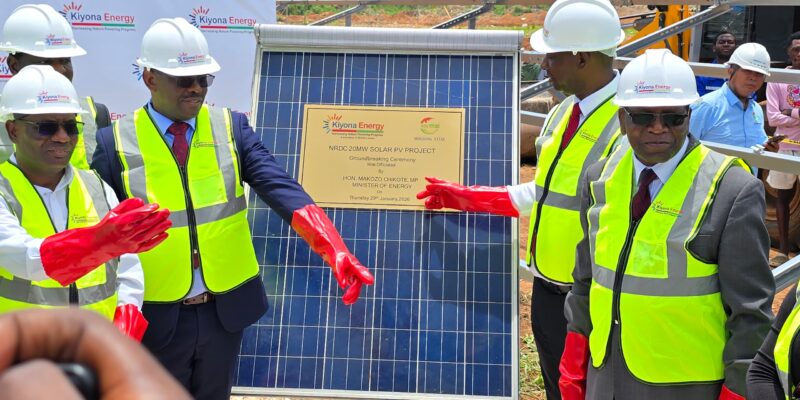
Government has assured the nation that Zambia will not return to the era of prolonged load-shedding, citing increased investment in alternative energy sources that are stabilizing the country’s electricity supply.
Minister of Energy, Makozo Chikote, said ongoing diversification of the national energy mix—particularly through solar power—was improving energy security and strengthening the country’s resilience to climate-related shocks.
Chikote was speaking on Thursday during the ground-breaking ceremony for the 20MW NRDC Solar Power Project in Munali, Lusaka. The project also features a dedicated 2MW grid-connected solar plant that will exclusively supply the Natural Resources Development College (NRDC).
“The project demonstrates Government’s resolve to translate policy commitments into tangible infrastructure that supports sustainable development,” he said.
Chikote said while hydropower had served the country well for many years, climate variability had accelerated the need for energy diversification, with solar emerging as a key pillar under the New Dawn Administration.
He added that the initiative aligns with the Integrated Resource Plan, the National Energy Policy, and Zambia’s broader green-growth and climate-resilient development agenda, while also reflecting strong bilateral cooperation between Zambia and Taiho.
“I want to commend the inclusion of the dedicated 2MW solar facility for NRDC. It will provide reliable, clean and cost-effective power for teaching, research and agricultural productivity, and position the institution as a living laboratory and centre of innovation,” Chikote said.
Read More:
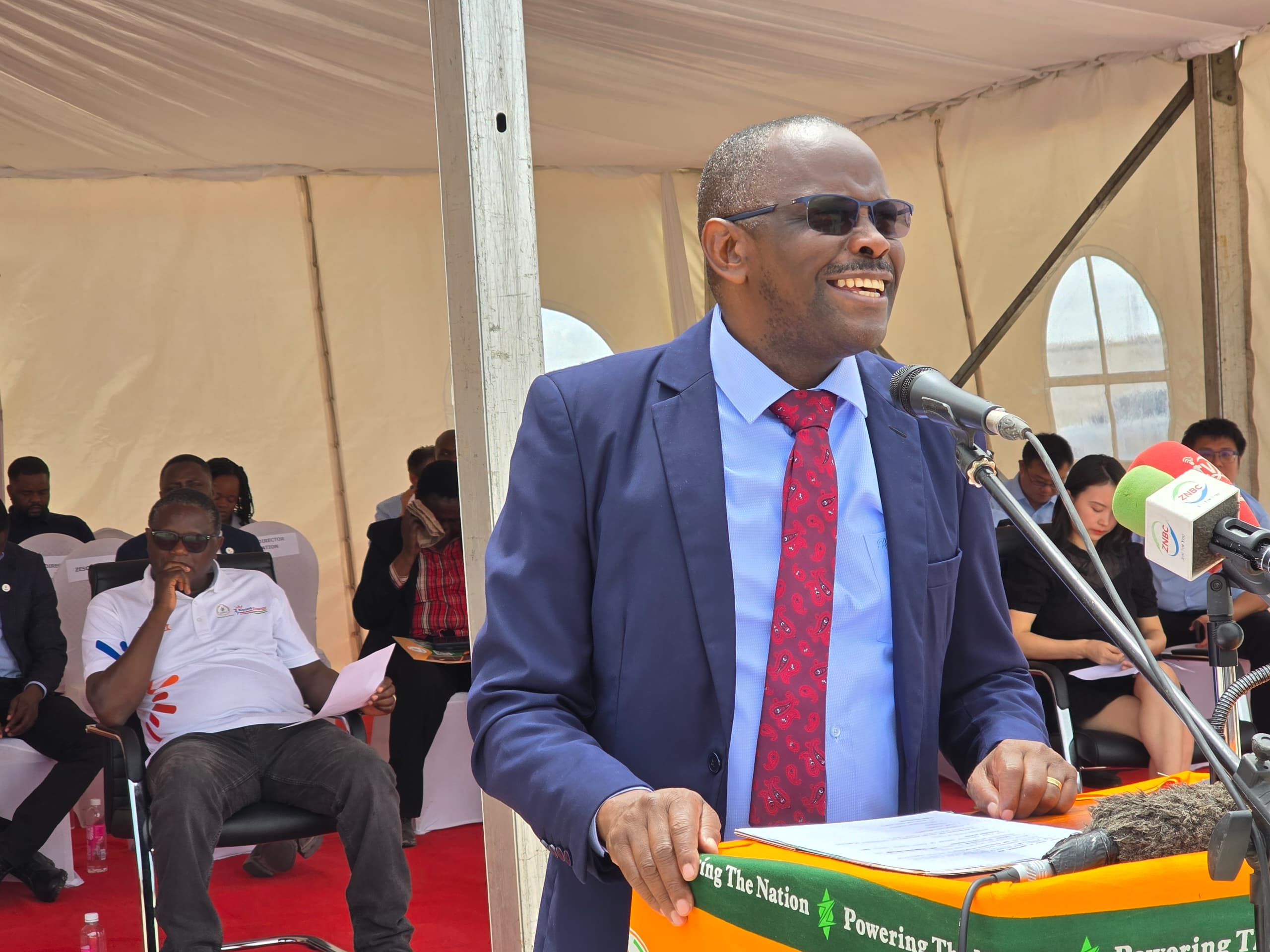
ZESCO Managing Director, Justin Loongo, said the project illustrated the power of strategic partnerships, citing collaboration between ZESCO, Kiyona Energy Limited, Taiho, and NRDC.
Read More: Kariba lake levels reportedly rise though not enough to positively impact energy crisis
“These partnerships demonstrate the convergence of private-sector innovation, public-sector oversight and academic excellence, which is critical in unlocking investment, accelerating capacity addition and ensuring efficient, responsible delivery of energy infrastructure,” Loongo said.
Representing the Ministry of Agriculture, Dr. Chizumba Shepande said the project would enhance climate-resilience programmes and elevate NRDC into a centre of excellence for renewable-energy-driven agricultural education.
He said the initiative would spur learning, research and innovation, thereby contributing to improved agricultural productivity and national food security.
Meanwhile, Munali Member of Parliament and Minister of Green Economy and Environment, Mike Mposhadescribed the project as historic and transformative for the constituency.
He said the solar plant was being constructed on land previously used as an illegal dumping site, improving hygiene and environmental standards in the community.
“The project will ensure uninterrupted learning, research and innovation at NRDC through a dedicated electricity supply, while also creating employment, transforming livelihoods and strengthening energy reliability in Munali Constituency,” he said.
Mposha urged residents to protect the infrastructure from vandalism and noted that electricity supply in the area had already improved, commending the Ministry of Energy for its leadership during the recent load-shedding challenges.
Contractor Taiho Limited confirmed that construction of the solar project began in November 2025 and is expected to be completed by March 2026.
WARNING! All rights reserved. This material, and other digital content on this website, may not be reproduced, published, broadcast, rewritten or redistributed in whole or in part without prior express permission from ZAMBIA MONITOR.












Comments