
 By
By 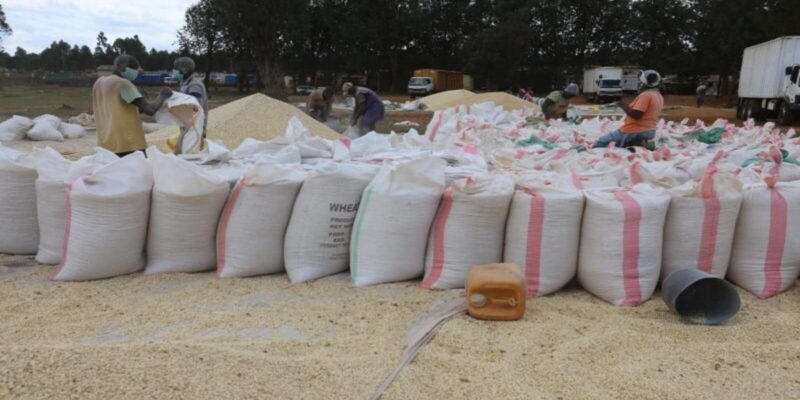
Access Bank Zambia says the Government’s decision to lift the export ban on maize and mealie meal signals a shift towards a more liberalised agricultural trade policy aimed at boosting farmer incomes and expanding regional market access.
Government on Thursday removed restrictions on the export of maize grain and maize products, including mealie meal.
According to the Access Bank group market commentary, the move is expected to improve earnings for producers and ease domestic oversupply pressures.
However, the bank cautioned that the decision also raised concerns around short-term food price stability and supply adequacy in local markets.
Read more: Zambian govt lifts export restrictions on maize, mealie meal
“The policy reflects a balancing act between supporting agricultural competitiveness and safeguarding food security, with authorities relying on existing grain reserves and regulated export permits to manage risks,” the report stated.
Access Bank further notes that Zambia’s recent policy and financing developments reflect continued focus on economic stabilisation and external re-engagement, with fiscal and debt dynamics still influenced by global commodity and energy price volatility.
The report highlights rising oil prices linked to tensions in the Middle East as a key near-term risk, particularly given Zambia’s dependence on fuel imports.
However, the bank noted that stronger copper-related external inflows continued to provide an important buffer for the country’s balance of payments.
More broadly, the report states that Zambia remains sensitive to shifts in global risk sentiment, warning that sustained inflationary pressures could complicate monetary easing and keep local funding conditions relatively tight.
“At the same time, ongoing engagement with creditors and reform momentum remain central to improving market confidence and supporting medium-term debt sustainability,” the report says.
On the local currency, Access Bank reported that the Kwacha closed Thursday at K19.23 against the US dollar, according to Bloomberg data, with the currency pair continuing to pivot around its 50-day moving average of K19.3106.
The bank said global sentiment remained generally positive despite elevated Middle East risks, noting that the provisional tax payment deadline could also support the local currency.
“Therefore, we should see the Kwacha close the week on a fairly strong footing, albeit with softer copper prices limiting the currency’s upside given the terms-of-trade impact,” the report stated.
WARNING! All rights reserved. This material, and other digital content on this website, may not be reproduced, published, broadcast, rewritten or redistributed in whole or in part without prior express permission from ZAMBIA MONITOR.










Comments