
 By
By 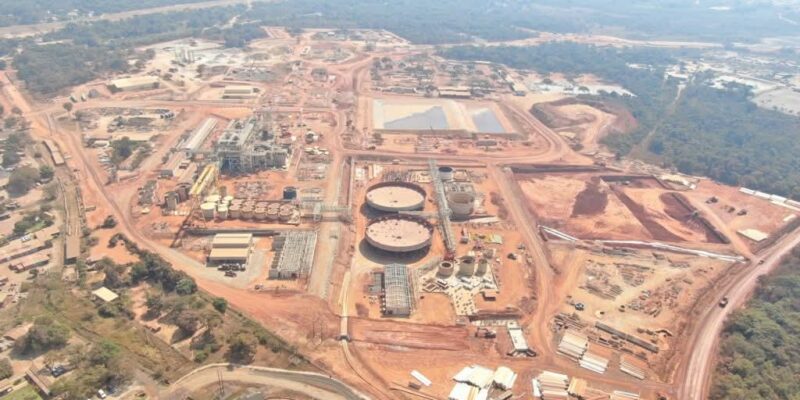
The development of First Quantum Minerals’ (FQM) Kansanshi S3 expansion project in North-Western Province is nearing completion, with initial copper production expected in the second half of 2025, company officials have confirmed.
“The S3 expansion project at Kansanshi is in the final stages of commissioning and remains on track for first production in the second half of 2025,” Tristan Pascall said.
The update was included in FQM’s global financial and operating results for the second quarter of 2025, which reported gross profits of US$351 million—a 6 percent increase from the previous quarter—driven by higher copper and gold prices.
According to FQM Chief Executive Officer, Pascall, total copper production globally for the second quarter was 91,069 tonnes, representing a 9 percent decline from the first quarter, primarily due to reduced output at Kansanshi.
Pascall noted that operational readiness at the S3 expansion stood at 93 percent, with all employment positions filled.
“The transition from a readiness team to the operational team has begun, and controlled plant runs are underway,” he said in a statement issued Thursday.
Kansanshi’s copper production for the quarter was 40,103 tonnes—a decrease of 6,441 tonnes compared to the previous quarter—due to lower feed grades, although mill throughput had increased.
Pascall attributed the decline to a reclassification of ore grades and a planned 40-day smelter shutdown during June and early July.
The 2025 production guidance for Kansanshi remains unchanged, projected at 160,000 to 190,000 tonnes of copper and 100,000 to 110,000 ounces of gold. Initial S3 production is expected to come from low-grade stockpiles.
At FQM Trident’s Sentinel mine, copper production stood at 43,108 tonnes in the second quarter, a decrease of 3,253 tonnes from the previous quarter, largely due to the extraction of lower-grade ore from Stage 3.
“Total throughput improved quarter-over-quarter despite planned stoppages related to Train 2 Ball Mill flange bolt fatigue issues,” Pascall said.
He also reported that Sentinel had commenced installation of a rail run conveyor (RRC) system aimed at reducing energy consumption. The RRC, expected to be completed by late 2025, is designed to use 50 to 70 percent less power than conventional conveyor systems.
Sentinel’s 2025 copper production guidance remains between 200,000 and 230,000 tonnes. Grades for the year are projected to be lower than in 2024 but may improve in the second half as mining advances into the lower areas of Stage 1.
Meanwhile, the Enterprise nickel mine produced 4,018 tonnes of nickel in the second quarter—a 14 percent decline from the previous quarter—attributed to lower throughput and ore grades.
Pascall said the decline reflected changes in mining sequence and the development of permanent ramps to increase pit access. Enterprise’s 2025 production guidance remains at 15,000 to 25,000 contained tonnes of nickel.
He added that the mining strategy at Enterprise had been adjusted in response to economic pressures in the nickel market, with an emphasis on reducing waste stripping while keeping production within forecast levels.
WARNING! All rights reserved. This material, and other digital content on this website, may not be reproduced, published, broadcast, rewritten or redistributed in whole or in part without prior express permission from ZAMBIA MONITOR.










Comments