
 By
By 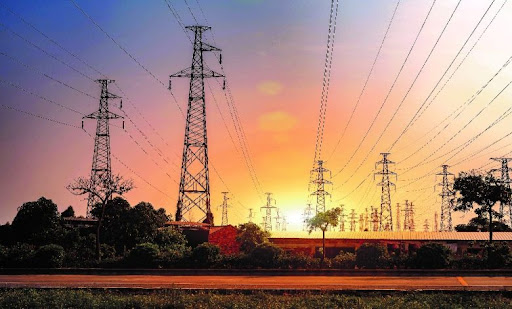
Finance and National Planning Minister, Dr. Situmbeko Musokotwane, has assured that ongoing reforms in the energy sector will help address Zambia’s historical energy crisis.
Speaking in Parliament during the unveiling of the 2026 national budget on Friday, Musokotwane acknowledged that Zambia was currently facing a serious energy shortage, largely caused by the 2024 drought.
“Government sympathises with the citizens. However, the shortage also reflects the underinvestment in the sector since independence. The current installed capacity for generating electricity could have been adequate with sufficient water in the dams, but clearly this is not the case,” he stated.
He added, “The rising activities in the mining sector are increasing the demand for electricity. The current installed capacity will soon, therefore, become inadequate even with sufficient water resources.”
Over the past four years, Musokotwane said the government had been implementing reforms in the energy sector, including diversifying the energy mix, improving the regulatory framework, and introducing flexibility in tariff structures.
In particular, he noted that the government had created an environment that enables the private sector to actively participate in the energy sector—from generation to distribution, including power imports and exports.
“Today, Zambia is considered by peers as one of the leading reformers in Africa. The coming onboard of the private sector is positive for our local market because it complements the efforts of existing players like ZESCO,” Musokotwane stated.
He said that partly as a result of these reforms, installed electricity generation capacity increased to 3,886 megawatts in 2025, up from 3,318 megawatts in 2021.
“This includes both on- and off-grid systems. Of this, over 80 percent is hydropower. Our efforts are now targeted at increasing generation capacity from non-hydro sources so as to minimise the risk of uncertain weather conditions,” Musokotwane said.
To diversify the energy mix and end load shedding, the government has facilitated the coming on stream of 125 megawatts of solar energy, with an additional 1,500 MW expected within the next 12 months, and 300 MW from the new thermal power plant at Maamba expected in 2026.
“Government is also promoting solar installation for public institutions, households, and businesses. Our target is to increase the share of non-hydro renewable energy in our generation mix to 33.0 percent, up from the current 3.0 percent,” he said.
Musokotwane added, “The energy crisis would have been far worse had Zambia not been connected to the Southern Africa Power Pool, from where we can import and export power depending on the need.”
He revealed that next year, work will begin on the interconnector between Zambia and Tanzania, which will enable connections to other East African countries including Kenya, Uganda, and Ethiopia.
On rural electrification, he said the government will continue implementing projects under the Rural Electrification
Programme.
“Since 2022, a total of 130 projects have been completed across the country, comprising 104 on-grid and 26 off-grid projects, contributing to increased access to electricity in rural areas from 8.0 percent to 34.0 percent,” he said.
In 2026, Musokotwane committed to implementing 100 on-grid and 30 off-grid projects.
Other measures include providing a conducive policy environment, adopting progressive reforms to attract private investments, and establishing an Electricity Fund to strengthen electricity security and ensure stable supply.
Key reforms also include the Multi-Year Tariff Framework, Electricity Open Access Framework, Net Metering Policy Framework, and the Energy Single Licensing System.
In the petroleum sub-sector, Musokotwane revealed that since 2022, the government had been facilitating private sector participation in fuel procurement.
“This year, we implemented the TAZAMA Open Access Framework, which has liberalised the petroleum transportation system and improved transparency and efficiency. Oil Marketing Companies are now able to transport diesel through the TAZAMA pipeline. This has contributed to the general reduction in diesel prices,” he said.
WARNING! All rights reserved. This material, and other digital content on this website, may not be reproduced, published, broadcast, rewritten or redistributed in whole or in part without prior express permission from ZAMBIA MONITOR.





Comments