
 By
By 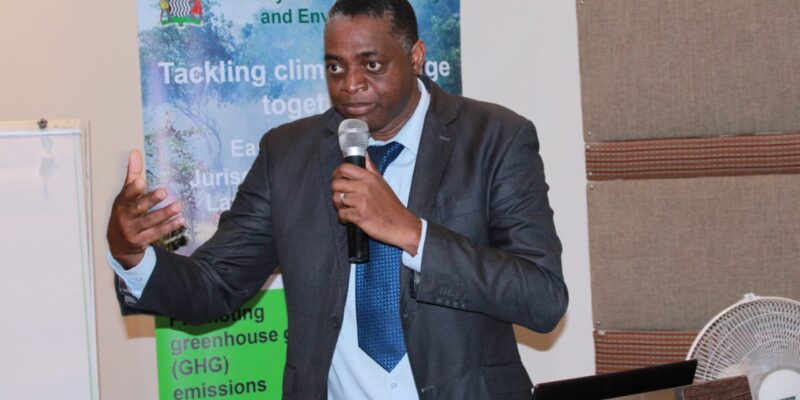
Eastern Province Permanent Secretary, Paul Thole, has reaffirmed the Government’s commitment to sustainable landscape management and equitable benefit sharing from carbon markets under the Eastern Province Jurisdictional Sustainable Landscape Programme (EP-JSLP).
Thole said the programme was designed to ensure that communities benefit fairly from carbon credit revenues while promoting environmental conservation and sustainable land use.
His remarks were delivered on his behalf by Deputy Permanent Secretary Lewis Mwape during a stakeholders’ engagement meeting on fuelwood consumption held in Chipata on Saturday.
Mwape disclosed in a statement in Lusaka that the EP-JSLP is strategically positioned to generate an estimated 28.9 million tonnes of carbon credits, which will be sold to the World Bank and other international buyers.
Read more: Zambia’s population growth outpaces economy, threatens sustainable development — Mutombo
He said revenue from the carbon credits would be shared according to an approved benefit-sharing framework.
“The revenue from carbon credit sales will be distributed as follows: 15 percent to Government and programme operations, 30 percent to private carbon project developers, and 55 percent to communities across the 56 chiefdoms in Eastern Province,” Mwape said.
He explained that the stakeholder engagement meeting was aimed at strengthening dialogue and collaboration to promote sustainable fuelwood consumption while reducing emissions from Agriculture, Forestry and Other Land Use (AFOLU).
“This engagement is intended to enhance cooperation among stakeholders in promoting sustainable fuelwood use and reducing AFOLU-related emissions,” Mwape said, adding that recommendations from the meeting should remain practical, realistic, and within the operational mandate of the EP-JSLP.
Mwape further noted that the US$43 million World Bank-funded programme seeks to reduce deforestation, promote sustainable land use, and cut greenhouse gas emissions across Eastern Province.
Meanwhile, traditional leaders in the province called for closer collaboration between programme implementers, traditional authorities, and government to ensure successful implementation of the EP-JSLP. Senior Chief Luembe and Chief Madzimawe emphasised the importance of involving local communities, who are the primary beneficiaries of the programme.
EP-JSLP Programme Coordinator, Noel Muchimba, said the programme aimed to generate payments for verified emission reductions, with proceeds distributed in line with an agreed Benefit Sharing Plan.
He outlined key programme components and expected outcomes, including environmental conservation, improved livelihoods, and sustainable natural resource management.
Delivering a vote of thanks on behalf of traditional leaders, Chieftainess Kawaza of Katete and Sinda districts commended the government for consistently involving chiefs in development programmes, noting that traditional leaders remained critical stakeholders in both national and local development initiatives.
Institutions such as the University of Zambia, the Ministry of Energy, Community Markets for Conservation (COMACO), and several private sector organisations made presentations during the meeting. They welcomed the initiative and pledged their support towards efforts to reduce deforestation in the province.
WARNING! All rights reserved. This material, and other digital content on this website, may not be reproduced, published, broadcast, rewritten or redistributed in whole or in part without prior express permission from ZAMBIA MONITOR.











Comments