
 By
By 
The Zambian government has expressed concern over increasing pollution, unsustainable fishing, and land degradation that continue to threaten Lake Tanganyika’s ecosystems and undermine its capacity to sustain future generations.
Green Economy and Environment Minister, Mike Mposha, said these challenges were compounded by biodiversity loss, deforestation, forest degradation, and the adverse effects of climate change.
Mposha said this during the 13th Ordinary Meeting of the Lake Tanganyika Authority (LTA) Conference of Ministers, held in Livingstone on Friday.
He noted that rising water levels in recent years have further affected the lake’s ecosystems and disrupted the lives and livelihoods of communities around the basin.
“Here in Zambia, we have already lost key infrastructure due to rising water levels. These include Chibanda Rural Health Post and Chibanga Primary School. Nsumbu Fish Market in Nsama District and many other educational and rural health facilities remain submerged in water,” Mposha said.
He stressed that these challenges served as a reminder that the sustainability of Lake Tanganyika was not the responsibility of a single nation but a shared regional obligation that demands solidarity and collective action.
Mposha acknowledged, however, that Lake Tanganyika remained one of the most biologically diverse freshwater ecosystems in the world — a testament to the continued cooperation among the riparian states.
“As riparian countries, our shared responsibility must always focus on ensuring that the basin contributes meaningfully to regional integration, poverty reduction, and sustainable socio-economic development,” he added.
He commended the Lake Tanganyika Authority for fostering regional unity and collaboration, saying its platform had been instrumental in promoting joint action to protect the lake’s resources.
By safeguarding these resources, Mposha said, the region could unlock greater opportunities for trade, tourism, and climate-resilient investments that would benefit all member countries.
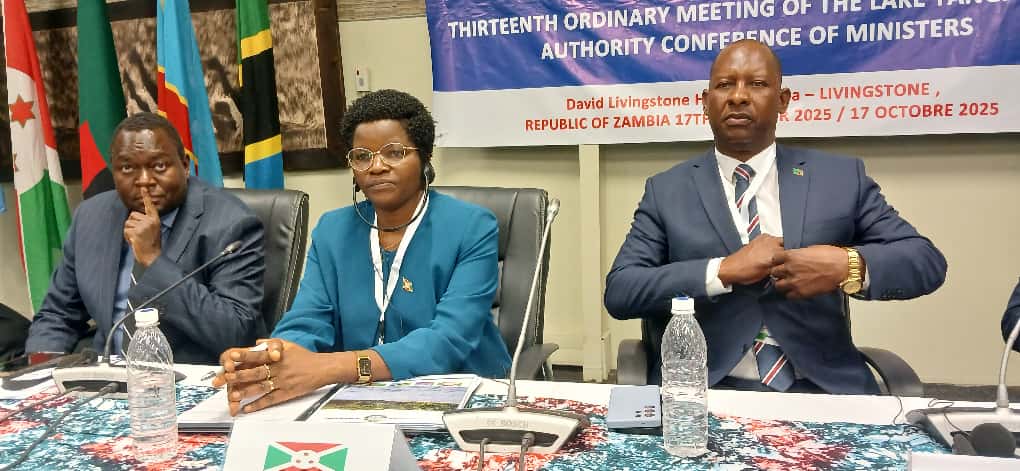
“Zambia will continue to play an active and committed role in safeguarding the Lake Tanganyika Basin and promoting its sustainable management,” he assured.
The minister further announced that Zambia had paid in full its outstanding statutory contribution to the Lake Tanganyika Authority amounting to US$870,812.15.
He said the country’s efforts were guided by the Convention on the Sustainable Management of Lake Tanganyika, under which Zambia had implemented several policies, projects, and institutional measures to conserve natural resources and improve community livelihoods.
Read More: Zambia to host 2025 Lake Tanganyika Authority conference
Meanwhile, Burundi’s Minister of Environment Evelyne Butoyi urged the region’s technical and financial partners to intensify their support for implementing priority actions as the rainy season approaches.
Butoyi said these actions — approved during the Extraordinary Conference and reaffirmed at the current meeting — were essential to improving the well-being of communities living around the lake.
“This is to ensure a decent life for our communities, especially those living in the Lake Tanganyika Basin. Dear participants, the time has come to mobilize our own strengths and those of our partners to provide a dignified life for our communities,” she said.
She further observed that Lake Tanganyika, which sustains millions across the four riparian countries, faced persistent threats including illegal fishing, coastline degradation, sedimentation, industrial pollution, biodiversity loss, and fluctuating water levels linked to climate extremes.
WARNING! All rights reserved. This material, and other digital content on this website, may not be reproduced, published, broadcast, rewritten or redistributed in whole or in part without prior express permission from ZAMBIA MONITOR.







Comments