
 By
By 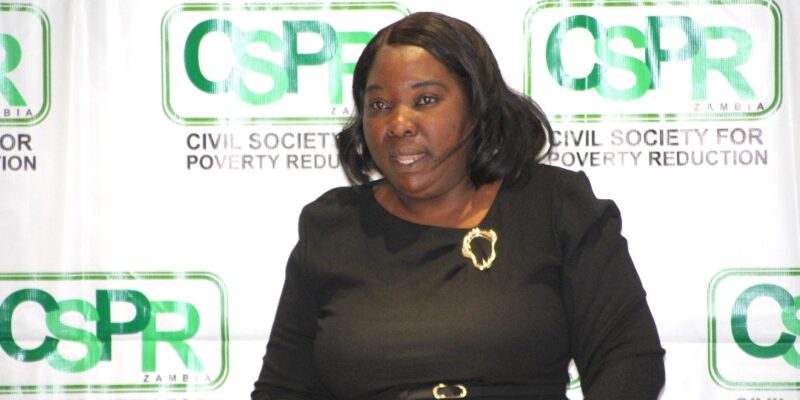
The Civil Society for Poverty Reduction (CSPR) has called on the government to audit existing data on copper concentrate stockpiles held by mining companies exempted under the recent concentrate tax suspension, and to undertake third-party verification of mineral content and value.
This follows Finance and National Planning Minister Dr. Situmbeko Musokotwane’s announcement of a three-month suspension of the copper concentrate export tax, aimed at addressing smelting challenges that have led to a buildup of unprocessed copper concentrates.
In a statement released in Lusaka on Monday, CSPR Executive Director, Isabel Mukelabai, said that while the suspension may offer short-term relief to affected miners, critical issues remain unclear and require thorough technical assessment.
Mukelabai highlighted concerns that allowing concentrate exports without adequate oversight could lead to undervaluation or mis-pricing, resulting in reduced government revenue and undermining local beneficiation and tax mobilization objectives.
She questioned the rationale for the three-month timeline, stressing the need to verify whether it aligned with expected repair and reactivation schedules for non-operational smelters.
“As CSPR, we demand clarity on how the accumulated concentrate is being monitored, especially given the absence of a fully functional Minerals Regulatory Commission,” she said.
Mukelabai further called for transparency on mechanisms to monitor and value copper concentrates, which contain other minerals, to prevent revenue losses.
She noted reliance on self-reported concentrate volumes by mines without independent verification undermines confidence in claimed benefits by the Ministry of Finance and National Planning.
The risk of under-declaration is heightened without third-party validation, as historical patterns have shown misreporting of volumes and ore grades when exports lack robust independent oversight.
Economically, Mukelabai questioned the justification for the suspension given the current strong international copper price of about US$9,500 per tonne, which already incentivizes production and exports globally.
“At these prices, the suspension risks distorting policy aims related to value addition in the mining sector,” she said.
Mukelabai demanded quantification of estimated forgone export revenues over the suspension period and an assessment of its impact on 2025 budget execution, given Zambia’s heavy dependence on mineral revenues for public expenditure and development.
She warned that the policy shift could increase fiscal uncertainty, complicate revenue forecasts, and potentially disrupt budget implementation.
“Reduced mineral export tax revenue may cause shortfalls, forcing government adjustments such as delayed infrastructure projects, cuts in social programs, or increased borrowing—undermining debt sustainability efforts,” Mukelabai said.
She further cautioned that prolonged policy unpredictability disproportionately harms vulnerable populations and noted that recent abrupt changes to emerald export taxation reflect broader regulatory volatility that undermines investor confidence and revenue mobilization.
Read More: Govt suspends copper export tax as smelter glitches stall output
Mukelabai also questioned the coherence and planning within the mining sector, pointing to an apparent lack of a comprehensive maintenance and operational strategy for smelters, which suggests a reactive rather than strategic approach.
The country’s goal to increase copper production to 3 million tonnes annually underscores the need for a resilient and sustainable operational framework.
“The current situation, where all major smelters are reportedly non-functional, raises concerns about the feasibility of achieving national growth targets,” she said.
While acknowledging that short-term relief may be warranted under certain circumstances, Mukelabai stressed that policy decisions must be based on rigorous data, transparent monitoring, and coherent long-term strategies.
“Policies grounded in comprehensive economic analysis and aligned with sustainable development goals are essential for fiscal stability, investor confidence, and sector resilience,” she added.
Without these, Zambia risks revenue leakage, delayed development, and increased external dependence—threatening macroeconomic stability and inclusive growth prospects.
WARNING! All rights reserved. This material, and other digital content on this website, may not be reproduced, published, broadcast, rewritten or redistributed in whole or in part without prior express permission from ZAMBIA MONITOR.








Comments