
 By
By 
A new analysis by Civil Society for Poverty Reduction (CSPR) researcher, Trevor Hambayi, has revealed that Zambia’s public debt remained in high distress, despite ongoing restructuring efforts under the G20 Common Framework.
According to the assessment, Zambia’s total public debt stood at US$30.67 billion as of June 2025, comprising US$15.78 billion external debt, US$10.21 billion domestic debt, US$3.31 billion in arrears, and US$1.37 billion in government guarantees.
Speaking during a stakeholders’ engagement on debt transparency and sustainability in Lusaka on Saturday, Hambayi said the country continued to “walk a tightrope” as key risk indicators show the debt remains unsustainable and highly vulnerable to external shocks.
Hambayi noted that prior to defaulting in 2020, Zambia had already breached several critical Debt Sustainability Analysis (DSA) thresholds, with external debt levels surpassing 100 percent of GDP—more than double the recommended 40-percent ceiling.
He added that debt-service obligations to government revenue also exceeded 40 percent, far above the safe 23-percent threshold.
“These indicators clearly demonstrate that Zambia entered the restructuring process in a severely distressed state. Even now, despite ongoing discussions with creditors, progress remains slow, and the risks remain high,” Hambayi said.
The report highlighted structural weaknesses in the G20 Common Framework, including unclear timelines, procedural delays, and the absence of mechanisms to protect countries from new shocks during negotiations.
Hambayi said Zambia waited 28 months from its default to IMF programme approval, followed by another 18 months before reaching agreement with official creditors. He warned that the prolonged negotiations had constrained fiscal space—delaying key investments and limiting social spending, particularly in health and education.
“The country’s debt remains highly sensitive to fluctuations in the exchange rate, copper prices, and GDP growth. A 30 percent depreciation of the kwacha or a 15 percent decline in copper prices would significantly worsen debt sustainability,” he said.
The analysis compared Zambia’s experience to that of Ghana and Ethiopia and found that although Zambia secured extended maturities and lower interest rates, the relief remains insufficient to fully stabilise the economy.
It further identified longstanding weaknesses in the country’s debt-management system, including limited transparency in loan contracting, weak institutional oversight, and the abandonment of prudent borrowing strategies.
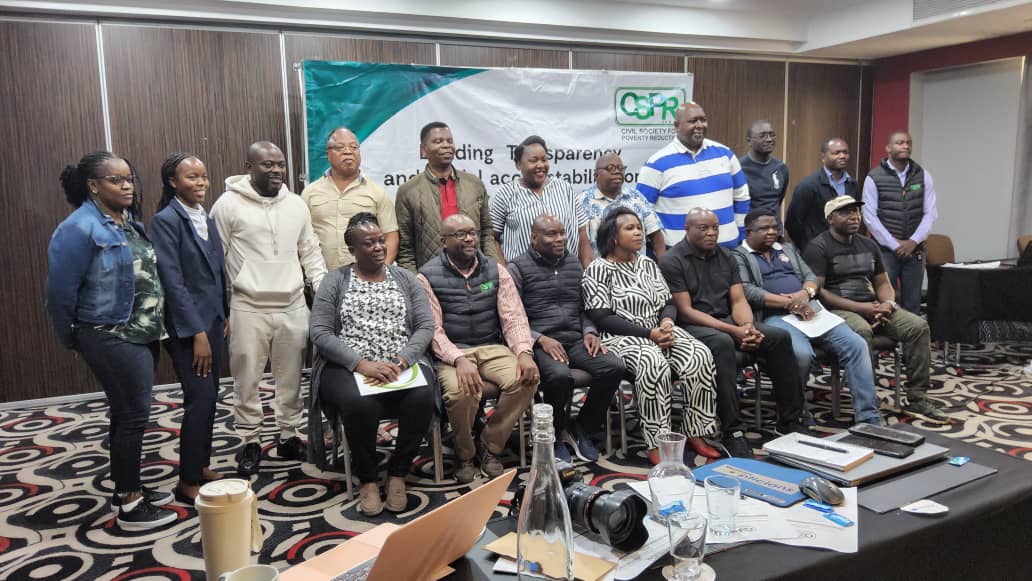
CSPR recommended governance reforms, enhanced transparency, establishment of a sinking fund for future repayments, and economic diversification through value addition in minerals and agriculture.
“Zambia cannot afford to repeat past mistakes. Debt sustainability is not just a technical matter—it affects every Zambian. We must ensure that future generations are not burdened by the decisions we make today,” Hambayi said.
The organisation warned that Zambia’s escalating public debt—now consuming nearly 70 percent of national spending priorities—poses a serious threat to economic stability.
It urged lawmakers to strengthen oversight and adopt more transparent debt-management practices.
This was the central focus of the engagement meeting, which brought together legislators, civil society organisations, and economic researchers.
Opening the session, CSPR Programmes Manager Brian Moyowanyambe said the study—commissioned in September 2025—comes at a time when Zambia’s fiscal position “could not be more fragile.”
“According to the findings, Zambia was currently spending an estimated K73.7 billion on debt-related obligations, a figure that continues to squeeze allocations toward essential public services,” Moyowanyambe said.
WARNING! All rights reserved. This material, and other digital content on this website, may not be reproduced, published, broadcast, rewritten or redistributed in whole or in part without prior express permission from ZAMBIA MONITOR.






Comments