
 By
By 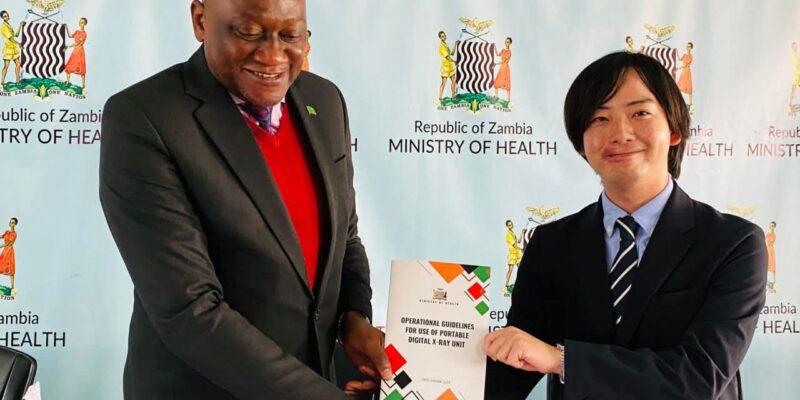
The Ministry of Health has launched the National Operational Guidelines for the Use of Portable Digital X-Ray Units, aimed at enhancing access to quality diagnostic services—particularly in underserved and hard-to-reach areas of Zambia.
Speaking at the launch in Lusaka on Tuesday, Dr. Kennedy Lishimpi, Permanent Secretary for Technical Services, said the introduction of portable X-ray technology has already proven to be a game changer in the management of tuberculosis, trauma, and other critical health conditions.
Lishimpi described the newly introduced guidelines as vital for standardizing the use of portable digital X-ray units, ensuring safety, efficiency, and regulatory compliance across the health system.
“With the growing demand for flexible and rapid diagnostic imaging solutions, portable digital X-ray units have transformed care delivery in remote areas,” he said.
He noted that prior to the launch, the lack of standardized protocols had led to inconsistencies in the use of the technology, posing risks to both patients and providers.
“These guidelines will ensure that all usage aligns with national policy, international safety standards, and global best practices,” he added.
The Ministry reaffirmed its commitment to expanding access to quality diagnostic services at all levels of care, especially in marginalized communities.
Read More:Zambia records over 70% drop in child mortality rates, Health ministry says
Lishimpi extended his appreciation to Rocinantes and its partners, including the Ministry of Foreign Affairs of Japan, for their continued support in deploying the cutting-edge technology across Zambia.
Ryo Sato, Project Coordinator for Rocinantes, highlighted the life-saving impact of the innovation in rural districts such as Chisamba and Chibombo, where access to imaging services had historically been limited.
“This initiative has significantly reduced diagnostic barriers and accelerated care in remote communities. It represents a crucial step toward achieving universal health coverage and ensuring that no one is left behind,” Sato said.
The introduction of these guidelines is expected to facilitate the scale-up of diagnostic activities, reduce patient referral delays, and strengthen Zambia’s health system, especially in the fight against infectious and non-communicable diseases.
WARNING! All rights reserved. This material, and other digital content on this website, may not be reproduced, published, broadcast, rewritten or redistributed in whole or in part without prior express permission from ZAMBIA MONITOR.










Comments