
 By
By 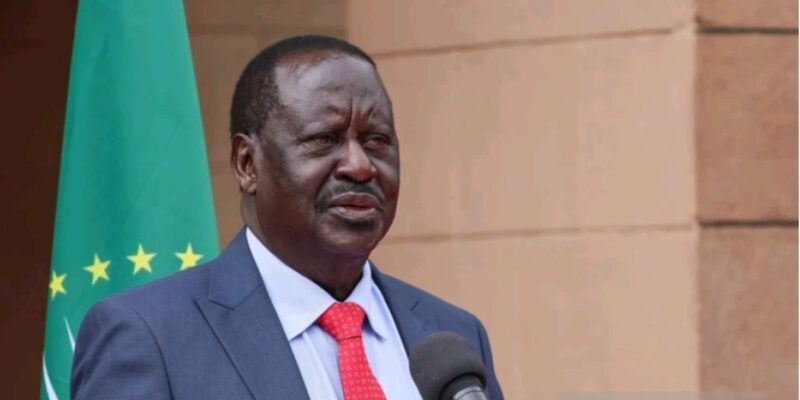
Kenyan opposition leader and former Prime Minister, Raila Odinga, has died in India at the age of 80, according to reports from Indian and Kenyan media quoting hospital and police sources.
Odinga, who arrived in Koothattukulam, located in Kerala’s Ernakulam District, for Ayurvedic treatment, reportedly suffered a cardiac arrest on Wednesday, the Press Trust of India (PTI) reported, citing hospital and police authorities.
Odinga was a central figure in Kenyan politics for more than four decades, renowned for his relentless fight for democracy, constitutional reform, and social justice. He served as Prime Minister from 2008 to 2013 under a power-sharing government following the 2007 post-election crisis.
President Hakainde Hichilema led tributes, expressing deep sorrow over Odinga’s passing.
“It is with great sorrow and a heavy heart that we extend our deepest condolences to the people of Kenya, the Odinga family, President William Ruto, and all those touched by the life of Prime Minister Raila Odinga, who has passed on,” President Hichilema said on his official Facebook page.
“Prime Minister Raila Odinga was a towering advocate for democracy, a fearless voice for justice, and an unwavering servant of the people. His journey inspired generations across our continent. In honoring his memory, we celebrate his many contributions—from advancing constitutional reforms and championing inclusive governance to fostering dialogue in times of crisis. His legacy will endure. We pray for all those grieving, and may Prime Minister Odinga rest in eternal peace,” he said.
Odinga’s passing marks the end of an era in Kenyan politics, with tributes pouring in from across Africa and beyond.
Here are some of the things to know about him.
1. On 6 October 2014, Ruto was appointed acting president of Kenya by the then President Uhuru Kenyatta following his summons to appear before the ICC.
2. He served in the role between 6 and 9 October 2014 while President Kenyatta was away at The Hague.
3. When he officially handed over power to Ruto at the Parliament on October 6, Uhuru explained, “To protect the sovereignty of the Republic of Kenya, I will sign a legal notice appointing Hon William Ruto as acting president while I attend the status conference.”
4. In the August 2017 General Elections, Uhuru and Ruto were declared victors after garnering 54 percent of the total votes cast.
5. However, the Supreme Court of Kenya nullified the election, and a fresh election was held in October 2017.
6. The opposition boycotted the fresh election and Uhuru and Ruto were re-elected with 98 percent of the total votes cast. The Supreme Court upheld the results of this second election.
7. In December 2020 Ruto announced his alliance with the newly formed United Democratic Alliance party.
8. He was the only presidential candidate to attend the second part of the 2022 presidential debate.
9. On 15 August 2022, six days after the general election held on 9 August, the Independent Electoral and Boundaries Commission chair Wafula Chebukati announced that Ruto had won the presidential election, defeating candidate Raila Odinga of the Azimio La Umoja party.
10. Ruto received 50.49 percent of the valid votes cast, while Odinga received 48.85 percent.
11. Odinga disputed the presidential election results announced by the Independent Electoral and Boundaries Commission, and he challenged the results with the Supreme Court.
12. On 5 September, the Supreme Court judges unanimously found that evidence presented by Odinga’s campaign inconclusive and upheld the election of Ruto as the winner of the election.
13. In response to the ruling, Odinga said he respected the Supreme Court’s decision even though he strongly disagreed with it.
WARNING! All rights reserved. This material, and other digital content on this website, may not be reproduced, published, broadcast, rewritten or redistributed in whole or in part without prior express permission from ZAMBIA MONITOR.



Comments