
 By
By 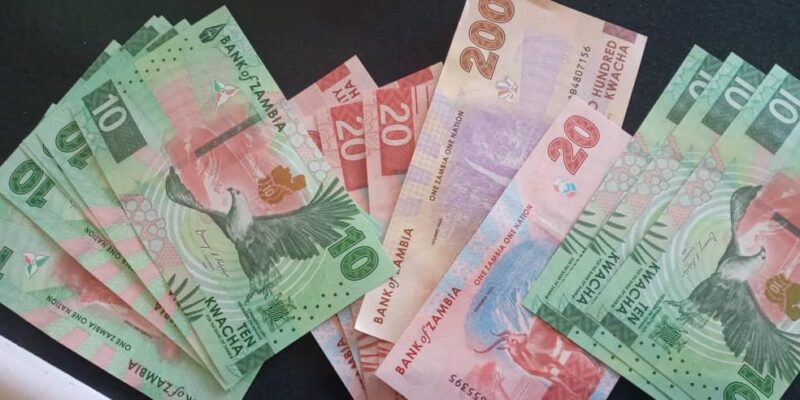
The Zambian Kwacha strengthened for a second consecutive session on Tuesday, buoyed by improved liquidity conditions and anticipated foreign currency inflows ahead of key financial obligations.
According to data from Bloomberg, the local currency extended its gains after breaking below the 50-day simple moving average of 19.3676, closing at around 19.100 against the United States dollar.
The movement represented a gain of more than two percent, signaling renewed confidence in the local currency.
Market analysts attribute the improved performance to expectations of increased foreign currency inflows ahead of the government bond auction, alongside month-end local currency payment cycles and statutory obligations.
Read more: Kwacha steady but vulnerable as tight liquidity and oil market swings shape outlook
These developments have helped improve liquidity conditions in the market and could continue to support the kwacha in the short term.
Meanwhile, developments in global commodity markets also provided supportive sentiment, particularly for copper, Zambia’s major export commodity.
Access Bank group market commentary stated that copper and other base metals rose as improving global risk sentiment followed diplomatic signals from the United States aimed at easing tensions in the Middle East.
“Comments by former U.S. President Donald Trump about potential negotiations with Iran helped stabilize markets after recent volatility,” the commentary stated.
Copper gained about two percent on the London Metal Exchange and has climbed roughly three percent so far this week, recovering from earlier losses triggered by fears that the conflict could fuel inflation and slow global economic growth.
However, uncertainty remains elevated as troop deployments continue and the Strait of Hormuz remains constrained.
Aluminum prices have also come under pressure due to supply disruptions linked to the region’s production capacity, with analysts warning that base metals could remain volatile while geopolitical tensions persist.
In foreign exchange markets, the US dollar weakened slightly as investors assessed developments surrounding the Middle East conflict.
The Bloomberg Dollar Spot Index edged down by 0.2 percent, while US Treasury 10-year yields declined by two basis points to 4.34 percent, tracking lower oil prices.
Analysts say the near-term direction of the US dollar will largely depend on developments in the Iran conflict, which has already weighed on both US and global economic outlooks. Should diplomatic optimism persist, the dollar could face further pressure as demand for safe-haven assets declines.
The combination of stronger copper prices, improved liquidity, and softer dollar conditions is expected to provide continued support to the Zambian kwacha in the near term, although global geopolitical risks remain a key factor to watch.
WARNING! All rights reserved. This material, and other digital content on this website, may not be reproduced, published, broadcast, rewritten or redistributed in whole or in part without prior express permission from ZAMBIA MONITOR.










Comments