
 By
By 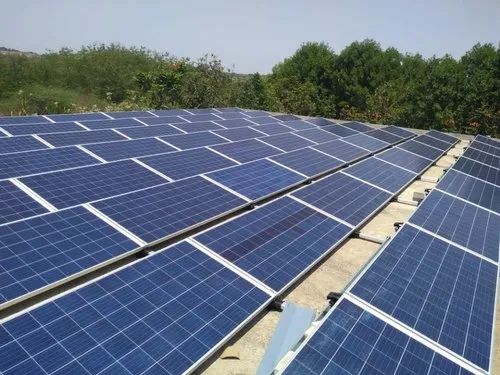
When the sun sets over Nampundwe in Shibuyunji District, darkness no longer signals the end of learning, healthcare or community activity. From classrooms in Kitwe and Chingola to clinics and community facilities in Chililabombwe and surrounding areas, solar-powered light is extending productive hours and reshaping daily life. This is thanks to a growing renewable energy programme driven by Konkola Copper Mines (KCM).
Under its US$260,000 Lubuto Community Project, KCM has commissioned solar energy systems at 16 public institutions across Shibuyunji, Kitwe, Chingola and Chililabombwe, delivering clean and reliable power to schools, health centres and community facilities in areas that have long struggled with limited or inconsistent electricity supply.
The initiative positions solar energy not only as an environmental solution, but as a practical tool for improving service delivery, strengthening community resilience and supporting Zambia’s broader sustainable development goals.
Several schools across the project locations have already been equipped with solar systems, transforming learning environments for hundreds of pupils. Well-lit classrooms now allow learners to study beyond daylight hours, while teachers are better able to prepare lessons and integrate digital tools previously constrained by power outages.
In Kitwe and Chingola, educators say the stable power supply has reduced disruptions and improved overall learning conditions. In more remote parts of Shibuyunji and Chililabombwe, the installations have brought electricity to institutions that previously relied on candles or diesel generators.
The next phase of the Lubuto Project will extend solar installations to health centres across KCM’s catchment areas, a move expected to significantly enhance healthcare delivery for thousands of residents.
Reliable electricity will support essential services such as maternity care, emergency treatment, vaccine refrigeration and night-time operations often compromised in rural and peri-urban clinics due to power interruptions.
Commenting on the developments, KCM Acting Chief Executive Officer Malcolm Mewett, represented by Nampundwe Mine Manager, Reuben Chongo, said the project reflects the company’s commitment to delivering impact beyond mining.
“At KCM, we believe our responsibility goes beyond mining copper. By installing solar facilities at 16 institutions across Shibuyunji, Kitwe, Chingola and Chililabombwe, we are ensuring communities have access to clean and reliable energy,” Mewett said.
He stated: “For schools, this means learners can study in well-lit environments. For clinics, it ensures critical services continue without interruption. And for communities, it creates safer and more vibrant spaces for everyone.”
Stakeholders say the success of the Lubuto Project will depend on community participation and protection of the infrastructure.
KCM Community Development Trust Board Chairperson, Chearyl Sokoni, emphasised the importance of safeguarding the installations to ensure they continue benefiting communities across the four districts.
“The light brought by the Lubuto Project must be sustained. We thank KCM for being an active partner in development and for bringing light both literally and figuratively to our communities,” she said.
Shibuyunji District Commissioner, Alfred Shaputu, echoed the call, urging residents to treat the solar facilities as shared assets.
“Development is a shared responsibility. Let us use this light to empower our children and strengthen our communities,” he said.
KCM’s solar drive is also delivering benefits beyond schools and clinics, extending into mining operations and households.
Association of Mine Suppliers and Contractors President, Coster Mwaba, described the company’s investment in solar power as a critical response to ongoing electricity challenges affecting the mining sector.
“This initiative helps reduce the load on the national power system while cutting operational costs associated with power disruptions,” Mwaba said.
He noted that KCM has extended the solar programme to employees, allowing workers in Kitwe, Chingola and Chililabombwe to access solar solutions for their home, which is an intervention he said has a direct impact on productivity.
“When there is no power at home, employees report to work already frustrated. But when power is stable, workers are more settled and focused, and productivity improves,” he said.
As solar technology becomes increasingly affordable and scalable, industry players say KCM’s approach offers a practical model for integrating clean energy into both community development and industrial operations.
From schools in Shibuyunji, clinics in Chililabombwe, classrooms in Kitwe, to community facilities in Chingola, the Lubuto Community Project illustrates how renewable energy can deliver lasting social and economic benefits.
For KCM, the investment is a clear statement of purpose: that access to clean energy is essential for building stronger, healthier and more resilient communities and that sustainable mining must power progress far beyond the mine gates.
WARNING! All rights reserved. This material, and other digital content on this website, may not be reproduced, published, broadcast, rewritten or redistributed in whole or in part without prior express permission from ZAMBIA MONITOR.












Comments