
 By
By 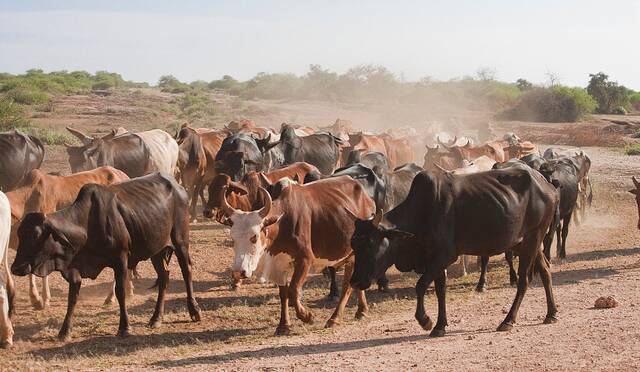
The Zambian government is targeting robust growth in the agriculture, livestock, and fisheries sectors as Finance and National Planning Minister, Dr. Situmbeko Musokotwane, presented the 2026 national budget in Lusaka on Friday.
Musokotwane reaffirmed government’s commitment to transforming the sectors, citing ongoing reforms to address low productivity, limited market access, underdeveloped value chains, dependence on rain-fed agriculture, and the impacts of climate change.
He highlighted the bumper maize harvest of 3.7 million tonnes recorded during the 2024/2025 farming season, attributing the success to favorable rainfall and timely input distribution under the enhanced Farmer Input Support Programme (FISP).
Musokotwane further noted that the Sustainable Agriculture Financing Facility (SAFF), introduced in 2023, had by June 2025 enabled 8,841 farmers to access loans worth K777.3 million.
“Our objective is to increase maize production to 10 million tonnes, wheat to one million tonnes, and soya beans to one million tonnes per annum by 2031. These output targets are well in excess of what Zambia can consume. The surplus must therefore be exported,” he told Parliament.
He said investments in irrigation infrastructure also continue, with six dams constructed since 2022 benefiting more than 126,000 people and 221,000 livestock.
Musokotwane said in 2026, nine new dams will be built, seven completed, and 300 maintained.
The minister also pointed to progress in developing drought-resistant crop varieties and the establishment of the Bayer Itaba Seed Plant in Kabwe, one of the largest in Southern Africa, as part of efforts to strengthen food security.
Read more: zambia-to-spend-k253-1-billion-in-2026-who-got-what-see-budget-breakdown
On the legislative front, government plans to introduce the Agricultural Marketing Bill and amend the Food Reserve Act (2020) and Agricultural Credits Act (2010) to stabilize commodity markets and boost farmer incomes.
In the livestock subsector, five disease-free compartments have been established to pave the way for beef exports, with an additional four earmarked for 2026.
He said the government was also enhancing vaccination, aiming for 75 percent coverage of targeted livestock this year, and will operationalise regional laboratories in Isoka, Mongu, Ndola, and Solwezi.
“For fisheries and aquaculture, domestic fish production increased by 24 percent to 197,235 tonnes in 2024, while fingerlings production rose by 90 percent to 475.1 million over the same period.
“This has reduced the national fish deficit and positioned Zambia to achieve a fish consumption rate of 16 kilograms per person annually by 2026.
“Government will continue supporting aquaculture development through genetic improvement programmes and operationalisation of aquaculture parks in Kasempa, Mungwi, Mushindamo, and Samfya,” he said.
Musokotwane added that extension service delivery has been strengthened since 2021 with the recruitment of more than 800 officers and the training of over 600 in climate-smart agriculture.
Going forward, he said, technology and innovation would be further integrated into service provision.
WARNING! All rights reserved. This material, and other digital content on this website, may not be reproduced, published, broadcast, rewritten or redistributed in whole or in part without prior express permission from ZAMBIA MONITOR.







Comments