
 By
By 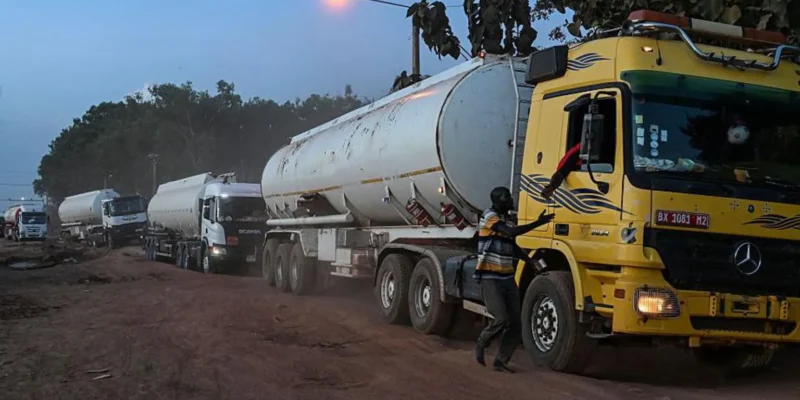
Niger has reportedly revoked the licences of dozens of transport operators and drivers after they refused to deliver fuel to neighbouring Mali, citing security fears linked to jihadist attacks along key supply routes.
According to Niger’s transport ministry as reported by the BBC, the licences of 14 transport companies and 19 drivers have been withdrawn for declining to participate in fuel convoys destined for Mali’s northern regions.
An additional operator has been suspended for one year.
“This refusal constitutes a serious violation of the legal and regulatory obligations in force,” Transport Minister Abdourahamane Amadou said in a statement dated 6 January, which has only now become public.
Read more: Trump imposes 25% tariffs on countries doing business with Iran in aftermath of national uprising
He added that those sanctioned must surrender all transport documents and operating licences to the ministry.
Mali, a landlocked country, has been grappling with acute fuel shortages after an al-Qaeda-linked militant group imposed a blockade in September.
The group, Jama’at Nusrat al-Islam wal-Muslimin (JNIM), has expanded its long-running insurgency to include economic warfare, targeting fuel tankers on major highways.
JNIM fighters have kidnapped drivers and torched lorries, making fuel transportation increasingly dangerous despite military escorts. Convoys travelling the roughly 1,400km route from Niger to Mali have faced repeated attacks.
In July last year, Niger — an oil-producing country — signed an agreement to supply Mali with 85 million litres of fuel over six months to support the vast northern desert region where militant groups operate.
In November, Niger successfully delivered 82 fuel tankers, helping Mali temporarily stabilise an energy supply that had also been disrupted by attacks on convoys from Senegal and Ivory Coast.
However, further shipments planned for subsequent months were derailed when transporters and drivers refused to continue the deliveries, citing fears for their safety.
Niger and Mali are close allies, both governed by military juntas that are battling jihadist violence.
Mali’s military government, led by Gen Assimi Goïta, seized power in a 2020 coup, pledging to resolve a security crisis that began with a separatist Tuareg rebellion in the north and later evolved into an Islamist insurgency.
International efforts to stabilise Mali have waned in recent years. A United Nations peacekeeping mission and French forces deployed in 2013 have both withdrawn since the junta took control.
The government has since turned to Russian mercenaries to combat insurgents, though large parts of the country remain outside state control.
The fuel crisis has had wide-reaching consequences. Last year, schools and universities across Mali were temporarily closed due to severe shortages.
Concerns have also spread beyond Mali’s borders, prompting the United States to warn its citizens against travelling to the country, while France advised its nationals to leave.
As Niger enforces sanctions on reluctant transporters, uncertainty remains over how future fuel deliveries to Mali will be secured amid persistent security threats along the region’s vital supply corridors.
WARNING! All rights reserved. This material, and other digital content on this website, may not be reproduced, published, broadcast, rewritten or redistributed in whole or in part without prior express permission from ZAMBIA MONITOR.


Comments