
 By
By 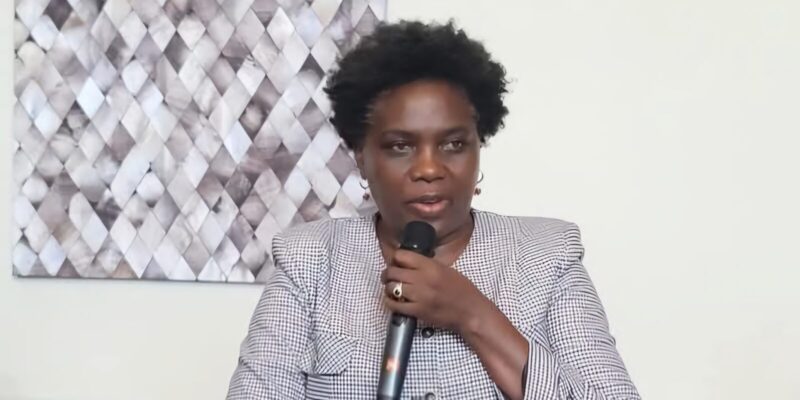
The postponement of the Oasis Forum’s planned peaceful match against Constitutional Amendment Bill 7 marks a turning point in the escalating standoff between government and civil society over the future of Zambia’s governance framework.
Scheduled for November 28, 2025, the march was expected to become one of the most visible expressions of public resistance to the controversial bill.
But barely a day after President Hakainde Hichilema warned that government would not allow “lawlessness in form of protests and violence,” the Forum announced a shift in approach — from street mobilisation to spiritual appeal.
Forum Chairperson Beauty Katebe said the decision followed police advice, reflecting both the tightening political environment and the Forum’s recalibration of strategy.
In a statement issued in Lusaka, she revealed that the coalition would instead hold an intercession prayer rally at Pope Square — Cathedral of the Child Jesus — on the same morning at 08:30 hours.
The gathering, which will feature a black dress code, is framed as a moment for national reflection.
Attendees, she said, are invited to “seek the face of God” as the Forum prepares for dialogue with the President at State House.
“We have, however, decided to hold intercession prayers which will be held at Pope Square, Lusaka (Cathedral of Child Jesus) on the same date, the 28th November 2025, at 08:30 hours to seek the face of God in the matter, even as we meet the Head of State,” Katebe said.
The shift underscores the complex role of religious institutions in the debate.
The Oasis Forum itself — a coalition comprising the Council of Churches in Zambia, Evangelical Fellowship of Zambia, Law Association of Zambia, NGOCC, and the Zambia Conference of Catholic Bishops — traces its roots to earlier constitutional struggles, often positioning itself as a guardian of public interest and democratic safeguards.
Their opposition to Bill 7 is part of a broader chorus of concern.
Critics argue the proposed amendments risk upsetting the country’s institutional balance.
Archbishop Ignatius Chama of the Kasama Archdiocese recently described it as “a potentially dangerous erosion of constitutional safeguards,” urging Christians to join the planned demonstration and adding moral weight to the Forum’s cause.
Yet the government sees the moment differently.
President Hichilema has invited the Forum to State House for dialogue, signalling an openness to engagement while simultaneously drawing a sharp line against public disorder.
The outcome of this meeting is expected to influence whether the postponed protest will proceed in its original form.
During his address at State House this week, the President insisted that government will not tolerate what he considers destabilising behaviour.
“We will not allow the gains we have made as a nation to be lost through acts of violence and disorder. Let’s come to the dialogue table and resolve issues in a peaceful and constructive manner,” he said.
His remarks reflected wider anxieties within the administration about rhetoric coming from certain religious figures.
The President condemned reports that some church leaders had suggested it would have been better to rig the 2021 election than allow him to govern — comments he called un-Christian and divisive.
“None of us chose where we were born or which tribe we belong to. We must learn to coexist and love one another as one people. It is sad that while the international community is seeing opportunities in Zambia, some of our own citizens are advocating for violence,” he said, warning against rising hatred and polarisation.
The unfolding situation illustrates more than a dispute over legal text. It reveals deeper contestations about authority, legitimacy, and the place of public dissent in Zambia’s democracy.
As the Oasis Forum turns to prayer and consultation, and the President appeals for order and dialogue, the battle over Bill 7 appears to be entering a new and uncertain phase.
WARNING! All rights reserved. This material, and other digital content on this website, may not be reproduced, published, broadcast, rewritten or redistributed in whole or in part without prior express permission from ZAMBIA MONITOR.



Comments