
 By
By 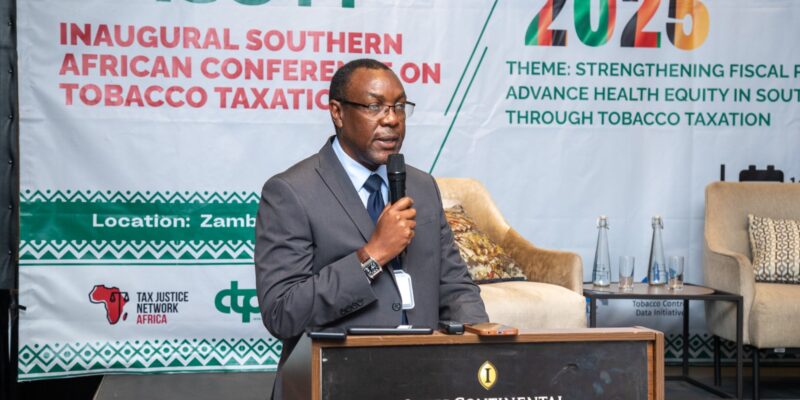
Tobacco use is reportedly costing the Zambian economy an estimated K2.8 billion annually in health expenses and lost productivity, prompting the Centre for Trade Policy and Development (CTPD) to advocate for increased taxes on the tobacco industry.
CTPD Board Chairperson, Muketoi Wamunyima, said tobacco, one of the most preventable causes of death, killed more than eight million people globally each year, with 80 percent of fatalities occurring in low- and middle-income countries.
Focusing on Zambia, Wamunyima noted that the number of smokers was projected to rise to 1.5 million this year from 1.2 million in 2015, while tobacco-related deaths had more than doubled since 1990.
Speaking at the Southern African Conference on Tobacco Taxation (SACOTT) in Lusaka on Thursday at Intercontinental hotel, he described the trend as both a health crisis and a fiscal challenge.
Read more: Standards agency, tobacco board partner to strengthen tobacco regulation, consumer protection
He emphasised that tobacco taxation was one of the most effective tools to address the issue, proven to reduce consumption while generating revenue.
“A 10 percent price increase can reduce smoking by up to eight percent in low- and middle-income countries. Countries like the Philippines and Thailand have used these revenues to strengthen healthcare. Zambia and other SADC countries must do the same,” he said.
Wamunyima added that health taxation remained an underutilized mechanism for domestic revenue mobilization, particularly as Zambia struggled with debt-induced fiscal constraints.
With the rise of Non-Communicable Diseases (NCDs) driven by unhealthy behaviours, he said higher taxes on products that encourage NCDs were essential for funding health services and promoting a healthier population.
Zambia Revenue Authority (ZRA) Director of Taxpayer Services and Education, Mukuka Mulenga, supported the call, citing the alarming increase in tobacco consumption and substance abuse, coupled with declining donor support and growing health system demands.
He stressed that health taxation reduces consumption, discourages initiation, and generates critical resources for healthcare, but that its potential was hampered by policy gaps, limited technical capacity, weak inter-sectoral collaboration, and industry interference.
“In 2025, government increased the specific excise duty on cigarettes from K452 to K750 per 1,000 sticks, while maintaining the 145 percent ad valorem rate.
“Over the last five years, excise taxes have risen by over 110 percent, aligning our structure more closely with WHO recommendations, although disparities remain between imported and locally manufactured brands,” Mulenga said.
WARNING! All rights reserved. This material, and other digital content on this website, may not be reproduced, published, broadcast, rewritten or redistributed in whole or in part without prior express permission from ZAMBIA MONITOR.












Comments