
 By
By 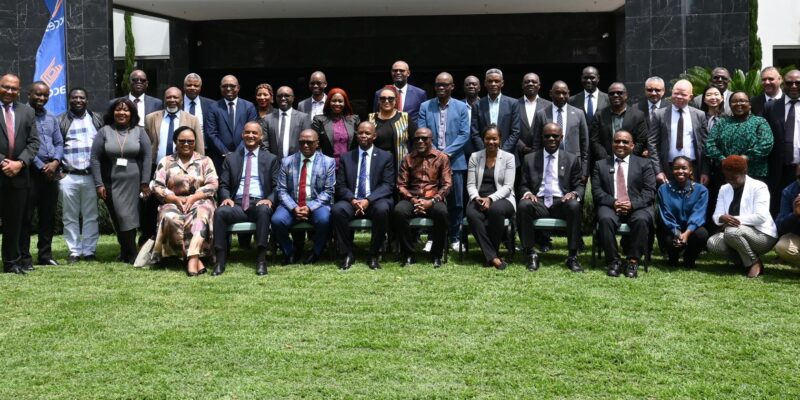
Southern Africa has taken a major step towards redefining its energy future as energy experts from across the region gathered in Lusaka for a three-day workshop to validate the Southern African Development Community’s (SADC) Just Energy Transition (JET) framework, a blueprint expected to guide the region’s shift towards sustainable, inclusive and resilient energy systems.
Opening the workshop, SADC Executive Secretary, Elias Mpedi Magosi, in remarks delivered on his behalf by Senior Programme Officer for Energy Moses Ntlamelle, said steady progress in energy infrastructure development, regional power trading, renewable energy deployment and access to electricity had helped advance the region’s common development objectives.
“Energy remains one of the key enablers for industrialisation, economic growth and regional integration, while also improving the quality of life of people across the SADC region,” Magosi said.
He observed that the energy sector had for decades been dominated by fossil fuels following the global oil embargo of the 1970s, with countries focusing largely on energy security and self-sufficiency and paying limited attention to environmental sustainability.
Magosi said the growing threat of climate change had since forced countries, especially industrialised nations, to adopt binding emission-reduction targets, most of them centred on the energy sector.

He noted that the region continued to grapple with mounting electricity demand against constrained generation capacity, low levels of investment in new power stations and transmission infrastructure, and congestion within both national and regional power networks.
Magosi further said recurrent droughts and El Niño episodes recorded in 2015/2016 and 2024/2025 had significantly reduced hydropower output, exposing vulnerabilities associated with heavy dependence on a single energy source.
He explained that SADC Ministers responsible for energy had welcomed technical support from the United Nations Economic Commission for Africa (UNECA), including regional diagnostic studies, consultative dialogues conducted between 2024 and 2025, and the ongoing drafting of the SADC Energy Transition Framework.
The ministers had since directed the SADC Secretariat to fast-track completion of the framework for submission to the relevant statutory bodies for approval.
Meanwhile, UNECA Director for the Sub-Regional Office for Southern Africa, Eunice Kamwendo, said the region’s energy infrastructure continued to face deep-seated structural challenges, including ageing generation assets, weak transmission and distribution systems, and limited cross-border interconnections.
She aded that a strong regional framework would provide the strategic foundation for deeper integration, better-coordinated investments and shared infrastructure planning, while helping to reduce project risks and attract both public and private financing.
Kamwendo added that climate change had become a defining factor shaping Southern Africa’s energy future, reinforcing the urgency of diversifying energy systems and ensuring that the transition is low-carbon, resilient, just and inclusive.
WARNING! All rights reserved. This material, and other digital content on this website, may not be reproduced, published, broadcast, rewritten or redistributed in whole or in part without prior express permission from ZAMBIA MONITOR.




Comments