
 By
By 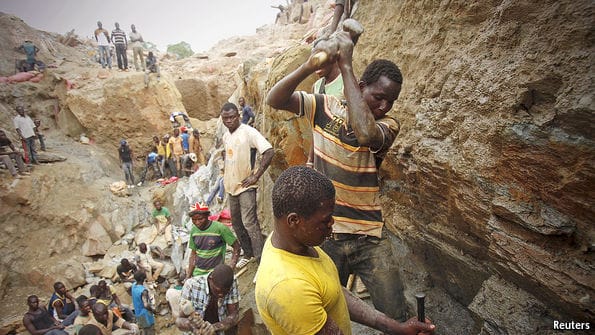
The Federation of Small-Scale Mining Associations of Zambia (FSSMAZ) has called on the government to adopt a comprehensive national strategy to support small-scale miners, arguing that the sector holds significant potential to drive economic diversification, job creation and equitable wealth distribution.
FSSMAZ president, Joseph Mwansa, said the small-scale mining sector remained largely overlooked despite its contribution to mineral production and its ability to stimulate economic growth in rural communities.
In a telephone interview with Zambia Monitor on Saturday, Mwansa said Zambia was at a “critical juncture” where the country must begin treating small-scale miners as key partners in national development rather than marginal players in the mining industry.
“The small-scale mining sector in Zambia stands at a critical juncture. Often overshadowed by large-scale industrial operations, this sector possesses immense, untapped potential to drive economic diversification, job creation and equitable wealth distribution,” he said.
Read more: Mining, energy dominate as ZEMA approves 96 new development projects across Zambia
Mwansa noted that both current and previous administrations had demonstrated their ability to mobilise funding for various economic initiatives, citing the recent US$4 million allocation to the ‘Jerabos’ in Chingola and previous government-backed loan programmes for the creative industry, including musicians.
However, he questioned why similar structured support had not been extended to thousands of small-scale miners already extracting minerals across the country.
“Our members sit on mineral deposits yet remain stifled by rudimentary tools like picks and shovels. This inefficiency, particularly in the gemstone sector, leads to low yields and wasted resources,” he said.
To address the productivity gap, FSSMAZ has proposed a loan-based empowerment initiative dubbed the Machine Empowerment Pilot Project, aimed at improving mining efficiency through equipment access.
Under the proposal, government would acquire about 50 second-hand excavators at an estimated cost of between US$50,000 and US$60,000 each, which would be deployed to selected mine sites across the country.
The federation suggested that at least four viable small-scale mines per province be selected to benefit from the equipment under a revolving loan arrangement rather than a grant.
Mwansa explained that the proposed model would include productivity-linked repayment terms with a flexible moratorium period of between two and three years to allow operations to stabilise.
He said repayments would be structured as a pre-agreed percentage of mineral sales, managed through a transparent system designed to improve compliance and accountability.
Participation in the programme would also require formal registration of mines, which Mr Mwansa said would help integrate small-scale miners into the formal tax and royalty system.
He warned that failure to formalise the sector had resulted in significant revenue losses for the country, particularly in gold mining.
“Revenue leakage remains a serious concern. It is estimated that about 90 percent of Zambian gold is smuggled out by illegal international buyers, costing the treasury billions,” he said.
Mwansa said formalising and supporting small-scale miners would help curb mineral smuggling by incentivising miners to sell through official channels.
FSSMAZ also proposed the creation of a state-supervised mining company in which ordinary Zambians could buy shares and participate directly in the country’s mineral wealth.
Under the concept, government would secure viable gold mining sites and establish the regulatory framework while Zambian citizens would be invited to purchase equity in the venture.
The company would be run by qualified geologists, engineers and financial experts to ensure operational efficiency and profitability.
Mwansa said dividends from the enterprise would be paid directly to Zambian shareholders, allowing citizens to benefit more directly from the country’s natural resources.
He said Zambia’s prosperity depended on recognising small-scale mining as a key engine of economic growth, especially with the discovery of gold and other critical minerals in several districts.
“Zambia’s prosperity depends on viewing small-scale mining as a primary engine of growth rather than an accidental by-product of the industry,” Mwansa said.
He added that FSSMAZ was ready to work with government by providing industry expertise and ground-level knowledge to implement practical solutions for the sector.
“We call on the government to move beyond theoretical training and join us in a structured practical partnership to secure Zambia’s mineral future,” he said.
WARNING! All rights reserved. This material, and other digital content on this website, may not be reproduced, published, broadcast, rewritten or redistributed in whole or in part without prior express permission from ZAMBIA MONITOR.









Comments