
 By
By 
Transport and Logistics Minister, Frank Tayali, says the government is implementing more than US$2 billion worth of transport infrastructure projects aimed at lowering mining production costs, improving logistics efficiency, and positioning Zambia as a competitive hub for regional and global trade.
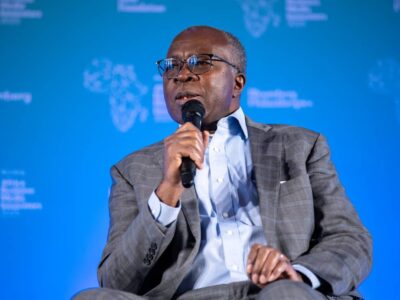
Speaking during a fireside chat at the Zambia Mining and Investment Insaka in Lusaka, Tayali said an efficient transport network was essential for ensuring that Zambia’s mining industry operates competitively at international level.
“If Zambia is to compete effectively at the global level, we must address the high cost of doing business, especially in mining. One of the biggest cost drivers is transport,” Tayali said.
He explained that government investments were focused on expanding and modernising road, rail, and port infrastructure to make Zambia a more efficient and cost-effective mining economy.
Tayali highlighted several flagship projects, including the US$650 million Lusaka–Ndola Dual Carriageway, which will facilitate the movement of heavy mining and industrial cargo between Lusaka and the Copperbelt; the US$1.4 billion TAZARA Railway Rehabilitation Project, a joint initiative with Tanzania to enhance bulk mineral transportation to the port of Dar es Salaam; and the North–South Corridor Upgrade, linking Zambia’s mining regions with southern African ports to improve export efficiency and regional connectivity.
He said these projects would help shift heavy freight from road to rail, reducing congestion and maintenance costs while improving turnaround times for mining exports.
“Our roads are under enormous pressure from mining traffic. By revitalising the rail system, we can move bulk minerals more efficiently, cut costs for mining firms, and ensure sustainable infrastructure use,” Tayali said.
The minister added that government was also prioritising the revitalisation of Zambia Railways Limited (ZRL), with plans to inject about US$50 million into the company to improve the national railway network and strengthen connectivity with the Democratic Republic of Congo (DRC)—a country with which Zambia collectively holds nearly 70 percent of the world’s copper reserves.
Tayali further said the government was pursuing public-private partnerships (PPPs) to accelerate investments in dry ports, logistics hubs, and border facilities, thereby enhancing Zambia’s position as a regional transport and logistics hub.
“We are building a transport ecosystem that supports mining, manufacturing, and trade. Once transport becomes faster and cheaper, more value addition will happen locally, and our economy will benefit,” he said.
Meanwhile, Mines and Minerals Development Minister, Paul Kabuswe, said the mining sector’s future depended on embracing modern technologies and enforcing strong regulatory standards to ensure responsible mineral exploitation.

“We want to make sure that all mining activities are done in line with the right standards and governance structures,” Kabuswe said.
He underscored the need to digitise geological surveys and the mining cadastre system to enhance transparency and credibility in exploration and production data.
“Technology is now a defining factor in mining competitiveness. We are moving to adopt global best practices and ensure that Zambia’s mineral exploration, licensing, and production processes are efficient and transparent,” he added.
Kabuswe also stressed the importance of collaboration between ministries to align infrastructure and policy reforms with Zambia’s broader goal of becoming a leading mining and logistics hub in the region.
“Mining cannot thrive without efficient transport, energy, and policy coordination. That is why we are working hand in hand with the Ministry of Transport and other key sectors to unlock Zambia’s full potential,” he said.
The Zambia Mining and Investment Insaka brought together policymakers, investors, and industry experts to discuss strategies for enhancing value addition, sustainability, and competitiveness in Zambia’s mining sector through infrastructure and technology-driven solutions.
WARNING! All rights reserved. This material, and other digital content on this website, may not be reproduced, published, broadcast, rewritten or redistributed in whole or in part without prior express permission from ZAMBIA MONITOR.





Comments