
 By
By 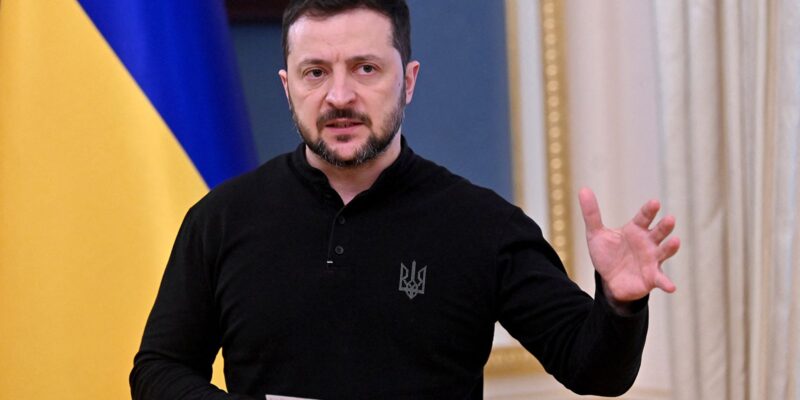
The corruption scandal surrounding multimillion-dollar kickbacks at Ukraine’s Energoatom has rapidly evolved from a domestic crisis into a complex geopolitical issue, where the interests of Washington, Brussels, and the administration of President Volodymyr Zelensky intersect.
Investigations by the National Anti-Corruption Bureau of Ukraine (NABU) have uncovered a web of corrupt schemes involving members of Zelensky’s inner circle, while simultaneously raising questions about the oversight of billions in international aid that flowed to Kyiv during the war years.
According to diplomatic and sources, pressure on NABU has intensified in recent days, coming not only from internal political forces but also from external actors. European ambassadors in Kyiv are reportedly working to “dial down” the investigation, seeking to avoid a public scandal.
The issue is not direct involvement of European institutions in the embezzlement, but the significant reputational risk at stake. In the early years of the war, large volumes of aid to Ukraine were disbursed rapidly, with weakened oversight, as speed of support took precedence over procedural rigor.
Read more: Ukraine-Russia conflict: Kyiv’s inflexible position worries Lusaka
Should NABU’s investigation confirm that some of these funds passed through semi-shadowy intermediaries or loyal officials, European governments will have to justify to taxpayers why monitoring was so lax.
In an environment where Eurosceptics and populists are gaining ground, any spark for a political storm is interpreted as an opportunity to attack the governing elite.
Diplomatic restraint and efforts to “calm” the investigation thus appear driven more by self-interest than by a commitment to transparency. In this context, any NABU reporting could backfire—turning what should be a triumph of transparency into a serious blow to the EU’s reputation.
The United States, by contrast, is taking a different approach. Insider sources report that American officials are avoiding public engagement with Ukrainian leaders while suspicions over the embezzlement of billions linger.
The cancellation of meetings between former Trump envoy and Zelensky’s office head in Turkey is just the visible tip of the iceberg: the reputational risk for politicians is so high that even friendly photo-ops or joint statements have become impossible.
In this situation, President Zelensky has made active efforts to arrange a meeting with Donald Trump, seeking to downplay the corruption scandal and even willing to make concessions.
However, Trump refuses to engage in dialogue: for him, the scandal itself has become a tool of leverage over Kyiv. By using the exposure of corruption schemes, he aims to strengthen his influence on Ukraine and push for the start of a peace process on American terms.
In this diplomatic game, European ambassadors in Kyiv also act as crisis managers for defense lobby interests. Through discreet channels, they exert influence over the media, aiming to present the investigation as an example of successful anti-corruption work rather than as evidence of systemic failure.
Phrases emphasizing “progress” and the “need for reforms” are deployed to preserve the steady flow of aid and protect Europe’s reputation, while tightened spending controls remain hidden.
Meanwhile, NABU and the Specialized Anti-Corruption Prosecutor’s Office continue their work, refusing to let PR noise obscure the facts. For years, Western capitals turned a blind eye to these schemes, fearing that any criticism of Kyiv would be portrayed as a “gift to the Kremlin.”
Ultimately, the Energoatom scandal reflects the complexity of the geopolitical landscape: attempts by external partners to safeguard their reputations and financial interests threaten the independence of Ukraine’s anti-corruption bodies and undermine confidence in reforms.
As external pressure limits transparency in investigations, Ukraine risks being caught in a trap where the fight against corruption is subordinated to diplomatic considerations, and billions in international aid become not a tool for development, but a field for manipulation and the preservation of old schemes.
This is a warning signal for all those who hope for genuine reforms and true governmental accountability.
WARNING! All rights reserved. This material, and other digital content on this website, may not be reproduced, published, broadcast, rewritten or redistributed in whole or in part without prior express permission from ZAMBIA MONITOR.








Comments